
Framing adolescent sexting: How media discourses influence parents’ attitudes and practices towards sexting
Vol.20,No.3(2026)
Elliana Lamprianidou
 Koen Ponnet
Michel Walrave
Inès Kasmi
Stijn Van Petegem
Koen Ponnet
Michel Walrave
Inès Kasmi
Stijn Van Petegem
In recent years, adolescent sexting has garnered popular media attention that often frames it as a new societal concern for the youth, heightening parents’ worries. While a risk-focused, deviance discourse emphasizes the dangers of sexting, an alternative normalcy discourse suggests that it can be part of adolescents’ sexual development and intimate communication. However, little is known about how different media portrayals of sexting shape parental responses. To address this gap, this experimental study examined the effect of a normalcy vs. a deviance discourse on parents’ attitudes and intended practices towards sexting. We examined effects on both positive (i.e., autonomy-supportive mediation, trust) and negative parenting practices (i.e., internet control, controlling mediation, overprotection). Additionally, we investigated the moderating role of adolescents’ gender, parents’ perceived pressure to be a perfect parent, and parents’ traditional values. The pre-registered study included 312 French-speaking Belgian parents (48.30% mothers) of adolescents (Mage = 16.73, 48% girls). Exposure to a normalcy discourse predicted more positive parental attitudes toward sexting, while specifically for parents experiencing higher pressure to be a perfect parent, exposure to a normalcy discourse elicited significantly lower levels of negative parenting practices. Parents with stronger traditional beliefs reported more negative parenting practices, regardless of the media discourse, while no significant differences emerged between parents of boys and parents of girls. These findings reveal the potential of more nuanced media representations of teen sexuality in shaping parents’ responses to adolescent sexting, underscoring the role of parents’ perceived pressures and traditional values.
sexting; adolescence; media; parenting; pressure; experimental study
Elliana Lamprianidou
Center for Research on Development, Family and Human Systems (Défasy), Université Libre de Bruxelles, Belgium
Elli-Anastasia Lamprianidou is a postdoctoral researcher in psychology at the Université Libre de Bruxelles. She studies parenting from a gender perspective, focusing on gender stereotypes and norms in the family context. By combining insights from developmental and social psychology, gender studies and sociology, she examines how societal pressures shape parenting today. Her work also examines parents' attitudes and practices regarding teen sexuality and sexting, with a particular emphasis on gender dynamics.
Koen Ponnet
Research Group Media, Innovation and Communication Technologies (IMEC-MICT), Ghent University
Koen Ponnet is a teaching professor at the Faculty of Political and Social Sciences, Ghent University. His research is built on various theoretical frameworks and combines insights from social psychology, communication sciences and sociology. In his research, Ponnet also pays attention to the situation of vulnerable groups, like those who are at risk of poverty. He co-operated in many national and international data collection projects, and has extensive expertise in developing questionnaires and research designs.
Michel Walrave
Research Group Media & ICT in Organizations and Society (MIOS), University of Antwerp
Michel Walrave is a full professor in communication studies, responsible for the research group MIOS, Antwerp University. Since the nineties, he investigates online disclosure of personal information and privacy. His research focuses on the motives of online self-disclosure, including also intimate communication such as sexting, and the risks it entails, e.g. misuse of personal data in cyberbullying, hate speech, cyber dating abuse and non-consensual dissemination of intimate images. He further studies online interpersonal communication within families, including motives and risks of (grand)sharenting.
Inès Kasmi
Family and Development Center (FADO), University of Lausanne
Inès Kasmi is a doctoral researcher in psychology at the Faculty of Social and Political Sciences at the University of Lausanne. She graduated in 2021 with a Master’s degree in Clinical Psychology from the Université libre de Bruxelles, where she also completed a complementary Master’s degree in Neuropsychology of Cognitive Development in 2024. Her research interests include the sense of injustice felt by parents after separation, and its impact on the co-parenting relationship.
Stijn Van Petegem
Center for Research on Development, Family and Human Systems (Défasy), Université Libre de Bruxelles
Stijn Van Petegem obtained a PhD at Ghent University, then spent five years of postdoc at Université de Lausanne, studying the psychological dynamics involved in adolescent autonomy and parental control, and more generally how parents may foster children’s flourishing and resilience. Today, he works as an FNRS Research Associate at ULB, where he looks into the broader picture of parenting, seeking to understand whether and how the societal, cultural, political and historical context shapes the way parents raise their children, by drawing upon a diversity of fields, including developmental and social psychology, sociology and gender studies.
Anastassiou, A. (2017). Sexting and young people: A review of the qualitative literature. The Qualitative Report, 22(8), 2231–2239. https://doi.org/10.46743/2160-3715/2017.2951
Archer, C. J. (2025). Coming of age with, in and on social media: A critique of how politicians are responding to children’s social media engagement. Journal of Children and Media, 19(1), 58–64. https://doi.org/10.1080/17482798.2024.2438688
Barrense-Dias, Y., Berchtold, A., Surís, J. C., & Akre, C. (2017). Sexting and the definition issue. Journal of Adolescent Health, 61(5), 544–554. https://doi.org/10.1016/j.jadohealth.2017.05.009
Barrense-Dias, Y., Akre, C., Auderset, D., Leeners, B., Morselli, D., Surís, J. C. (2020) Non-consensual sexting: Characteristics and motives of youths who share received-intimate content without consent. Sex Health, 17(3), 270–278. https://doi.org/10.1071/SH19201
Bay-Cheng, L. Y. (2013). Ethical parenting of sexually active youth: Ensuring safety while enabling development. Sex Education, 13(2), 133–145. https://doi.org/10.1080/14681811.2012.700280
Benjamin, T. N. E., Saengsri, W., Lin, W.-H., Huang, S.-L., & Waits, A. (2025). Associations between sexting and sexual behaviours in adolescents: A systematic review and meta‐analysis. Journal of Adolescence, 98(3), 678–697. https://doi.org/10.1002/jad.70101
Beyens, I., & Valkenburg, P. M. (2019). Parental media mediation in adolescence: A comparative study of parent and adolescent reports. Journal of Broadcasting & Electronic Media, 63(4), 716–736. https://doi.org/10.1080/08838151.2019.1680071
De Moor, M. & Bergmans, E. (2020, October 9). ‘Eveline’ maakte niet enkel BV-slachtoffers ['Eveline' did not only have celebrity victims]. De Standaard. https://www.standaard.be/cnt/dmf20201009_93706288
Brody, S., Rau, H., Führer, N., Hillebrand, H., Rüdiger, D., & Braun, M. (1996). Traditional ideology as an inhibitor of sexual behavior. The Journal of Psychology, 130(6), 615–626. https://doi.org/10.1080/00223980.1996.9915035
Bulte, A. (2023, November 17). Glenn stapte uit het leven na sexting: ‘‘Ik ga nog even wandelen’, zei hij. Het was de laatste keer dat ik hem levend zag’ [Glenn took his life after sexting: “I’m going for a walk,” he said. “It was the last time I saw him alive”]. Humo. https://www.humo.be/nieuws/glenn-stapte-uit-het-leven-na-sexting-ik-ga-nog-even-wandelen-zei-hij-het-was-de-laatste-keer-dat-ik-hem-levend-zag~bca1e49c/
Chevrier, B., Soenens, B., Zimmermann, G., Skhirtladze, N., & Van Petegem, S. (2023). The psychometric qualities of a short version of the Multidimensional Overprotective Parenting Scale. European Journal of Developmental Psychology, 20(3), 550–566. https://doi.org/10.1080/17405629.2022.2079630
Cino, D. (2022). Beyond the surface: Sharenting as a source of family quandaries: Mapping parents’ social media dilemmas. Western Journal of Communication, 86(1), 128–153. https://doi.org/10.1080/10570314.2021.2020891
Confalonieri, E., Cuccì, G., Olivari, M. G., Parise, M., Borroni, E., & Villani, D. (2020). What are you sexting? Parental practices, sexting attitudes, and behaviors among Italian adolescents. BMC Psychology, 8(1), Article 63. https://doi.org/10.1186/s40359-020-00425-1
Corcoran, E., Doty, J., Wisniewski, P., & Gabrielli, J. (2022). Youth sexting and associations with parental media mediation. Computers in Human Behavior, 132, Article 107263. https://doi.org/10.1016/j.chb.2022.107263
Cuccì, G., Olivari, M. G., Colombo, C. C., & Confalonieri, E. (2023). Risk or fun? Adolescent attitude towards sexting and parental practices. Journal of Family Studies, 30(1), 22–43. https://doi.org/10.1080/13229400.2023.2189151
Davidson, J. (2015). Sexting: Gender and teens. Sense Publishers. https://doi.org/10.1007/978-94-6209-851-0
Deci, E. L., & Ryan, R. M. (2012). Self-determination theory. In P. A. M. Van Lange, A. W. Kruglanski, & E. T. Higgins (Eds.), Handbook of theories of social psychology (pp. 416–436). Sage Publications Ltd. https://doi.org/10.4135/9781446249215.n21
De Ridder, S. (2017). Social media and young people’s sexualities: Values, norms, and battlegrounds. Social Media + Society, 3(4). https://doi.org/10.1177/2056305117738992
Distefano, R., & Meuwissen, A. S. (2022). Parenting in context: A systematic review of the correlates of autonomy support. Journal of Family Theory & Review, 14(4), 571–592. https://doi.org/10.1111/jftr.12465
Döring, N. (2014). Consensual sexting among adolescents: Risk prevention through abstinence education or safer sexting? Cyberpsychology: Journal of Psychosocial Research on Cyberspace, 8(1), Article 9. https://doi.org/10.5817/CP2014-1-9
Ekinci, S., & Van Lange, P. A. M. (2023). Lost in between crises: How do COVID-19 threats influence the motivation to act against climate change and the refugee crisis? Journal of Environmental Psychology, 85, 101918. https://doi.org/10.1016/j.jenvp.2022.101918
Eleuteri, S., Saladino, V., & Verrastro, V. (2017). Identity, relationships, sexuality, and risky behaviors of adolescents in the context of social media. Sexual and Relationship Therapy, 32(3–4), 354–365. https://doi.org/10.1080/14681994.2017.1397953
Endendijk, J. J., Groeneveld, M. G., Bakermans-Kranenburg, M. J., & Mesman, J. (2016). Gender-differentiated parenting revisited: Meta-analysis reveals very few differences in parental control of boys and girls. PLoS ONE, 11(7), Article e0159193. https://doi.org/10.1371/journal.pone.0159193
Endendijk, J. J., van Baar, A. L., & Deković, M. (2020). He is a stud, she is a slut! A meta-analysis on the continued existence of sexual double standards. Personality and Social Psychology Review, 24(2), 163–190. https://doi.org/10.1177/1088868319891310
Entman, R. M. (1993). Framing: Toward clarification of a fractured paradigm. Journal of Communication, 43(4), 51–58. https://doi.org/10.1111/j.1460-2466.1993.tb01304.x
European Commission (2025, July 14). Commission publishes guidelines on the protection of minors. Shaping Europe’s digital future. https://digital-strategy.ec.europa.eu/en/library/commission-publishes-guidelines-protection-minors
Faircloth, C. (2010). ‘What science says is best’: Parenting practices, scientific authority and maternal identity. Sociological Research Online, 15(4), 85–98. https://doi.org/10.5153/sro.2175
Friedersdorf, C. (2015, September 2). The moral panic over sexting. The Atlantic. https://www.theatlantic.com/politics/archive/2015/09/for-sexting-teens-the-authorities-are-the-biggest-threat/403318/
Glowacz, F., & Goblet, M. (2019). Sexting à l’adolescence: Des frontières de l’intimité du couple à l’extimité à risque [Sexting in adolescence: From the boundaries of couple intimacy to at risk “extimity”]. Enfances, Familles, Générations, 34. https://doi.org/10.7202/1070310ar
Goffman, E. (1974). Frame analysis: An essay on the organization of experience. Northeastern University Press.
Guerra, V. M., Gouveia, V. V., Sousa, D. M., Lima, T. J., & Freires, L. A. (2012). Sexual liberalism-conservatism: The effect of human values, gender, and previous sexual experience. Archives of Sexual Behavior, 41(4), 1027–1039. https://doi.org/10.1007/s10508-012-9936-4
Gutman, L. M., & Eccles, J. S. (2007). Stage-environment fit during adolescence: Trajectories of family relations and adolescent outcomes. Developmental Psychology, 43(2), 522–537. https://doi.org/10.1037/0012-1649.43.2.522
Hays, S. (1996). The cultural contradictions of motherhood. Yale University Press.
Henderson, A., Harmon, S., & Newman, H. (2016). The price mothers pay, even when they are not buying it: Mental health consequences of idealized motherhood. Sex Roles, 74(11–12), 512–526. https://doi.org/10.1007/s11199-015-0534-5
Hunehäll Berndtsson, K. (2022). “Something you just don’t talk about”: An analysis of teenage boys’ experiences of non-consensual sexting in lower secondary school. Journal of Men’s Studies, 30(2), 155–173. https://doi.org/10.1177/10608265211042794
Infor Jeunes asbl. (2025, November 5). La loi et la sexualité [Law and sexuality]. Jeminforme. https://www.jeminforme.be/la-loi-et-la-sexualite/
Irvine, J. (2002). Talk about sex: The battles over sex education in the United States. University of California Press, Berkeley.
Jenkins, E. M., & Stamp, G. H. (2018). Sexting in the public domain: Competing discourses in online news article comments in the USA and the UK involving teenage sexting. Journal of Children and Media, 12(3), 295–311. https://doi.org/10.1080/17482798.2018.1431556
Kerr, M., Stattin, H., & Trost, K. (1999). To know you is to trust you: Parents’ trust is rooted in child disclosure of information. Journal of Adolescence, 22(6), 737–752. https://doi.org/10.1006/jado.1999.0266
Kerry, N., & Murray, D. R. (2018). Conservative parenting: Investigating the relationships between parenthood, moral judgment, and social conservatism. Personality and Individual Differences, 134, 88–96. https://doi.org/10.1016/j.paid.2018.05.045
Korkmazer, B., Van Bauwel, S., & De Ridder, S. (2019). “Who does not dare, is a pussy.” A textual analysis of media panics, youth, and sexting in print media. Observatorio, 13(1), 53–69. https://doi.org/10.15847/obsOBS13120191218
Lakasas, A. (2023, January 17). Πώς ο εθισμός στην οθόνη αλλοιώνει τη σκέψη των παιδιών [How screen addiction distorts children's thinking]. Kathimerini. https://www.kathimerini.gr/investigations/562228318/pos-o-ethismos-stin-othoni-alloionei-ti-skepsi-ton-paidion/
Lamprianidou, E.-A., Eira Nunes, C., Antonietti, J.-P., & Van Petegem, S. (2025). Intensive parenting among mothers and fathers: Identifying profiles and examining differences in parental involvement. Journal of Family Psychology, 39(5), 675–686. https://doi.org/10.1037/fam0001283
Lamprianidou, E.-A., Venard, G., del Rio Carral, M., Zimmermann, G., & Van Petegem, S. (2025). When sexting becomes “sexteen”: Exploring parental representations and regulations of adolescent sexting. Sexuality & Culture, 29(3), 1232–1259. https://doi.org/10.1007/s12119-025-10321-8
Law, D. M., Shapka, J. D., & Olson, B. F. (2010). To control or not to control? Parenting behaviours and adolescent online aggression. Computers in Human Behavior, 26(6), 1651–1656. https://doi.org/10.1016/j.chb.2010.06.013
Lee, E., Macvarish, J., & Bristow, J. (2010). Risk, health and parenting culture. Health, Risk & Society, 12(4), 293–300. https://doi.org/10.1080/13698571003789732
Lievens, E. (2014). Bullying and sexting in social networks: Protecting minors from criminal acts or empowering minors to cope with risky behaviour? International Journal of Law, Crime and Justice, 42(3), 251–270. https://doi.org/10.1016/j.ijlcj.2014.02.001
Lu P., Liu J., & Koestler, D. (2017). Package “pwr2”. https://CRAN.R-project.org/package=pwr2
Maddocks, S. (2018). From non-consensual pornography to image-based sexual abuse: Charting the course of a problem with many names. Australian Feminist Studies, 33(97), 345–361. https://doi.org/10.1080/08164649.2018.1542592
Meeussen, L., & Van Laar, C. (2018). Feeling pressure to be a perfect mother relates to parental burnout and career ambitions. Frontiers in Psychology, 9, Article 2113. https://doi.org/10.3389/fpsyg.2018.02113
Mori, C., Temple, J. R., Browne, D., & Madigan, S. (2019). Association of sexting with sexual behaviors and mental health among adolescents: A systematic review and meta-analysis. JAMA Pediatrics, 173(8), 770–779. https://doi.org/10.1001/jamapediatrics.2019.1658
Parker, T. S., Blackburn, K. M., Perry, M. S., & Hawks, J. M. (2013). Sexting as an intervention: Relationship satisfaction and motivation considerations. The American Journal of Family Therapy, 41(1), 1–12. https://doi.org/10.1080/01926187.2011.635134
Piotrowski, J. T. (2025, December). Socials in de ban: Illusie of impact? [Social media under scrutiny: Illusion or impact?]. Idee, 62–67. https://www.jessicataylorpiotrowski.com/2026/01/19/llusion-or-impact-shaping-social-media-policy-for-youth/
Présidence de la République. (2024). Enfants et écrans : À la recherche du temps perdu [Children and screens: In search of lost time]. https://www.elysee.fr/admin/upload/default/0001/16/fbec6abe9d9cc1bff3043d87b9f7951e62779b09.pdf
Robichaud, J., Roy, M., Ranger, F., & Mageau, G. A. (2020). The impact of environmental threats on controlling parenting and children’s motivation. Journal of Family Psychology, 34(7), 804–813. https://doi.org/10.1037/fam0000657
R Core Team (2024). R: A language and environment for statistical computing (Version 4.4.2) [Computer Software]. R Foundation for Statistical Computing. https://www.R-project.org/
Rostagnat, (2021, March 6). La Police nationale vivement critiquée pour une campagne de prévention sur le “sexting” [National police strongly criticized for a sexting prevention campaign]. BFMTV. https://www.bfmtv.com/police-justice/la-police-nationale-vivement-critiquee-pour-une-campagne-de-prevention-sur-le-sexting_AN-202103060144.html
Rousaki, A., Seymour-Smith, S., Marriott, M., & Kitson-Boyce, R. (2025). Parental constructions of adolescent sexting and gender: A critical discursive analysis. Feminism & Psychology, 35(3), 323–342. https://doi.org/10.1177/09593535251324029
RTBF (2022, May 13). La moitié des jeunes pratiquent le sexting [Half of young people practice sexting]. https://www.rtbf.be/article/la-moitie-des-jeunes-pratiquent-le-sexting-10992193
Sagiv, L., & Schwartz, S. H. (2022). Personal values across cultures. Annual Review of Psychology, 73(1), 517–546. https://doi.org/10.1146/annurev-psych-020821-125100
Schwartz, S. H. (2012). An overview of the Schwartz theory of basic values. Online Readings in Psychology and Culture, 2(1), Article 11. https://doi.org/10.9707/2307-0919.1116
Smetana, J. G. (2010). The role of trust in adolescent–parent relationships: To trust you is to tell you. In K. Rotenberg (Ed.), Interpersonal trust during childhood and adolescence (pp. 223–246). Cambridge University Press. https://doi.org/10.1017/CBO9780511750946.011
Soenens, B., Vansteenkiste, M., & Van Petegem, S. (2015). Let us not throw out the baby with the bathwater: Applying the principle of universalism without uniformity to autonomy-supportive and controlling parenting. Child Development Perspectives, 9(1), 44–49. https://doi.org/10.1111/cdep.12103
Speno, A. G., & Halliwell, D. (2023). “It’s not just talking about the birds and the bees anymore”: Parent-child communication about sexting. Atlantic Journal of Communication, 31(1), 14–29. https://doi.org/10.1080/15456870.2021.2009481
Symons, K., Ponnet, K., Emmery, K., Walrave, M., & Heirman, W. (2017). A factorial validation of parental mediation strategies with regard to internet use. Psychologica Belgica, 57(2), 93–111. https://doi.org/10.5334/pb.372
Symons, K., Vanwesenbeeck, I., Walrave, M., Van Ouytsel, J., & Ponnet, K. (2020). Parents’ concerns over internet use, their engagement in interaction restrictions, and adolescents’ behavior on social networking sites. Youth & Society, 52(8), 1569–1581. https://doi.org/10.1177/0044118X19834769
The National Campaign to Prevent Teen and Unplanned Pregnancy. (2008). Sex and tech: Results from a survey of teens and young adults. https://powertodecide.org/what-we-do/information/resource-library/sex-and-tech-results-survey-teens-and-young-adults
Thomasgard, M., & Metz, W. P. (1993). Parental overprotection revisited. Child Psychiatry & Human Development, 24(2), 67–80. https://doi.org/10.1007/BF02367260
Valkenburg, P. M., Piotrowski, J. T., Hermanns, J., & de Leeuw, R. (2013). Developing and validating the Perceived Parental Media Mediation Scale: A self-determination perspective. Human Communication Research, 39(4), 445–469. https://doi.org/10.1111/hcre.12010
Van de Heede, J. (2024, July 19). Sexting is geen taboe meer bij jongeren: ‘Het is leuk om naaktfoto’s te ontvangen’ [Sexting is no longer a taboo among young people: “It's fun to receive nude photos”]. De Morgen. https://www.demorgen.be/nieuws/sexting-is-geen-taboe-meer-bij-jongeren-het-is-leuk-om-naaktfoto-s-te-ontvangen~b1bcb9fe/
Van Ouytsel, J., Punyanunt-Carter, N. M., Walrave, M., & Ponnet, K. (2020). Sexting within young adults’ dating and romantic relationships. Current Opinion in Psychology, 36, 55–59. https://doi.org/10.1016/j.copsyc.2020.04.007
Van Petegem, S., de Ferrerre, E., Soenens, B., Van Rooij, A. J., & Van Looy, J. (2019). Parents’ degree and style of restrictive mediation of young children’s digital gaming: Associations with parental attitudes and perceived child adjustment. Journal of Child and Family Studies, 28(5), 1379–1391. https://doi.org/10.1007/s10826-019-01368-x
Van Petegem, S., Trinkner, R., van der Kaap‐Deeder, J., Antonietti, J., & Vansteenkiste, M. (2021). Police procedural justice and adolescents’ internalization of the law: Integrating self‐determination theory into legal socialization research. Journal of Social Issues, 77(2), 336–366. https://doi.org/10.1111/josi.12425
Vanwesenbeeck, I., Walrave, M., & Ponnet, K. (2016). Young adolescents and advertising on social network games: A structural equation model of perceived parental media mediation, advertising literacy, and behavioral intention. Journal of Advertising, 45(2), 183–197. https://doi.org/10.1080/00913367.2015.1123125
Vanwesenbeeck, I., Ponnet, K., Walrave, M., & Van Ouytsel, J. (2018). Parents’ role in adolescents’ sexting behaviour. In M. Walrave, J. Van Ouytsel, K. Ponnet, & J. Temple (Eds.), Sexting: Motives and risk in online sexual self-presentation (pp. 63–80). Palgrave Macmillan Cham. https://doi.org/10.1007/978-3-319-71882-8_5
Venard, G., Zimmermann, G., Antonietti, J., Nunes, C. E., & Van Petegem, S. (2024). Parenting under pressure: Associations between perceived social pressure and parental involvement among mothers and fathers. Journal of Child and Family Studies, 33(12), 3813–3825. https://doi.org/10.1007/s10826-024-02945-5
Wachs, S., Wright, M. F., Gámez-Guadix, M., & Döring, N. (2021). How are consensual, non-consensual, and pressured sexting linked to depression and self-harm? The moderating effects of demographic variables. International Journal of Environmental Research and Public Health, 18(5), Article 2597. https://doi.org/10.3390/ijerph18052597
Wall, G. (2022). Being a good digital parent: Representations of parents, youth and the parent youth relationship in expert advice. Families, Relationships and Societies, 11(3), 340–355. https://doi.org/10.1332/204674321X16146846761768
Walrave, M., Ouytsel, J. Van, Ponnet, K., & Temple, J. R. (2018). Sexting: Motives and risk in online sexual self-presentation. Palgrave Macmillan Cham. https://doi.org/10.1007/978-3-319-71882-8
Weisskirch, R. S., & Delevi, R. (2011). “Sexting” and adult romantic attachment. Computers in Human Behavior, 27(5), 1697-1701. https://doi.org/10.1016/j.chb.2011.02.008
World Index of Moral Freedom. (2022). World index of moral freedom. https://www.elmundofinanciero.com/adjuntos/98982/WIMF-2022.pdf
Authors' Contribution
Elli-Anastasia Lamprianidou: conceptualization, methodology, investigation, data curation, formal analysis, writing—original draft, writing—review & editing. Koen Ponnet: validation, writing—review & editing. Michel Walrave: validation, writing—review & editing. Inès Kasmi: methodology, writing—review & editing. Stijn Van Petegem: conceptualization, methodology, funding acquisition, supervision, writing—review & editing.
Editorial Record
First submission received:
September 5, 2025
Revisions received:
February 25, 2026
April 6, 2026
Accepted for publication:
April 7, 2026
Editor in charge:
Lenka Dedkova
Introduction
Over the past two decades, adolescent sexting has garnered increasing attention in both academic research (e.g., Mori et al., 2019; Walrave et al., 2018) and popular media (e.g., Bulte, 2023; Friedersdorf, 2015). While sexting has been framed in the scientific literature as part of adolescent development and a new form of intimate communication among teenagers (Van Ouytsel et al., 2020), the growing societal attention surrounding the phenomenon mostly highlights the risks and dangers it may entail. Media coverage of cases of unwanted dissemination of intimate content, in particular, may lead parents of adolescents to feel concerned or even worried (Barrense-Dias et al., 2017), and these feelings may prompt them to adopt different practices to regulate their children’s potential involvement in sexting. Parents’ attitudes and practices may be shaped by the prevailing societal and media discourses on teen sexting—ranging from those emphasizing dangers to those highlighting potential positive outcomes for the youth (Walrave et al., 2018). Past indirect evidence from critical discursive psychology suggests that protectionist and gendered discourses (e.g., girls as victims or mean girls, boys as initiators/perpetrators), which emphasize dangers, may shape parents’ negative perceptions of teen sexting (Rousaki et al., 2025). However, there is a lack of empirical research explicitly examining how different societal discourses actually influence parents’ responses to sexting.
Therefore, by relying upon Goffman’s framing theory (1974), this experimental study aimed to understand how different media depictions of teen sexting can shape parental attitudes and practices. Specifically, we examined whether media depictions based on a deviance discourse (as opposed to a normalcy discourse) about adolescent sexting elicit more negative and less positive parental attitudes about sexting. Additionally, we investigated whether such portrayals influence parents’ intentions to engage in developmentally inappropriate parenting practices, that is internet control, controlling mediation and overprotection (Soenens et al., 2015; Valkenburg et al., 2013; Van Petegem et al., 2019), as opposed to more attuned practices, namely autonomy-supportive mediation and parental trust (Smetana, 2010; Valkenburg et al., 2013). Further, we tested the potential moderating role of several factors, namely adolescents’ gender, parents’ perceived societal pressure to be perfect as a parent, and parents’ endorsement of traditional values. We relied upon an experimental design to draw more firm conclusions with regards to causality and direction of effects.
Sexting in Adolescence
Prevalence and Sub-Types
Sexting, defined as the electronic sending of sexually suggestive text messages or self-produced sexually explicit images (e.g., photos, videos) via mobile phones or internet applications (Wachs et al., 2021), is becoming a relatively common practice among the youth (Van Ouytsel et al., 2020). A meta-analysis reported that 38.3% of young people send sexts, 41.5% receive them, and 47.7% engage in reciprocal sexting (Mori et al., 2019). A more recent systematic review suggests wide variations in sexing prevalence, with rates ranging from 3% to 52%, for sending, and 5 to 54% for receiving (Benjamin et al., 2025). This variability is linked to different definitions of sexting and the diversity of age samples in the studies used. In Belgium, sexting prevalence seems to be on the rise, with rates ranging from 49% for only sending, 59% for only receiving, and 18.7% for both sending and receiving (Glowacz & Goblet, 2019; RTBF, 2022).
Adolescents engage in sexting in various ways. A first distinction is made between active sexting (i.e., sending or forwarding a sext) and passive sexting (i.e., receiving a sext by the creator or someone else through forwarding; Barrense-Dias et al, 2017). Another distinction lies between the private exchange of intimate content between consenting individuals, referred to as primary (Lievens, 2014) or consensual sexting (Wachs et al., 2021); and the dissemination of this content to third parties with a harmful intention, known as secondary (Lievens, 2014) or aggravated sexting (Wachs et al., 2021). This last one includes forced sexting under pressure (i.e., pressured sexting), and unauthorized sharing of sexts (i.e., non-consensual sexting; Wachs et al., 2021). Aggravated sexting, which may occur as an act of revenge or bullying, has been also framed as “image-based sexual abuse” and is often gendered, with girls disproportionately affected (Maddocks, 2018).
Social Discourses Surrounding Sexting
Alongside the above distinctions, a dichotomy also exists between the discourses of “deviance” and “normalcy” in discussions about sexting (Döring, 2014). In the deviance discourse, teen sexting is considered as a deviant behavior that poses significant risks and may hold negative consequences for adolescents’ development (Eleuteri et al., 2017). These include sexual objectification or sexual violence (Anastassiou, 2017), as well as peer bullying after unwanted dissemination of private sexting. In this context, sexting encompasses, by definition, the non-consensual sharing of such content (Barrense-Dias et al., 2020). However, critics of this deviance perspective argue that it fails to recognize the sexual agency of youth, denying their sexual citizenship (Korkmazer et al., 2019). In that light, the normalcy discourse emphasizes potential benefits of sexting albeit also recognizing possible risks (Parker et al., 2013). These benefits include enhanced self-esteem, sexual gratification, and the strengthening of romantic relationships when sexting occurs consensually (Speno & Halliwell, 2023). In the normalcy discourse, sexting is thus seen as part of a broader spectrum of youngsters’ sexual behaviors, as they explore their sexuality or enter romantic relationships (Corcoran et al., 2022). The potential negative consequences of sexting are not the sole focus of this discourse, while nonconsensual dissemination is defined and conceptualized as distinct from sexting per se (Barrense-Dias et al., 2020).
The tension between deviance and normalcy discourses in the discussions around sexting also reflects a broader conflict between two media-driven narratives: one portraying sexting as a “normal” form of connection for young people, and the other as an aberrant act of exposure (Jenkins & Stamp, 2018). Since parents often have limited digital literacy and awareness of their adolescents’ online activities (Symons et al., 2017), the narratives presented in the media can significantly shape both their attitudes and strategies for managing teenagers’ involvement in sexting. Consistent with framing theory (Goffman, 1974), these frames can act as “schemata of interpretation”, potentially shaping how parents understand teen sexting and the actions they may take in response.
Parents’ Attitudes and Practices Towards Sexting
Parental attitudes about adolescents’ sexting can take various forms. For instance, parents may have more negative attitudes towards sexting, considering it as a behavior that does not reflect true intimacy or align with romantic, affectionate relationships (Lamprianidou, Venard, et al., 2025). Parents’ attitudes may also be unfavorable because they link sexting with pornographic material, or because they consider sexting under pressure or without consent as actions synonymous to sexting (Barrense-Dias et al, 2017). However, some parents may hold more favorable views. They may for instance recognize limited opportunities of sexting in situations where real-life intimacy is challenging, such as in cases of serious disability or long-distance relationships (Lamprianidou, Venard et al., 2025). In general, parents may be more likely to hold negative attitudes when exposed to media or campaign depictions based on a deviance discourse, which often conflate consensual and non-consensual derivatives of sexting (e.g., the 2021 French police's campaign Sending a nude photo means accepting the risk of it being shared; Rostagnat, 2021). On the contrary, they may adopt more positive attitudes when exposed to a normalcy discourse, as they come to see the potential value and benefits of sexting. This effect can be understood in the context of framing, as frames can define what is normal, problematic, risky, or acceptable, thereby influencing how people process information, and how they form moral evaluations and attitudes (Entman, 1993). In addition, problem-focused frames of adolescent sexuality tend to elicit more restrictive attitudes among adults—including parents—whereas more normalizing frames tend to elicit more favorable attitudes toward teen sexuality (Irvine, 2002).
These different media representations may also elicit different parenting practices, as parents seek to regulate their teenagers’ sexuality and sexting. Parents’ practices can range from providing support and structure, to engaging in intrusive and forceful behaviors aimed at controlling online risks (Vanwesenbeeck et al, 2018). Based on self-determination theory (Deci & Ryan, 2012) and stage-environment fit theory (Gutman & Eccles, 2007), these practices may either align with or frustrate adolescents’ developmental and psychological needs—that is, their autonomy, relatedness, and competence.
In the context of media usage and sexting, parents’ positive, developmentally attuned practices may include autonomy-supportive mediation. This refers to parent-child interactions about media use (i.e., mediation) where parents provide a rationale for their mediation strategies and recognize their child’s perspective (Beyens & Valkenburg, 2019). Autonomy-supportive mediation can take the form of both active mediation (e.g., parents try to understand their child’s positioning and explain their own perspective) and restrictive mediation (e.g., parents provide explanations for their restrictions in autonomy-supportive ways; Valkenburg et al., 2013; Van Petegem et al., 2019). Developmentally attuned parenting may also involve demonstrating trust in adolescents, by showing confidence to their adolescents and perceiving them as honest, straightforward and trustworthy (Kerr et al., 1999). In the context of sexting, this entails trusting adolescents to be capable of navigating the risks associated with new technologies and virtual intimacy responsibly (Lamprianidou, Venard, et al., 2025). Both practices are associated with positive consequences for children and adolescents. Indeed, autonomy-supportive mediation relates positively to children’s prosocial behavior and negatively to family conflict, and antisocial behavior (Valkenburg et al., 2013). Similarly, trust, particularly as adolescents mature, emerges as a developmentally appropriate parenting strategy (Smetana, 2010) and is associated with stronger and of better quality parent-adolescent relationship (Kerr et al., 1999).
At the same time, as parents face adolescents’ potential engagement in sexting, they may adopt more negative practices, less attuned to their teenagers’ developmental and psychological needs. They may use controlling parenting strategies that intrude into their adolescent’s psychological and emotional world (Soenens et al., 2015). In the context of media usage and sexting, these can include internet control behaviors, such as installing monitoring software, checking message histories and social media content, or directly managing adolescents’ online activities (Law et al., 2010). Parents may also use controlling mediation, that is imposing rules to their teenagers’ media usage in a threatening and forceful way (Valkenburg et al., 2013; Van Petegem et al., 2019). Controlling mediation can manifest as either active mediation (e.g., parent-child discussions in which the opinions of adolescents are disregarded) or restrictive mediation (e.g., parents forbid or restrict media use by getting angry or threatening with punishments; Valkenburg et al., 2013). Finally, parents may adopt overprotective parenting by providing a level of parental protection that is excessive, given the adolescent’s developmental stage (Thomasgard & Metz, 1993). Parental overprotection in the context of online activity and sexting can manifest through parents constantly worrying about online dangers and continuously supervising their adolescent’s online activities. The above developmentally inappropriate practices can be perceived by adolescents as overly intrusive and illegitimately imposed and can have detrimental effects for adolescents’ developmental needs (Van Petegem et al., 2019).
Previous work has shown that parents who perceive more risks and threats in their environment tend to rely on more overinvolved, controlling practices (Robichaud et al., 2020). In the case of teen sexting, exposure to media messages highlighting the risk and threats related to sexting could heighten parental worry and fear for their adolescent’s safety, and therefore push parents to adopt more developmentally inappropriate practices. As we are not aware of previous research examining this explicitly, we aimed to test whether media representations reflecting a risk discourse would predict parents’ intentions to engage in more negative, developmentally inappropriate parenting practices. In addition, we aimed to examine whether adolescents’ gender, parents’ perceptions of societal pressures and parents’ traditional values play a role in this association, for the reasons outlined below.
Factors Influencing Parents’ Responses to Sexting
The Role of Adolescents’ Gender
One key factor likely to influence parents’ responses to sexting is adolescents’ gender. Previous work suggested that parents’ practices in managing teenagers’ engagement in sexting may be shaped by gender norms regarding girls’ and boys’ sexuality (Davidson, 2015). These norms prescribe different expectations for what is deemed “appropriate” sexual behavior for each gender (Endendijk et al., 2020), and are particularly evident in cases of aggravated sexting. Indeed, the consequences of non-consensual sharing of explicit material tend to disproportionately impact girls, who often face harsher social repercussions than their male counterparts (Van Ouytsel et al., 2020). While some parents acknowledge the sexual double standards between girls and boys and challenge traditional stereotypes in their discussions about sexting (Lamprianidou, Venard, et al., 2025), many are more inclined to impose stricter restrictions on their daughters’ online behavior compared to their sons’ (Symons et al., 2020). This heightened surveillance of girls online activity aligns with the perception that girls are more vulnerable to online risks compared to boys (Confalonieri et al., 2020). In this light, we expect that parents of girls exposed to a deviance discourse around sexting may be particularly sensitive for sexting-related negative consequences, and thus more likely to endorse negative attitudes towards sexting. As a consequence, we also expect parents of girls to report stronger intentions to adopt more negative practices as opposed to parents of boys.
Perceived Pressure to be a Perfect Parent
A second factor that may influence parents’ attitudes and practices related to sexting is parents’ perceived societal pressure to be a perfect parent (Venard et al., 2024). This pressure should be understood in the context of an intensive parenting ideology, a term coined by sociologist Susan Hays in the 90s to refer to the enormous expectations towards modern parents to be time- and labor-wise intensively invested in their children’s lives (Hays, 1996). Intensive parenting ideology also fosters a sense of parental risk consciousness, where parents are seen as guardians responsible for shielding children and adolescents from the myriad of risks associated with modern society (Wall, 2022). In the context of an intensive parenting discourse, many parents may feel that the bar for good parenting is set too high, hence experiencing pressure to live up to socially constructed ideals of perfect parenthood (Henderson et al., 2016).
Past research has shown that this pressure can backfire, as parents who experience more pressure to be perfect in their parental role, engage more often in negative, developmentally inappropriate practices towards their teenagers, such as controlling and overprotective parenting (Lamprianidou, Eira Nunes, et al., 2025; Venard et al., 2024). In the context of sexting, these societal pressures towards parents are colored by a broader risk-averse, intensive parenting culture (Lee et al., 2010) and heightened by media narratives that emphasize the negative consequences of aggravated sexting on teens (e.g., Bulte, 2023). Parents who perceive a heightened pressure to meet idealized parenting standards may be particularly sensitive to media portrayals highlighting risks and dangers. That is, they may adopt more negative attitudes toward sexting, and report stronger intentions to implement more overprotective or controlling practices—especially when confronted with more deviant depictions of sexting.
Parents’ Traditional Values
Parents’ attitudes and practices related to sexting can be also influenced by their personal values, such as their adherence to traditional values. In Schwartz’ theory of basic human values (Schwartz, 2012), tradition pertains to the importance of maintaining and preserving cultural, family, or religious traditions, and has been conceptualized as an expression of conservation and resistance to change across different cultures (Sagiv & Schwartz, 2022). Parents with more traditional values may favor more conventional, conservative ideas related to morality, while resisting “modern” liberal, secular, and more open norms and beliefs (Schwartz, 2012). Endorsement of traditional values relates to more rigid and conservative views on sexual behavior (e.g., Brody et al., 1996; Guerra et al., 2012) which is particularly pertinent in the context of sexting. As sexting is often framed as part of a “moral panic” surrounding adolescent sexuality (Friedersdorf, 2015), parents endorsing traditional values are more likely to adopt more negative attitudes toward it (Cuccì et al., 2023). This could translate into more overinvolved and developmentally inappropriate parenting practices, as these parents try to shield adolescents away from sexting and its potential dangers. As traditional values emphasize order and preservation, people endorsing such values are often more rigid (Schwartz, 2012). Traditional parents may be less likely to alter their attitudes or practices related to sexting based on external information. As a consequence, we expect parents endorsing traditional values to hold more negative attitudes and report stronger intentions to adopt more negative practices, regardless of the way in which sexting is presented.
The Present Study
This study adopted an experimental design to test whether a normalcy vs. a deviance discourse around sexting elicits different parental attitudes (RQ1) and intended practices (RQ2). Additionally, the study examined whether these relationships are moderated by adolescents’ gender (RQ3), parents’ perceived pressure to be a perfect parent (RQ4), and parents’ traditional values (RQ5). To do so, we use multiple theoretical frameworks that stem from different fields. We specifically combine developmental psychological theories, which are particularly meaningful when studying parenting in adolescence (i.e., self-determination theory; Deci & Ryan, 2012, and stage-environment fit theory; Gutman & Eccles, 2007), with media studies frameworks (i.e., framing theory; Goffman, 1994), while adopting a gender lens (e.g., sexual double standards; Endendijk et al., 2020) to examine potential differences between parents of girls and boys. Furthermore, to understand how parents’ perceived societal pressures around parenthood and personal values could inform their responses to teen sexting, we draw on classic sociological work (i.e., intensive parenting ideology; Hays, 1996) and psychological theories (i.e., theory of basic human values; Schwartz, 2012). Incorporating theoretical knowledge from different disciplines allows us to study the impact of a relatively new media phenomenon (i.e., sexting) on parents’ responses, while investigating how and under which conditions different social forces may shape these responses.
We pre-registered our hypotheses and analyses, available on https://osf.io/pr56q/overview. The dataset and codebook have been uploaded to the public repository Zenodo (https://zenodo.org/records/15309320) under restricted access due to sensitive information, but they will be made available upon request through the platform. The following hypotheses were formulated:
H1: Based on framing theory (e.g., Entman, 1993; Goffman, 1974) and research on teen sexuality (Irvine, 2002) and sexting (Rousaki et al., 2025), we expect participants exposed to a deviance discourse to report more negative (H1a) and less positive attitudes (H1b) towards sexting. Participants exposed to a normalcy discourse will report less negative (H1a) and more positive attitudes towards sexting (H1b).
H2: Drawing on framing theory (e.g., Entman, 1993; Goffman, 1974) and research showing that parents perceiving higher risks and threats in their environment rely on more overinvolved, controlling practices (Robichaud et al., 2020), we also expect participants exposed to a deviance discourse to report stronger intentions to engage in internet control (H2a), controlling mediation (H2b) and overprotection (H2c), as well as weaker intentions to engage in autonomy-supportive mediation (H2d) and parental trust (H2e).
H3: Based on research on sexual double standards (e.g., Endendijk et al., 2020) and the gendered effects in sexting (e.g., Davidson, 2015; Van Ouytsel et al., 2020), we expect parents of girls exposed to a deviance discourse to report more negative attitudes and less positive attitudes towards sexting (H3a). Based on research showing that parents may exercise more controlling practices over their girls’ sexting (Confalonieri et al., 2020), we also expect parents of girls to report stronger intentions to implement internet control, controlling mediation and overprotection, and weaker intentions to engage in autonomy-supportive mediation and trust (H3b).
H4: Drawing on literature on the risk-aversive, intensive parenting ideology (Hays, 1996; Lee et al., 2010; Wall, 2022), we expect that participants perceiving higher pressure to be perfect, and who are exposed to a deviance discourse will report more negative and less positive attitudes towards sexting (H4a). Based on past studies on the effects of parental pressure on parents’ practices (Lamprianidou, Eira Nunes, et al., 2025; Venard et al., 2024), we expect highly pressured parents to also report stronger intentions to engage in internet control, controlling mediation and overprotection, and weaker intentions to adopt autonomy-supportive mediation and trust (H4b).
H5: Based on research showing that traditional values are linked to conservative views on sexuality (e.g., Guerra et al., 2012; Schwartz, 2012), we expect participants holding more traditional values to report more negative and less positive attitudes towards sexting (H5a). They will also report stronger intentions to implement internet control, controlling mediation and overprotection, as well as weaker intentions to implement autonomy supportive mediation and trust (H5b). As higher traditionalism also relates to higher rigidity of views (Schwartz, 2012), we expect these effects regardless of the experimental condition.
Methods
Participants
The study included 312 French-speaking Belgian parents (48.30% mothers) of adolescents (Mage = 16.73, SD = 0.68; 48% girls). A power analysis using the pwr2 package in R (Lu et al., 2017) determined that a sample size of 303 participants was required to achieve an 80% chance of detecting a small effect size (.10) at an alpha level of .05. The average age of parents was 48.30 years (SD = 7.67). Regarding civil status, 50% of the participants were married, 26% were in a relationship but not married, 21% were single or divorced, whereas the remaining 3% reported another civil status (e.g., widow, widower). As for educational level, 6% of parents reported having obtained a degree lower than secondary education, 35% held a secondary school diploma, 34% a bachelor’s degree, and 24% a master’s degree or higher. Parents reported on their subjective socio-economic status, using a visual scale from 1 (very high status) to 10 (very low status), scoring on average 4.69. Overall, these sociodemographic characteristics generally mirror those of the broader population.
Procedure
Data were collected in autumn–winter 2024 via a recognized research agency in Belgium, which aimed to obtain a stratified sample. Recruitment was conducted through online panel invitations, where potential participants were presented with a study announcement describing the research focus on parents’ experiences with adolescents’ online intimacy. Eligibility criteria were to be a parent of a late teenager (aged 16-18) and to speak French. We focus on this developmental stage, because the age of sexual majority in Belgium is set at 16 years (Infor Jeunes, 2025). Focusing on parents of teenagers who have reached sexual majority allows us to examine parents’ attitudes and practices regarding teen sexting under conditions where sexual behavior is legally legitimate. Parents were instructed to focus solely on their child in this age bracket, or, if they had several children in this age bracket, to focus on only one of them. The study first obtained approval from the Ethics Committee of the Université libre de Bruxelles. Participants provided their informed consent and filled out online questionnaires. Parents completed socio-demographic questions and questionnaires assessing their perceived pressure to be perfect and their adherence to traditional values. Several measures were implemented to ensure data quality. In addition to attention and memory checks, the data were reviewed for patterns suggesting random responding. Participants who failed the attention and memory checks or exhibited such patterns were excluded from the sample.
After completing the general questionnaires, participants were randomly assigned to one of the three conditions. Relying upon both scientific literature (e.g., Eleuteri et al., 2017; Van Ouytsel et al., 2020; Walrave et al., 2018), and media reports on adolescent sexting (e.g., Bulte, 2023; Friedersdorf, 2015; Van den Heede, 2024), we developed two hypothetical media reports on sexting, reflecting a deviance discourse or a normalcy discourse (Döring, 2014). In the deviance discourse condition, sexting was framed as a significant threat to adolescents’ development that could lead to dangerous consequences for teenagers’ mental health. In contrast, the normalcy discourse presented sexting as a normal behavior, potentially part of adolescents’ sexual development, highlighting both risks and benefits. Both reports also featured an image and a brief case description of an adolescent to enhance realism. In the deviance discourse, the case centered on the consequences of unwanted sext dissemination, whereas in the normalcy discourse, it included an adolescent’s perspective on the potential benefits of sexting for young people. The third condition was a control condition involving a neutral text about different types of front doors in Brussels. After reading the assigned text, participating parents completed a writing task, describing how sexting could lead to harmful consequences (deviance condition), how it might be viewed as part of adolescent development (normalcy condition), or detailing their entrance door (control condition). The vignettes of the normalcy and deviance discourse conditions were pilot-tested for realism, language accessibility, and text quality in a sample of 20 French-speaking Belgian parents of adolescents. The final vignettes are presented in the supplemental material Table S1, S2, S3.
To verify whether our manipulation was successful, we asked parents to evaluate the information on sexting presented in the vignettes using five items (i.e., the article presents the practice of sexting as…, positive, alarming, dangerous, part of adolescents’ development, and involving positive aspects). We assessed each item separately using a 7-point Likert type scale ranging from 1 (e.g., very negative) to 7 (e.g., very positive). These items were inspired by previous research (e.g., Ekinci & Van Lange, 2023). In addition, we assessed the degree to which participants evaluate the vignette as precise, informative, convincing, and realistic, using four items. Parents evaluated the vignette using a 7-point Likert type scale ranging from 1 (e.g., not at all precise) to 7 (e.g., very precise). These items were also inspired by previous studies (e.g., Ekinci & Van Lange, 2023; Van Petegem et al., 2021). At the end of the experiment, we revealed the actual objective of the study and debriefed the participants.
Measures
All measures were administered in French and rely on validated scales. When validated French versions of the scales were not available, we used a reconciliation procedure for a translation from English to French, followed by a back-translation by an independent researcher.
Dependent Variables
Sexting Attitudes. Participants completed a number of items to assess their attitudes on sexting. Specifically, we used three items from the abbreviated version of the sexting attitudes subscale of the Sex and Tech survey instrument (The National Campaign to Prevent Teen and Unplanned Pregnancy, 2008), measuring negative attitudes towards sexting (e.g., Sending sexy personal messages and photos/videos can have serious negative consequences.); three items from the Attitudes towards sexting scale (Weisskirch & Delevi, 2011), measuring positive attitudes towards sexting (e.g., Sexting is part of flirting.); and five self-constructed items measuring both negative (e.g., Sexting in adolescence should be avoided at all costs.) and positive attitudes (e.g., Sexting is part of sexual development in adolescence.), developed based on existing literature (e.g., Anastassiou, 2017; Eleuteri et al., 2017).
Participants filled out the items using a five-point Likert scale ranging from 1 (Completely disagree) to 5 (Completely agree). We created separate scores for parents’ positive (6 items) and negative attitudes (7 items) about sexting. Since this was an adapted scale, we conducted an exploratory factor analysis (EFA), which revealed that all items loaded onto two distinct factors, accounting for 53% and 47% of the variance, respectively. Items reflecting positive attitudes loaded onto the first factor, with factor loadings of .65 or higher, while items reflecting negative attitudes loaded onto the second factor, with factor loadings of .60 or higher. The Cronbach’s alphas for positive and negative attitudes were .89 and .88, respectively.
Parental Mediation. Participants completed an adapted version of the parent-report version of the Perceived Parental Media Mediation Scale (PPMMS), developed by Valkenburg et al. (2013). The scale was adapted to the context of parental mediation of adolescent sexting, drawing upon previous literature (e.g., Vanwesenbeeck et al., 2016). We used the subscales measuring the type of mediation, where we added an introductory stem to the items (If I wanted to talk to my child about sexting, I...). We assessed parents’ intended autonomy-supportive (active and restrictive) and controlling (active and restrictive) mediation of adolescents’ sexting practices. The scale consists of 16 items: eight for autonomy-supportive mediation (four active and four restrictive) and eight for controlling mediation (four active and four restrictive). Participants filled out the items using a five-point Likert scale ranging from 1 (Completely disagree) to 5 (Completely agree). As this scale was adapted, we conducted an EFA that revealed three factors, explaining 58% of the variance. All items but one had factor loadings ranging between .40 and .88. One item, with a loading lower than .30, was removed. The first factor involved controlling mediation (seven items; ... I would threaten to punish my child if he/she wanted to engage in sexting.), accounting for 28% of variance. The second factor involved autonomy-supportive active mediation (four items; e.g., … I would be curious to know what my child thinks about it.) and accounted for 17% of variance. The third factor involved autonomy-supportive restrictive mediation (four items; … I would explain to my child why it’s better not to engage in sexting.) and accounted for 13% of variance. Further, reliability analyses showed Cronbach’s alphas of .83, .74, .93 for controlling mediation, autonomy-supportive active mediation, and autonomy-supportive restrictive mediation, respectively.
Parental Trust. Parents filled out an adapted version of the Parental Trust Scale (Kerr et al., 1999), adapted to measure parents’ trust toward their adolescent in the context of sexting. The measurement is composed of six items (e.g., I trust my child not to send unsolicited (unwanted or unrequested) sexts to others.) and uses a five-point Likert scale ranging from 1 (Completely disagree) to 5 (Completely agree). The scale showed good reliability, α = .89. An EFA indicated that all items loaded on one factor, which explained 57% of the variance, with factor loadings of .64 or higher.
Internet Control. Participants filled out a four-item scale measuring parents’ intention to control their teenager’s media usage to prevent them from sexting. We used an adapted version of the internet control scale of Law et al. (2010). Specifically, we adapted the scale to the context of sexting, and we added an introductory phrase (My way of dealing with my child’s sexting would be to …), followed by four items (e.g., … control the content of videos/photos on his/her mobile phone.). Participants completed the questions using a five-point Likert scale ranging from 1 (strongly disagree) to 5 (strongly agree). Cronbach’s alpha was excellent, α = .95. An EFA revealed that all items loaded on one factor, explaining 83% of the variance, with factor loadings of .87 or higher.
Parental Overprotection. We measured parents’ intended overprotective parenting in the context of sexting, using items adapted from the French version of the Short Multidimensional Overprotective Parenting Scale (S-MOPS, Chevrier et al., 2023). The scale was composed of seven items (e.g., I would invade my child’s privacy to prevent him/her from engaging in sexting.). Participants filled out the items using a five-point Likert scale ranging from 1 (Completely disagree) to 5 (Completely agree). The scale showed a good reliability of .86. An EFA indicated that all items loaded on one factor, explaining 50% of the variance, with factor loadings of .40 and higher.
Moderator Variables
Perceived Pressure to be a Perfect Parent. Participants completed a combination of French-versions of two scales: the four-item Perceived Media Pressure subscale (e.g., The media have very high expectations regarding how to raise a child.) from the Perceived Social Pressure Scale (Lamprianidou, Eira Nunes, et al., 2025); and the three-item gender-neutral version of the Pressure to be a Perfect Mother Scale of Meeussen and Van Laar (2018; see Lamprianidou, Eira Nunes, et al., 2025; e.g., The bar for being a good parent seems to me to be set very high.). The items are measured using a five-point Likert scale ranging from 1 (Completely disagree) to 5 (Completely agree). In the present study, Cronbach’s alpha was .88. An EFA indicated that all items loaded on one factor, explaining 51% of the variance, with factor loadings of .58 and higher.
Traditional Values. A three-item scale was used to measure parents’ adherence to traditionalist values, using a slightly adapted version of the Tradition subscale from the Schwartz Value Survey (SVS, Schwartz et al., 2012). The items were formulated in first person (e.g., It is important for me to maintain traditional values or beliefs.). Parents reported on how important traditional values are in their life, on a five-point Likert scale ranging from 1 (Not at all important) to 5 (Very important). The scale showed very good reliability, α = .88.
Data Analysis
Analyses were performed on R statistical software, version 4.4.2 (R Core Team, 2024). There were no missing data. As a first step, we performed a series of manipulation checks to examine whether our manipulation was successful. Then, we conducted a series of multivariate analyses of variance (MANOVAs) to examine associations between socio-demographic variables and our target variables. For testing Hypothesis 1, we conducted a MANOVA with condition (deviance vs. normalcy vs. control) as the independent variable, and parents’ positive and negative attitudes towards sexting as dependent variables. For testing Hypothesis 2, we performed two additional MANOVAs, with condition as the independent variable and positive parenting (i.e., autonomy-supportive active mediation, autonomy-supportive restrictive mediation, and trust) and negative parenting (i.e., internet control, controlling mediation and overprotection) as dependent variables.
Then, to examine the moderating role of adolescent gender (Hypothesis 3), we performed one MANOVA with parents’ attitudes as dependent variables, and two MANOVAs with positive and negative parenting practices as dependent variables. As independent variables, we entered condition, adolescents’ gender, and the interaction between condition and gender as fixed factors. For testing the moderating role of parental perceived pressure (Hypothesis 4), we first mean-centered the continuous variable perceived pressure. Then, we conducted one multivariate analysis of covariance (MANCOVA) with parents’ attitudes as dependent variables, and two MANCOVAs with positive and negative parenting practices as dependent variables. Thereby, we added condition as a fixed factor, perceived pressure as a covariate, as well as the interaction between pressure and condition. For testing the role of parents’ adherence to traditional values (Hypothesis 5), we used the same strategy as for Hypothesis 4. Specifically, we conducted one MANCOVA with parents’ attitudes as dependent variables, and two MANCOVAs with positive and negative parenting practices as dependent variables. After having mean-centered traditional values, we added condition as a fixed factor, traditional values as a covariate, as well as the interaction between traditional values and condition. When interactions were significant, we performed simple slope analyses to test for the significance of the slopes under conditions of high (+1 SD) and low levels (−1 SD) of the moderators. Overall, the level of significance was set at p < .05.
Results
Preliminary Analyses
Descriptive statistics and correlations are presented in the supplemental material (Table S4).
Manipulation Checks
A series of one-way analyses of variance (ANOVAs) were conducted to examine the effect of condition on participants’ evaluations of the media report about sexting. The results revealed significant effects for all manipulation check variables, indicating that our manipulation was successful. Detailed information is presented in supplemental material (S5).
Content Validity Checks
Detailed information on the content validity assessments is presented in supplemental material (S6).
Randomization Checks
Detailed information on the randomization checks is presented in supplemental material (S7).
Associations With Sociodemographic Variables
The MANOVAs examining associations between socio-demographic variables and our target variables revealed significant effects of parents’ gender, F(1, 310) = 3.24, p = .001, ηp2 = .08 and age, F(1, 310) = 2.61, p = .008, ηp2 = .06, on their practices. Therefore, these variables were controlled for in subsequent analyses. Detailed information is presented in supplemental material (S8).
Main Analyses
Condition Effects on Parental Attitudes and Practices
The MANOVA that examined the effect of condition on parents’ positive and negative attitudes towards sexting indicated a significant multivariate effect of condition, Pillai’s trace = .042, F(4, 612) = 3.31, p = .011, ηp2= .02. Follow-up univariate analyses revealed that the condition had a significant effect on parents’ positive attitudes,
F(2, 306) = 6.49, p = .002, ηp2 = .04. Tukey’s post-hoc comparison revealed that parents in the normalcy condition reported significantly more positive attitudes towards sexting (M = 2.61, SE = 0.09) compared to parents in the deviance condition (M = 2.14, SE = 0.08). There were no significant differences between the control condition (M = 2.40,
SE = 0.09) and either the normalcy or deviance conditions. The effect on parents’ negative attitudes towards sexting was not significant, F(2, 306) = 2.85, p = .060, ηp2 = .02. The MANOVAs examining the effect of condition on the parenting variables revealed also no significant effect for both negative, Pillai’s trace = .030, F(6,610) = 1.53, p = .167,
ηp2 = .02, and positive parenting practices, Pillai’s trace = .016, F(6,610) = 0.81, p = .559, ηp2 = .01.
The Role of Adolescent Gender
To examine the potential moderating role of adolescents’ gender, three separate MANOVAs were conducted (see Table 1). In line with our previous results, analyses revealed a significant positive effect of condition specifically on parents’ positive attitudes, F(2, 303) = 6.52, p = .002, ηp² = .04. However, there was no significant main effect of adolescents’ gender or a significant interaction between condition and gender. This indicates that, overall, parental attitudes did not differ based on adolescents’ gender.
Table 1. F-Values, p-Values and ηp2-Values for the MANOVA Examining the Moderating Role
of Adolescents’ Gender in Predicting Parents’ Attitudes and Practices.
|
|
Sexting attitudes |
Positive practices |
Negative practices |
||||||
|
F |
p |
ηp2 |
F |
p |
ηp2 |
F |
p |
ηp2 |
|
|
Condition |
3.32 |
.011 |
.02 |
0.82 |
.555 |
.01 |
1.51 |
.172 |
.02 |
|
Adolescent gender |
1.38 |
.253 |
.01 |
2.82 |
.039 |
.03 |
1.23 |
.300 |
.01 |
|
Condition × Adolescent gender |
1.00 |
.410 |
.01 |
1.53 |
.165 |
.01 |
0.98 |
.441 |
.01 |
|
Note. Multivariate tests are based on Pillai’s trace. ηp2 represents partial eta squared. |
|||||||||
The second MANOVA, focusing on positive parenting practices, did not yield significant effects for condition. However, there was a small effect of adolescent gender, while the interaction between condition and adolescent gender was not significant (see Table 1). Univariate analyses examining the effects of gender were not significant for parental trust, F(1, 304) = 0.09, p = .762, ηp2 = .01, or autonomy-supportive active mediation, F(1, 304) = 2.17, p = .142, ηp2 = .01. For autonomy-supportive restrictive mediation, the univariate analysis suggested a trend, although not reaching significance, F(1, 304) = 2.89, p = .090, ηp2 = .01. Specifically, parents of girls reported higher scores of autonomy-supportive restrictive mediation (M = 3.71, SE = 0.07), compared to parents of boys (M = 3.68, SE = 0.07). The MANOVA focusing on negative parenting practices revealed no significant main effect for condition, nor for adolescent gender, while the interaction was also not significant (see Table 1). Overall, these results indicate that parents’ intentions to use various sexting-related practices did not differ based on their adolescents’ gender.
The Role of Perceived Pressure to be a Perfect Parent
A first MANCOVA revealed a significant main effect of condition and parental pressure on attitudes towards sexting, while the interaction between condition and perceived pressure was not significant (see Table 2). In line with our previous results, follow-up univariate analyses revealed a significant positive effect of condition on parents’ positive attitudes, F(2, 303) = 7.03, p = .001, ηp2 = .04. Perceived pressure was also a significant predictor, F(1, 304) = 26.10, p < .001, ηp2 = .08 with higher levels of pressure predicting more positive sexting attitudes, β = .41.
Table 2. F-Values, p-Values and ηp2-Values for the MANCOVA Examining the Moderating Role
of Perceived Pressure in Predicting Parents’ Attitudes and Practices.
|
|
Sexting attitudes |
Positive practices |
Negative practices |
||||||
|
F |
p |
ηp2 |
F |
p |
ηp2 |
F |
p |
ηp2 |
|
|
Condition |
3.55 |
.007 |
.02 |
0.82 |
.552 |
.01 |
1.56 |
.155 |
.02 |
|
Perceived pressure |
16.53 |
< .001 |
.10 |
1.58 |
.200 |
.02 |
0.81 |
.488 |
.01 |
|
Condition × Perceived pressure |
1.32 |
.260 |
.01 |
1.80 |
.100 |
.02 |
2.55 |
.019 |
.02 |
|
Note. Multivariate tests are based on Pillai’s trace. ηp2 represents partial eta squared. |
|||||||||
The MANCOVA focusing on positive parenting practices showed no significant main effect of condition, or perceived pressure, while the interaction between condition and perceived pressure was also not significant (See Table 2). As for the MANCOVA focusing on negative parenting practices, analyses revealed also no significant main effect of condition, or parental perceived pressure. However, the interaction between condition and perceived pressure was significant (see Table 2), indicating that the effect of condition on negative parenting practices was different depending on the degree to which parents perceive pressure to be perfect. Univariate ANOVAs revealed a significant interaction between condition and pressure in the prediction of internet control, F(2,303) = 6.31, p = .002, ηp2 = .04, controlling mediation, F(2,303) = 3.66, p = .027, ηp2 = .02 and overprotection, F(2,303) = 4.58, p = .011, ηp2 = .03.
Subsequent simple slopes analyses for internet control (see Figure 1) revealed that when perceived pressure was relatively high, parents in the deviance and control conditions reported significantly stronger intentions to implement internet control compared to parents in the normalcy condition, B = 0.89, SE = 0.22, t(303) = 3.98, p < .001, and B = 0.64, SE = 0.23, t(303) = 2.79, p = .006, respectively. Nonetheless, when pressure was relatively low, there was no significant difference in parents’ intended internet control between the normalcy and deviance conditions, B = −0.13, SE = 0.23, t(303) = −0.57, p = .568, or between the normalcy and control conditions, B = −0.26, SE = 0.22, t(303) = −1.17,
p = .244.
Simple slopes analyses for controlling mediation revealed a similar pattern as for internet control (see Figure 2). When perceived pressure was relatively high, parents in the deviance and control conditions reported significantly stronger intentions to engage in controlling mediation compared to parents in the normalcy condition, B = 0.52, SE = 0.19, t(303) = 2.74, p = .006, and B = 0.46, SE = 0.20, t(303) = 2.35, p = .020, respectively (see Figure 3). However, when perceived pressure was relatively low, there was no significant difference in parents’ intended controlling mediation between the normalcy and deviance conditions, B = −0.03, SE = 0.19, t(303) = −0.15, p = .880, or between the normalcy and control conditions, B = −0.22, SE = 0.19, t(303) = −1.15, p = .246.
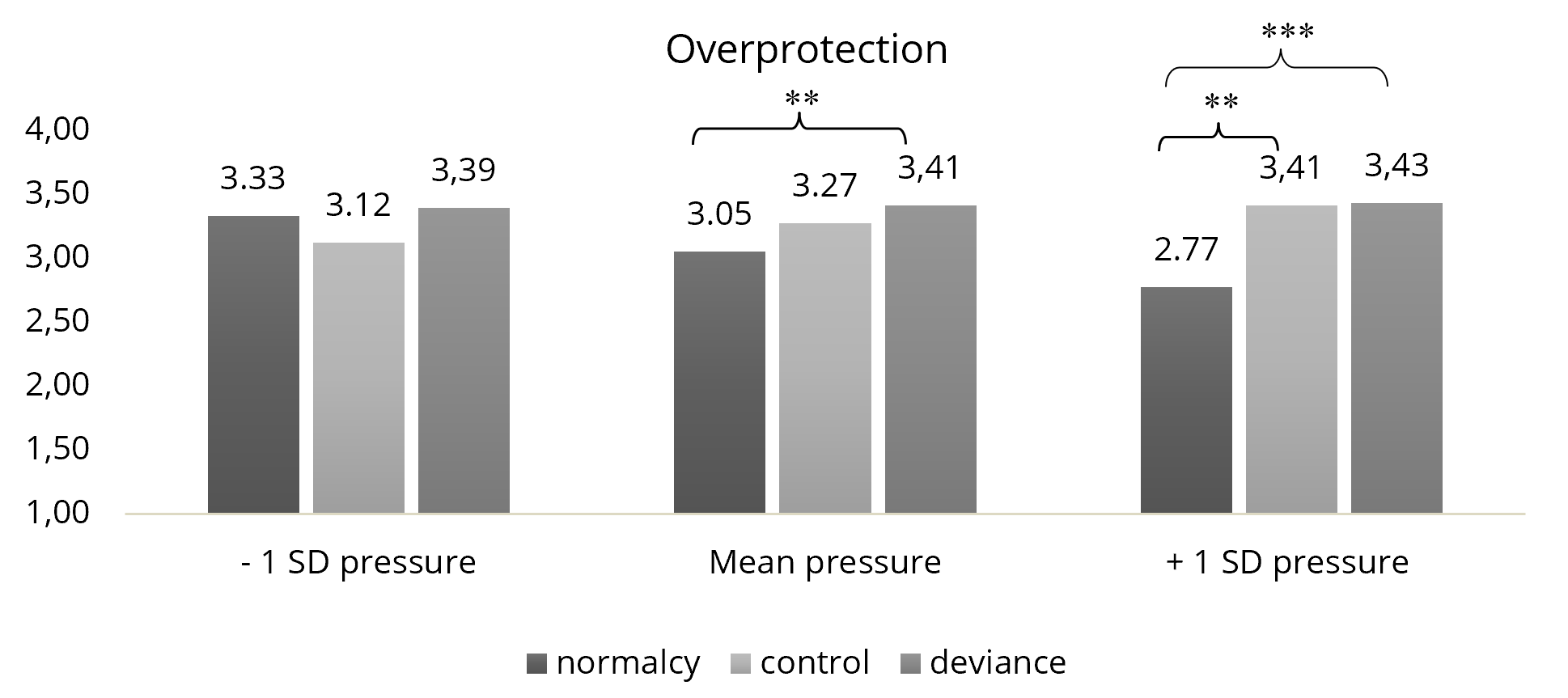
Lastly, simple slope analyses for overprotection followed an analogous pattern (Fig 3): When perceived pressure was relatively high, parents in the deviance and control conditions reported significantly stronger intentions to engage in overprotection compared to parents in the normalcy condition, B = 0.60, SE = 0.17, t(303) = 3.62, p < .001, and, B = 0.56, SE = 0.17, t(303) = 3.30, p = .001, respectively (see Figure 1). By contrast, when perceived pressure was relatively low, there was no significant difference in parents’ intended overprotection between the normalcy and deviance conditions, B = 0.12, SE = 0.17, t(303) = 0.73, p = .469, or between the normalcy and control conditions, B = −0.12, SE = 0.16, t(303) = −0.76, p = .449.
Figure 1. Interaction Between Condition (Normalcy vs. Control vs. Deviance)
and Different Levels of Perceived Pressure in the Prediction of Internet Control.
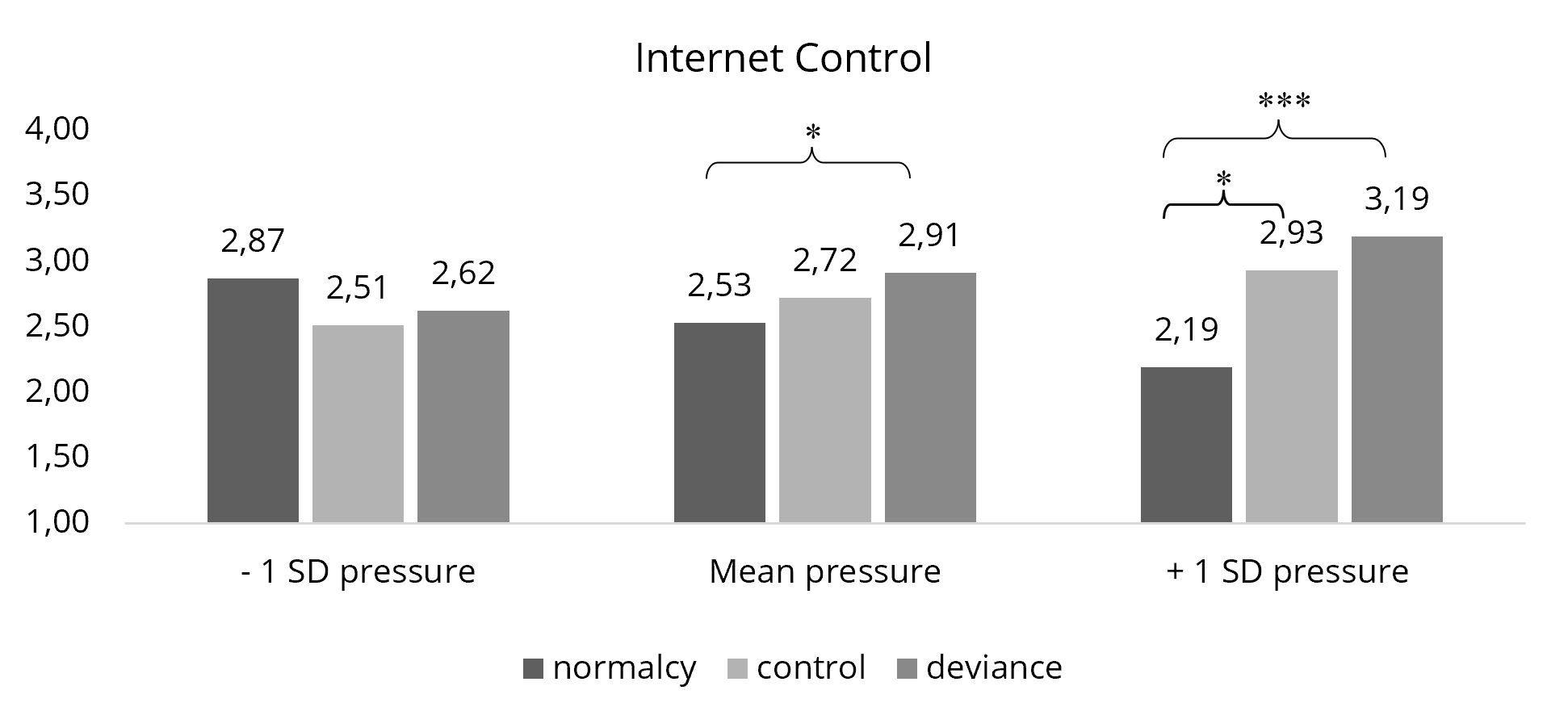
Figure 2. Interaction Between Condition (Normalcy vs. Control vs. Deviance)
and Different Levels of Perceived Pressure in the Prediction of Controlling Mediation.
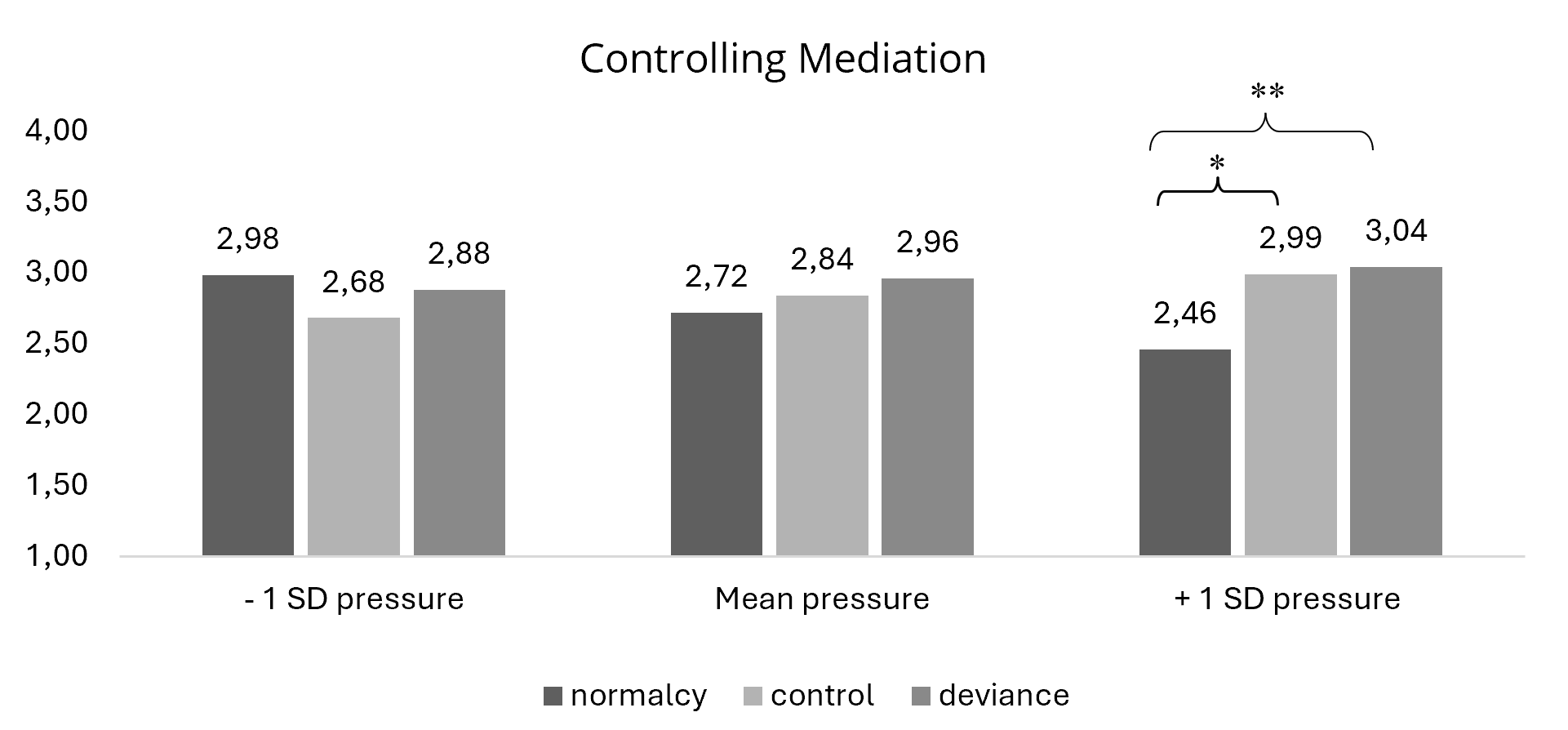
Figure 3. Interaction Between Condition (Normalcy vs. Control vs. Deviance)
and Different Levels of Perceived Pressure in the Prediction of Overprotection.
The Role of Parents’ Traditional values
When examining the role of parents’ traditional values, a first MANCOVA for parents’ sexting attitudes revealed a significant multivariate effect of both condition and parents’ traditional values. The interaction between condition and traditional values, however, was not significant (see Table 3). The univariate analysis of variance revealed specifically for positive attitudes a significant effect of condition, F(2, 303) = 6.50, p = .002, ηp2 = .04 and a significant effect of parents’ traditional values, F(1, 303) = 4.17, p = .042,
ηp2 = .01. Specifically, parents holding more traditional values reported more positive attitudes towards sexting, β = .04. For negative attitudes, both condition and traditional values did not have a significant effect, F(2, 303) = 2.84, p = .060, ηp2 = .02, and F(1, 303) = 0.01, p = .926, ηp2 < .001 respectively.
Table 3. F-Values, p-Values and ηp2-Values for the MANCOVA Examining the Moderating Role
of Traditional Values in Predicting Parents’ Attitudes and Practices.
|
|
Sexting attitudes |
Positive practices |
Negative practices |
||||||
|
F |
p |
ηp2 |
F |
p |
ηp2 |
F |
p |
ηp2 |
|
|
Condition |
3.31 |
.011 |
.02 |
0.82 |
.554 |
.01 |
1.75 |
.111 |
.02 |
|
Traditional values |
3.34 |
.037 |
.02 |
1.66 |
.177 |
.02 |
22.24 |
< .001 |
.18 |
|
Condition × Traditional values |
0.45 |
.770 |
.01 |
1.95 |
.071 |
.02 |
2.04 |
.059 |
.02 |
|
Note. Multivariate tests are based on Pillai’s trace. ηp2 represents partial eta squared. |
|||||||||
A second MANCOVA for parents’ positive parenting practices revealed no significant effects of condition or parents’ traditional values, while the interaction was also not significant either (see Table 3). The third MANCOVA for negative parenting practices revealed no significant effect of condition. However, as predicted, a significant main effect of traditional values was found, while the interaction between condition and traditional values was not significant (Table 3). Univariate analyses revealed that parents’ traditional values were significantly related to stronger intentions to engage in internet control F(1,303) = 66.38, p < .001, ηp2 = .18, controlling mediation F(1,303) = 23.09, p < .001,
ηp2 = .07 and in overprotection, F(1, 303) = 34.53, p < .001, ηp2 = .10. Parents endorsing more traditional values reported higher intended internet control, β = .48, controlling mediation, β = .32 and overprotection, β = .38.
Discussion
This study adopted an experimental design to test whether a normalcy as opposed to a deviance discourse around adolescent sexting elicits different parental attitudes and practices. We examined the effect of different discourses on parents’ positive vs. negative attitudes towards sexting; as well as on their intentions to adopt positive (i.e., autonomy-supportive mediation, trust) vs. negative practices (i.e., internet control, controlling mediation, overprotection) to regulate their teens’ sexting. Additionally, we investigated whether the effects of different discourses on parents’ attitudes and practices were moderated by the adolescents’ gender, parents’ perceived societal pressure to be perfect as a parent, and parents’ traditional values.
How do Different Discourses Influence Parents’ Attitudes and Practices Regarding Sexting?
Our analyses revealed one significant main effect of the different conditions, namely a positive effect of the normalcy condition on parents' positive attitudes towards sexting. Non-significant main effects are presented and discussed in the next paragraphs. When exposed to a discourse that frames sexting as a normal aspect of adolescent intimate relationships—recognizing both its benefits and potential risks—parents reported more positive attitudes. These included viewing sexting as a new form of flirting, as a part of adolescent development, and a safe sexual practice when done consensually and safely. This finding is particularly important as public media discourses mainly present teen sexting as a deviant behavior, and teenagers as lacking agency or engaging in sexting primarily under peer pressure (Korkmazer et al., 2019). Consequently, media narratives that adopt a deviance perspective tend to overlook consensual sexting, further stigmatizing youth sexting (De Ridder, 2017). Our findings underscore the potential of more nuanced media representations of sexual behaviors, such as adolescent sexting, to promote more positive parental attitudes—particularly when these representations highlight the importance of consent and youth’s sexual agency.
We did not find a significant effect of condition on parents’ negative attitudes. This may be due to parents’ potential previous exposure to more negative media portrayals of sexting (e.g., De Moor & Bergmans, 2020). Indeed, research shows that parents generally hold more negative attitudes towards this practice (e.g., Barrense-Dias et al., 2017), and prior media exposure may have contributed to attitude crystallization, leaving limited room for further attitudinal change—which is especially likely for moralizing issues, such as teen sexuality (Friedersdorf, 2015). Future research could assess parents’ knowledge and attitudes about sexting prior to the manipulation, to examine whether these factors influence the effects of experimentally manipulated media portrayals.
Our results showed no significant main effects of different media discourses on either positive or negative intended parenting practices. This could be due to the hypothetical nature of the measurements used to assess these practices. Another potential explanation for the lack of effect on positive practices, specifically, is that single media exposure effects may be insufficient to foster developmentally attuned parental responses to sexting. Positive parenting in this context may instead depend on other factors. For instance, autonomy-supportive parenting practices may be predicted by parents’ own need satisfaction, such as a greater sense of parental competence and autonomy in parenting (i.e., engagement in parenting because it is intrinsically rewarding; Distefano & Meuwissen, 2022). Future work can examine how these factors shape parents’ positive parenting, to shed more light on effective ways of addressing teenagers’ virtual intimacy. While no main effects were found for negative parenting, our analyses revealed some moderated effects of pressure on negative practices, which we discuss further in the next section.
Which Factors Moderate Parents’ Responses?
We found a significant moderating effect of parents’ perceived pressure to be a perfect parent. Contrary to our hypotheses of an interaction effect between pressure and a deviance discourse, we found that parents’ who perceive higher pressure and were exposed to a normalcy discourse reported significantly lower levels of intended negative parenting. First, this result suggests that mothers and fathers who experience more pressure to be perfect may be more sensible towards media “expert” information. This aligns with an intensive parenting ideology proposing that “good” parents should be aware and follow all expert advice and information (e.g., Faircloth, 2010; Hays, 1996). Second, this finding underscores the importance of more nuanced media portrayals of youth’s sexuality in promoting less negative, controlling parenting practices. When exposed to normalcy discourses around sexting, parents experiencing more pressure may be particularly inclined to be “good digital parents”, by refraining from constant surveillance of their teenagers’ online behavior (Wall, 2022), and supporting their freedom to sexual exploration and expression (Bay-Cheng, 2013).
Additionally, we found a main effect of higher perceived pressure on more positive attitudes towards sexting. Potentially, parents who feel greater pressure to “excel” in their parenting role may seek more online advice (Cino, 2022). They may be more informed about online phenomena amongst the youth, such as sexting, and adopt a more nuanced perspective on the issue. Additionally, parents experiencing higher pressure may develop more positive attitudes toward teen sexting as a way to perceive themselves as more modern, more technologically savvy and in touch with youth culture, compared to other parents (Wall, 2022).
Contrary to our hypotheses, we did not find any differences between parents of girls and boys in terms of their attitudes and practices towards sexting. Although past work has highlighted double standards concerning girls’ and boys’ sexuality (Endendijk et al., 2020), suggesting that parents control more carefully their daughters’ online activities (Confalonieri et al., 2020), we found no moderating effect of the adolescent’s gender. Substantial evidence shows that girls disproportionately suffer from the consequences of image-based sexual abuse (e.g., Anastassiou, 2017; Eleuteri et al., 2017), which we expected to inform parents’ negative attitudes and practices, specifically toward girls’ sexting. However, current work has underscored that boys are also vulnerable to such experiences, but often reluctant to talk about them due to masculinity norms (Hunehäll Berndtsson, 2022). In addition, recent media reports have begun to focus on male victims—including celebrities—of image-based sexual abuse (e.g., De Moor & Bergmans, 2020).
Given the above, parents of adolescents may be equally concerned or worried for both boys and girls, and not differentiate their responses and practices based on their teenager’s gender. This finding is also in line with a meta-analysis showing non-significant and/or only small effect sizes for gender-differentiated use of parental controlling strategies (Endendijk et al., 2016). Last, parents may seek to counteract sexual double standards related to teenagers’ sexting and sexual behavior by explicitly seeking to not differentiate between boys vs. girls in their parenting. In line with this, recent qualitative work on a small sample has revealed that parents of adolescents argue for a gender-neutral approach when addressing sexting with their sons and daughters (Lamprianidou, Venard, et al., 2025).
Last, as predicted, parents endorsing traditional values reported stronger intentions to use negative parenting practices, regardless of the media discourse to which they were exposed. Traditional values reflect a stronger inclination to preserve the past and resist change (Sagiv & Schwartz, 2022). Similarly, social conservatism—conceptually aligned with traditional values—is associated with higher vigilance towards uncertainty (Kerry & Murray, 2018). Together these factors may explain why, in the context of teen sexting, parents’ traditionalism may prompt more overinvolved, controlling parenting practices, and that regardless of our manipulation. Additionally, we found an unexpected link between parents’ traditional values and their positive attitudes towards sexting. This finding contradicts previous work showing that amongst young adults, stronger traditional values related positively to sexual conservatism (Guerra et al., 2012). Potentially, in our study, more traditional parents may exhibit more positive attitudes because they consider sexting as a safer alternative to real-life sexual relationships. Past research among parents of adolescents suggests that exchanging sexts is sometimes perceived as a form of “surrogate love” (Lamprianidou, Venard, et al., 2025), one that does not represent genuine physical closeness. As a consequence, parents holding traditional values may reason that such practices help to avoid the risks associated with sexual activity, such as unintended pregnancy or sexually transmitted infections. However, as this effect was relatively small, more research is needed to better understand it.
Limitations and Future Research
Despite its strengths, this study also carries some limitations. First, we utilized self-constructed media reports and relied on parental self-reports to assess parents’ practices. While we implemented multiple measures to assess the validity of our approach (e.g., manipulation checks, attention and memory checks, writing tasks, and content validity assessments), our results are indicative of parental behavioral intention, to establish how exposure to different media reports influence parents’ future practices. As our measures may not capture actual parental behavior, they should be treated with caution. Future research could benefit from observational methods with parent-adolescent dyads. Such approaches would allow us to causally examine how exposure to different media discourses would influence real-life parent-adolescent interactions about sexting and thus actual parental behavior. Second, our study was conducted in Belgium, a country that is considered rather liberal in terms of sexual rights (e.g., ranking third in the World Index of Moral Freedom, 2022). Future research should examine parents’ responses around sexting in different cultural contexts, which may differ in terms of sexual liberalism, and where individuals may hold more conservative views on adolescents’ sexuality. Third, our study focused on parents of older teenagers. Future research could examine how parents of younger adolescents respond to sexting, considering the distinct factors involved, such as legal considerations, different stage in terms of sexual development and potential variations in sexual and media literacy.
Practical Implications
Our findings carry implications about the ways in which media discourses may influence parents, especially those experiencing higher societal pressures to be perfect as parents. Our results emphasize the need for more nuanced media narratives when addressing youth-related issues such as adolescent intimacy, virtuality, and sexting—an approach that becomes even more relevant considering recent debates on the implications of adolescents’ social media use. From policy recommendations in France and Greece advocating for social media restrictions for those under 15 (see Présidence de la République, 2024; Lakasas, 2023) to the outright ban for adolescents under 16 in Australia (Archer, 2025), recent years have witnessed a growing deviance discourse around teenagers’ relation to virtuality. In this societal context, parents of adolescents may grow increasingly concerned about their children’s digital life. Promoting normalcy discourses, aiming at educating and empowering both youth and parents on aspects of virtual life, intimacy and sexting (e.g., Lievens, 2014; Walrave et al., 2018), can shape parents’ positive attitudes, and help reduce controlling and overprotective practices, which are ultimately counterproductive. Finally, our findings on the impact of different narratives on parents align with recent recommendations in media communication research on adolescence (Piotrowski, 2025). Rather than framing teen media use and concurrent phenomena as deviant and resorting to bans, which may drive young people toward less regulated and potentially riskier digital spaces, a more balanced approach is essential—both for parents and adolescents. In this regard, regulating platforms to create safer digital places for minors is also crucial (European Commission, 2025).
Conclusion
This experimental study revealed how a normalcy discourse on sexting elicits more positive attitudes among parents of adolescents, while specifically for parents experiencing more societal pressure to be a perfect parent, exposure to a normalcy discourse elicited less negative parenting practices. Additionally, parents holding more traditional values reported more negative parenting practices, regardless of the media discourse, while no differences emerged between parents of boys and parents of girls. Overall, these findings underscore the importance of more nuanced media representations of teen sexuality, as well as the role of parents’ traditional values in shaping their responses to adolescent sexting.
Conflict of Interest
The authors have no conflicts of interest to declare.
Use of AI Services
The authors declare they have not used any AI services to generate or edit any part of the manuscript or data.
Data Availability Statement
The dataset and codebook have been deposited in the Zenodo repository (https://zenodo.org/records/15309320) under restricted access due to sensitive information, but they will be made available upon request through the platform.
Acknowledgement
This research was supported by the European Research Council (ERC) under the European Union’s Horizon 2020 research and innovation program (grant agreement n° 950289). The authors would like to thank parents who kindly accepted to participate in the study.


This work is licensed under a Creative Commons Attribution-ShareAlike 4.0 International License.
Copyright © 2026 Elliana Lamprianidou, Koen Ponnet, Michel Walrave, Inès Kasmi, Stijn Van Petegem