
Associations between prior parental mediation and digital wellbeing among young adults: Incorporating both variable- and person-centered approaches
Vol.20,No.4(2026)

Amid pervasive digital connectivity, maintaining digital wellbeing is increasingly important for young people. Yet empirical research on the relationship between parental mediation and digital wellbeing remains limited. Incorporating both variable- and person-centered approaches, this study explores the associations between prior parental mediation, digital disconnection and digital wellbeing among young adults. Data were drawn from 994 Chinese first-year college students (aged between 15 to 22), a developmental stage marked by increasing autonomy over digital life. Variable-centered analyses indicated that only prior active mediation was significantly associated with digital wellbeing, with rule-based disconnection mediating this association. Latent profile analysis showed that most parents practiced different mediation strategies in a balanced way. Five distinct youth-perceived mediation patterns were identified: moderate-involved (37.12%), low-involved (31.79%), high-involved (16.00%), supportive (10.97%), and restriction-oriented (4.12%). Subsequent analysis showed that the high-involved and supportive mediation pattern was most favorable for digital wellbeing, while the low-involved
parental mediation; digital wellbeing; digital disconnection; person-centered approach; young adults
Wei Ren
School of Journalism and New Media, Xi'an Jiaotong University, Xi’an, China
Wei Ren is an Assistant Professor at the School of Journalism and New Media, Xi'an Jiaotong University. Her research focuses on digital media use and youth’s wellbeing.
Suchuan Ma
School of Marxism, Xi'an Jiaotong University, Xi’an, China
Suchuan Ma is a Professor at the School of Marxism, Xi'an Jiaotong University. His research interests include political communication, ideological education, etc.
Kaili Wang
School of Humanities and Social Sciences, Xi'an Jiaotong University, Xi’an, China
Kaili Wang is a PhD candidate at the School of Humanities and Social Science, Xi'an Jiaotong University. Her research focuses on the sociology of education.
Adigwe, I. (2021). Identifying the moderating and mediating variables in parental mediation practices in Nigerian families in the digital age. Social Media + Society, 7(3). https://doi.org/10.1177/20563051211033817
Bell, D. C., & Bell, L. G. (2018). Accuracy of retrospective reports of family environment. Journal of Child and Family Studies, 27(4), 1029–1040. https://doi.org/10.1007/s10826-017-0948-5
Büchi, M. (2024). Digital well-being theory and research. New Media & Society, 26(1), 172–189. https://doi.org/10.1177/14614448211056851
Cabello-Hutt, T., Cabello, P., & Claro, M. (2018). Online opportunities and risks for children and adolescents: The role of digital skills, age, gender and parental mediation in Brazil. New Media & Society, 20(7), 2411–2431. https://doi.org/10.1177/1461444817724168
Cao, S., & Li, H. (2023). A scoping review of digital well-being in early childhood: Definitions, measurements, contributors, and interventions. International Journal of Environmental Research and Public Health, 20(4), Article 3510. https://doi.org/10.3390/ijerph20043510
Chen, L., Liu, X., & Tang, H. (2023). The interactive effects of parental mediation strategies in preventing cyberbullying on social media. Psychology Research and Behavior Management, 16, 1009–1022. https://doi.org/10.2147/PRBM.S386968
Chen, L., & Shi, J. (2019). Reducing harm from media: A meta-analysis of parental mediation. Journalism & Mass Communication Quarterly, 96(1), 173–193. https://doi.org/10.1177/1077699018754908
Chen, V. H. H., & Chng, G. S. (2016). Active and restrictive parental mediation over time: Effects on youths’ self-regulatory competencies and impulsivity. Computers & Education, 98, 206–212. https://doi.org/10.1016/j.compedu.2016.03.012
Chou, H. L., Chou, C., & Chen, C. H. (2016). The moderating effects of parenting styles on the relation between the internet attitudes and internet behaviors of high-school students in Taiwan. Computers & Education, 94, 204–214. https://doi.org/10.1016/j.compedu.2015.11.017
Clark, L. S. (2011). Parental mediation theory for the digital age. Communication Theory, 21(4), 323–343. https://doi.org/10.1111/j.1468-2885.2011.01391.x
Corcoran, E., Gabrielli, J., Wisniewski, P., Little, T. D., & Doty, J. (2022). A measurement model of media parenting: Differences across parent and child reports and youth age and sex. Journal of Psychopathology & Behavioral Assessment, 44(3), 898–912. https://doi.org/10.1007/s10862-022-09962-y
Geber, S., Nguyen, M. H., & Büchi, M. (2024). Conflicting norms—How norms of disconnection and availability correlate with digital media use across generations. Social Science Computer Review, 42(3), 719–740. https://doi.org/10.1177/08944393231215457
Gimenez-Serrano, S., Garcia, F., & Garcia, O. F. (2022). Parenting styles and its relations with personal and social adjustment beyond adolescence: Is the current evidence enough? European Journal of Developmental Psychology, 19(5), 749–769. https://doi.org/10.1080/17405629.2021.1952863
Glatz, T., Crowe, E., & Buchanan, C. M. (2018). Internet-specific parental self-efficacy: Developmental differences and links to Internet-specific mediation. Computers in Human Behavior, 84, 8–17. https://doi.org/10.1016/j.chb.2018.02.014
Gomes, R., Mathew, J., Nair, S., Mulasi, A., & Yadav, P. (2023). Design and validation of the digital well-being scale. Journal of Theories and Research in Education, 18(1), 239–251. https://doi.org/10.6092/issn.1970-2221/16365
Grusec, J. E., & Goodnow, J. J. (1994). Impact of parental discipline methods on the child’s internalization of values: A reconceptualization of current points of view. Developmental Psychology, 30(1), 4–19. https://doi.org/10.1037/0012-1649.30.1.4
Guo, C., & Wan, B. (2022). The digital divide in online learning in China during the COVID-19 pandemic. Technology in Society, 71, Article 102112. https://doi.org/10.1016/j.techsoc.2022.102122
Hardy, S. A., Padilla‐Walker, L. M., & Carlo, G. (2008). Parenting dimensions and adolescents’ internalisation of moral values. Journal of Moral Education, 37(2), 205–223. https://doi.org/10.1080/03057240802009512
He, J., & Fan, X. (2018). Latent profile analysis. In V. Zeigler-Hill & T. K. Shackelford (Eds.), Encyclopedia of personality and individual differences (pp. 1–4). Springer International Publishing. https://doi.org/10.1007/978-3-319-28099-8_2316-1
Helsper, E. J. (2021). The digital disconnect: The social causes and consequences of digital inequalities. Sage Publication. https://doi.org/10.4135/9781526492982
Helsper, E. J., Veltri, G. A., & Livingstone, S. (2025). Parental mediation of children’ s online risks: The role of parental risk perception, digital skills and risk experiences. New Media & Society, 27(11), 5986–6005. https://doi.org/10.1177/14614448241261945
Huang, S., Lai, X., Li, Y., Wang, W., Zhao, X., Dai, X., Wang, H., & Wang, Y. (2023). Does parental media mediation make a difference for adolescents? Evidence from an empirical cohort study of parent-adolescent dyads. Heliyon, 9(4), Article e14897. https://doi.org/10.1016/j.heliyon.2023.e14897
Johnson, S. K. (2021). Latent profile transition analyses and growth mixture models: A very non-technical guide for researchers in child and adolescent development. New Directions for Child and Adolescent Development, 2021(175), 111–139. https://doi.org/10.1002/cad.20398
Jorge, A., Agai, M., Dias, P., & Martinho, L. C.-V. (2023). Growing out of overconnection: The process of dis/connecting among Norwegian and Portuguese teenagers. New Media & Society, 26(11), 6779–6795. https://doi.org/10.1177/14614448231159308
Ke, X., & Wang, Z. (2025). The longitudinal impact of parenting styles on pathological internet use among college students: The mediating role of rumination and the moderating role of environmental sensitivity. Behavioral Sciences, 15(11), Article 1549. https://doi.org/10.3390/bs15111549
Koch, T., Laaber, F., & Florack, A. (2024). Socioeconomic status and young people’s digital maturity: The role of parental mediation. Computers in Human Behavior, 154, Article 108157. https://doi.org/10.1016/j.chb.2024.108157
Kyriazos, T., & Poga-Kyriazou, M. (2023). Applied psychometrics: Estimator considerations in commonly encountered conditions in CFA, SEM, and EFA practice. Psychology, 14(5), 799–828. https://doi.org/10.4236/psych.2023.145043
Liu, Q., & Wu, J. (2024). What children learn in a digital home: the complex influence of parental mediation and smartphone interference. Education and Information Technologies, 29(5), 6273–6291. https://doi.org/10.1007/s10639-023-12071-2
Livingstone, S., Mascheroni, G., & Stoilova, M. (2023). The outcomes of gaining digital skills for young people’s lives and wellbeing: A systematic evidence review. New Media & Society, 25(5), 1176–1202. https://doi.org/10.1177/14614448211043189
Livingstone, S., Ólafsson, K., Helsper, E. J., Lupiáñez-Villanueva, F., Veltri, G. A., & Folkvord, F. (2017). Maximizing opportunities and minimizing risks for children online: The role of digital skills in emerging strategies of parental mediation. Journal of Communication, 67(1), 82–105. https://doi.org/10.1111/jcom.12277
Lo Cricchio, M. G., Palladino, B. E., Eleftheriou, A., Nocentini, A., & Menesini, E. (2022). Parental mediation strategies and their role on youths’ online privacy disclosure and protection: A systematic review. European Psychologist, 27(2), 116–130. https://doi.org/10.1027/1016-9040/a000450
Lukavská, K., Hrabec, O., Lukavský, J., Demetrovics, Z., & Király, O. (2022). The associations of adolescent problematic internet use with parenting: A meta-analysis. Addictive Behaviors, 135, Article 107423. https://doi.org/10.1016/j.addbeh.2022.107423
Matthes, J., Karsay, K., Hirsch, M., Stevic, A., & Schmuck, D. (2022). Reflective smartphone disengagement: Conceptualization, measurement, and validation. Computers in Human Behavior, 128, Article 107078. https://doi.org/10.1016/j.chb.2021.107078
Mayen, S., & Camerini, A.-L. (2025). Exploring parental mediation trajectories and their associations with mental health and autonomy in adolescents: A latent transition analysis. New Media & Society. Advance online publication. https://doi.org/10.1177/14614448251391731
Modecki, K. L., Goldberg, R. E., Wisniewski, P., & Orben, A. (2022). What is digital parenting? A systematic review of past measurement and blueprint for the future. Perspectives on Psychological Science, 17(6), 1673–1691. https://doi.org/10.1177/17456916211072458
Muthén, L., & Muthén, B. (2015). Mplus Version 7 user’s guide. Muthén & Muthén.
Nathanson, A. I. (2008). Parental mediation strategies. In W. Donsbach (Ed.), The international encyclopedia of communication https://doi.org/10.1002/9781405186407.wbiecp007
Navarro, J. L., Fletcher, A., & Jensen, M. (2023). A bifactor model of U.S. parents’ attitudes regarding mediation for the digital age. Journal of Children and Media, 17(1), 17–36. https://doi.org/10.1080/17482798.2022.2123012
Navarro, J. L., & Jensen, M. (2026). Styles of digital parental mediation: A multi-group person-centered approach. Journal of Child and Family Studies, 35(2), 481–501. https://doi.org/10.1007/s10826-025-03229-2
Nguyen, M. H. (2021). Managing social media use in an “always-on” society: Exploring digital wellbeing strategies that people use to disconnect. Mass Communication and Society, 24(6), 795–817. https://doi.org/10.1080/15205436.2021.1979045
Nguyen, M. H., Büchi, M., & Geber, S. (2024). Everyday disconnection experiences: Exploring people’s understanding of digital well-being and management of digital media use. New Media & Society, 26(6), 3657–3678. https://doi.org/10.1177/14614448221105428
Nguyen, M. H., & Hargittai, E. (2024). Digital disconnection, digital inequality, and subjective well-being: A mobile experience sampling study. Journal of Computer-Mediated Communication, 29(1), Article zmad044. https://doi.org/10.1093/jcmc/zmad044
Ong, Z. X., Dowthwaite, L., Perez Vallejos, E., Rawsthorne, M., & Long, Y. (2021). Measuring online wellbeing: A scoping review of subjective wellbeing measures. Frontiers in Psychology, 12, Article 616637. https://doi.org/10.3389/fpsyg.2021.616637
Panek, E. (2014). Evidence for the effects of parental mediation and childhood media use on US college students’ social media use. Journal of Children and Media, 8(2), 127–145. https://doi.org/10.1080/17482798.2013.825213
Parry, D. A., Kuit, C., Murray, A., & van der Westhuizen, A. (2025). Connect to disconnect: What an online community for digital disconnection can tell us about digital well-being. New Media & Society. Advance online publication. https://doi.org/10.1177/14614448251362436
Parry, D. A., le Roux, D. B., Morton, J., Pons, R., Pretorius, R., & Schoeman, A. (2023). Digital wellbeing applications: Adoption, use and perceived effects. Computers in Human Behavior, 139, Article 107542. https://doi.org/10.1016/j.chb.2022.107542
Popplewell, D. C., Carterollie, D. K., & Rainey, K. M. (2025). “I don’t think they even knew what to tell me:” Social media mediation and emerging adult social media outcomes. The Family Journal. https://doi.org/10.1177/10664807251329602
Priya, N., & Maheswari, P. U. (2025). Influence of different parental mediation strategies on adolescents’ hedonistic smartphone use: Parent–adolescent reports. Mobile Media & Communication, 13(1), 107–128. https://doi.org/10.1177/20501579241260649
Radanielina-hita, M. L. (2015). Parental mediation of media messages does matter: More interaction about objectionable content is associated with emerging adults’ sexual attitudes and behaviors. Health Communication, 30, 784–798. https://doi.org/10.1080/10410236.2014.900527
Ren, W., & Huang, R. (2026). Shield or shackle? Exploring the paradoxical role of restrictive mediation in adolescent depression. Health Communication, 41(1), 187–199. https://doi.org/10.1080/10410236.2025.2592117
Ren, W., & Zhu, X. (2022). Parental mediation and adolescents’ internet use: The moderating role of parenting style. Journal of Youth and Adolescence, 51(8), 1483–1496. https://doi.org/10.1007/s10964-022-01600-w
Ren, W., Zhu, X., & Huang, R. (2026). Parental mediation patterns and children’s digital resilience in rural China: A latent profile analysis. International Journal of Social Welfare, 35(2), Article e70062. https://doi.org/10.1111/ijsw.70062
Ren, W., Zhu, X., & Yang, J. (2022). The SES-based difference of adolescents’ digital skills and usages: An explanation from family cultural capital. Computers & Education, 177, Article 104382. https://doi.org/10.1016/j.compedu.2021.104382
Rodríguez-de-Dios, I., van Oosten, J. M. F., & Igartua, J. J. (2018). A study of the relationship between parental mediation and adolescents’ digital skills, online risks and online opportunities. Computers in Human Behavior, 82, 186–198. https://doi.org/10.1016/j.chb.2018.01.012
Roffarello, A. M., & De Russis, L. (2023). Achieving digital wellbeing through digital self-control tools: A systematic review and meta-analysis. ACM Transactions on Computer-Human Interaction, 30(4), Article 53. https://doi.org/10.1145/3571810
Rosič, J., Carbone, L., Vanden Abeele, M. M. P., Lobe, B., & Vandenbosch, L. (2024). Measuring digital well-being in everyday life among Slovenian adolescents: The Perceived Digital Well-Being in Adolescence Scale. Journal of Children and Media, 18(1), 99–119. https://doi.org/10.1080/17482798.2023.2272651
Sciacca, B., Laffan, D. A., O’Higgins Norman, J., & Milosevic, T. (2022). Parental mediation in pandemic: Predictors and relationship with children’s digital skills and time spent online in Ireland. Computers in Human Behavior, 127, 107081. https://doi.org/10.1016/j.chb.2021.107081
Senkbeil, M. (2023). How well does the digital home learning environment predict ICT literacy and ICT self-efficacy? Comparing the predictive power of adolescent and parent reports. Computers & Education, 207, Article 104937. https://doi.org/10.1016/j.compedu.2023.104937
Spurk, D., Hirschi, A., Wang, M., Valero, D., & Kauffeld, S. (2020). Latent profile analysis: A review and “how to” guide of its application within vocational behavior research. Journal of Vocational Behavior, 120, Article 103445. https://doi.org/10.1016/j.jvb.2020.103445
Steinberg, L., Lamborn, S. D., Darling, N., Mounts, N. S., & Dornbusch, S. M. (1994). Over‐time changes in adjustment and competence among adolescents from authoritative, authoritarian, indulgent, and neglectful families. Child Development, 65(3), 754–770. https://doi.org/10.1111/j.1467-8624.1994.tb00781.x
Steinfeld, N. (2021). Parental mediation of adolescent Internet use: Combining strategies to promote awareness, autonomy and self-regulation in preparing youth for life on the web. Education and Information Technologies, 26(2), 1897–1920. https://doi.org/10.1007/s10639-020-10342-w
Tan, C. Y., Xu, N., Liang, M., & Li, L. (2025). Meta-analysis of associations between digital parenting and children’s digital wellbeing. Educational Research Review, 48, Article 100699. https://doi.org/10.1016/j.edurev.2025.100699
Togar, E. M., Antheunis, M. L., Vanden Abeele, M. M. P., & De Leyn, T. (2024). Caught between autonomy and control: How Liberian teenagers perceive and navigate parental mediation of their mobile phone use. Journal of Children and Media, 19(2), 344–361. https://doi.org/10.1080/17482798.2024.2418520
Twenge, J. M., Joiner, T. E., Rogers, M. L., & Martin, G. N. (2018). Increases in depressive symptoms, suicide-related outcomes, and suicide rates among U.S. adolescents after 2010 and links to increased new media screen time. Clinical Psychological Science, 6(1), 3–17. https://doi.org/10.1177/2167702617723376
Valcke, M., Bonte, S., De Wever, B., & Rots, I. (2010). Internet parenting styles and the impact on Internet use of primary school children. Computers & Education, 55(2), 454–464. https://doi.org/10.1016/j.compedu.2010.02.009
Valkenburg, P. M., Krcmar, M., Peeters, A. L., & Marseille, N. M. (1999). Developing a scale to assess three styles of television mediation: “Instructive mediation,” “restrictive mediation,” and “social coviewing.” Journal of Broadcasting & Electronic Media, 43(1), 52–66. https://doi.org/10.1080/08838159909364474
van Deursen, A. J. A. M., & Helsper, E. J. (2015). The third-level digital divide: Who benefits most from being online? In L. Robinson, S.R. Cotten, & J. Schulz (Eds.), Communication & information technologies annual (Vol. 10, pp. 29–52). Emerald Group Publishing Limited. https://doi.org/10.1108/s2050-206020150000010002
van Deursen, A. J. A. M., & Helsper, E. J. (2018). Collateral benefits of Internet use: Explaining the diverse outcomes of engaging with the Internet. New Media & Society, 20(7), 2333–2351. https://doi.org/10.1177/1461444817715282
van Dijk, J. A. G. M. (2020). The digital divide. Polity Press.
Vanden Abeele, M. M. P. (2021). Digital wellbeing as a dynamic construct. Communication Theory, 31(4), 932–955. https://doi.org/10.1093/ct/qtaa024
Vanden Abeele, M. M. P., Halfmann, A., & Lee, E. W. J. (2022). Drug, demon, or donut? Theorizing the relationship between social media use, digital well-being and digital disconnection. Current Opinion in Psychology, 45, Article 101295. https://doi.org/10.1016/j.copsyc.2021.12.007
Wei, K. K., Teo, H. H., Chan, H. C., & Tan, B. C. Y. (2011). Conceptualizing and testing a social cognitive model of the digital divide. Information Systems Research, 22(1), 170–187. https://doi.org/10.1287/isre.1090.0273
White, S. R., Rasmussen, E. E., & King, A. J. (2015). Restrictive mediation and unintended effects: Serial multiple mediation analysis explaining the role of reactance in us adolescents. Journal of Children and Media, 9(4), 510–527. https://doi.org/10.1080/17482798.2015.1088873
Young, R., & Tully, M. (2022). Autonomy vs. control: Associations among parental mediation, perceived parenting styles, and U.S. adolescents’ risky online experiences. Cyberpsychology: Journal of Psychosocial Research on Cyberspace, 16(2), Article 5. https://doi.org/10.5817/CP2022-2-5
Zhao, L., Cao, C., Li, Y., & Li, Y. (2022). Determinants of the digital outcome divide in E-learning between rural and urban students: Empirical evidence from the COVID-19 pandemic based on capital theory. Computers in Human Behavior, 130, Article 107177. https://doi.org/10.1016/j.chb.2021.107177
Authors' Contribution
Wei Ren: conceptualization, data curation, formal analysis, funding acquisition, methodology, writing—original draft, writing—review & editing. Suchuan Ma: project administration, data curation, investigation, methodology. Kaili Wang: data curation, investigation.
Editorial Record
First submission received:
July 23, 2025
Revisions received:
January 15, 2026
April 28, 2026
June 5, 2026
Accepted for publication:
June 5, 2026
Editor in charge:
Lenka Dedkova
Introduction
Digital technologies have fully integrated into our daily lives, especially among younger generations. Growing up in a digitalized era, it is difficult for them to imagine a life without connectivity. This “constant connectivity” presents significant challenges for the wellbeing of youth as well as parenting strategies. Despite its offering of autonomy, constant connectivity can be distracting, potentially diminishing one’s efficiency in work and study and damaging their physical and mental health (Büchi, 2024; Vanden Abeele, 2021). The question of how parents can help optimize online opportunities for their youth while minimizing online risks has been a persistent public concern (Livingstone et al., 2023). To date, many studies have focused on risk reduction, exploring whether parental mediation strategies could effectively reduce the amount of Internet use, its overuse, cyberbullying or more general online risks (L. Chen et al., 2023; Lukavská et al., 2022; Ren & Zhu, 2022). The risk-and-harm discourse has notable limitations. It tends to emphasize adolescents’ vulnerability and often overlooks their agency. In response, an increasing number of studies have examined the positive or adaptive outcomes of parental mediation. These include increased online opportunities (Rodríguez-de-Dios et al., 2018), improved digital literacy (Ren et al., 2022; Senkbeil, 2023), capital-enhancing engagement (Huang et al., 2023), and enhanced online self-regulation (V. H. H. Chen & Chng, 2016). Despite this growing attention, few studies have explicitly addressed digital wellbeing, a relatively new term that denotes a subjective state of positive functioning in the digital realm (Ong et al., 2021; Vanden Abeele, 2021; Vanden Abeele et al., 2022).
This study investigates how parental mediation is associated with digital wellbeing among young adults, focusing on first-year Chinese college students. Parenting practices are widely recognized as crucial for personal and social adjustment beyond adolescence, even after direct parental involvement is over (Gimenez-Serrano et al., 2022; Steinberg et al., 1994). Through everyday interactions with children, such as guidance and restriction, parents facilitate the gradual internalization of externally imposed norms and behavioral expectations into individuals’ own values and standards (Grusec & Goodnow, 1994). Consistent with broader socialization processes, the central aim of parental mediation lies in promoting this internalization. Adolescence represents a critical developmental period for such internalization, during which parental rules, values, and boundaries are incorporated into individuals’ cognitive frameworks (Hardy et al., 2008). These internalized schemas continue to guide behavior after leaving home, shaping how young adults manage their digital lives (Ke & Wang, 2025).
Notably, during middle and high school, Chinese students often endure a rigid and intense schedule, with limited autonomy in using digital devices. Regardless of variation in parental mediation, most schools ban the use of such devices, and students spend the majority of their time within school settings, including structured evening study sessions (Liu & Wu, 2024)1. Under such conditions, variations in digital experiences are limited, which may constrain the visibility of associations between parental mediation and digital wellbeing. This does not imply that parental mediation is less relevant. Rather, in such structured contexts, its influence is more likely to be internalized, shaping norms and self-regulatory orientations rather than observable practices. In contrast, university entry brings greater autonomy and unrestricted access to digital devices, making this phase a more accurate reflection of their digital lives. As they are in a transitional stage toward adulthood, first-year college students are also positioned to provide relatively accurate retrospective assessments of their earlier digital home environment, including parental mediation. Accordingly, this stage is suited for assessing the long-term associations between prior parental mediation and current digital wellbeing.
To date, empirical research on parental mediation has only rarely examined such long-term associations (Panek, 2014; Popplewell et al., 2025). Even fewer studies have considered digital wellbeing as an outcome variable. In addition, the mechanisms underlying this association remain insufficiently specified. Existing studies seldom explain how parental mediation may translate into adaptive digital outcomes. To address this gap, this study introduces the notion of digital disconnection - the intentional act of distancing oneself from digital devices rather than from specific platforms or activities—as a mediating process (Matthes et al., 2022; Nguyen et al., 2024). This allows an exploration of whether parental mediation is associated with digital wellbeing through young people’s more conscious management of their digital media use. A further limitation of prior research is its reliance on either variable-centered or person-centered approaches regarding parental mediation. This study adopts both approaches. The variable-centered approach explores the associations between specific parental mediation strategies and digital wellbeing. The person-centered approach employs Latent Profile Analysis (LPA) to identify distinct parental mediation patterns. The integration recognizes that parental mediation is often enacted through combinations of strategies rather than in isolation (V. H. H. Chen & Chng, 2016; Mayen & Camerini, 2025). It enables us to explore whether certain combinations of strategies are particularly associated with higher levels of digital wellbeing, with or without the mediating role of digital disconnection. By integrating both approaches, the study offers a comprehensive account of how distinct parental mediation strategies and their combined patterns relate to digital wellbeing.
Literature Review
Theoretical Foundation of Digital Wellbeing
The concept of “digital wellbeing” has garnered significant attention in recent years, yet scholars provide quite diverse definitions (for a review, see Cao & Li, 2023). In simplest terms, it refers to “being well online”, emphasizing the importance of fostering positive engagement and leveraging digital technologies to enhance our lives (Ong et al., 2021; Vanden Abeele, 2021). This theoretical concept intersects with three main research areas. First, research documents the paradox of connectivity. While ubiquitous connectivity can enhance autonomy, it also brings informational overload, reduces productivity, or simply instills a feeling of meaningless (Matthes et al., 2022; Nguyen et al., 2024; Twenge et al., 2018). This paradox raises the urgent quest for digital wellbeing, described by Vanden Abeele (2021) as “… experiencing maximal controlled pleasure and functional support, together with minimal loss and functional impairment” (p.938). Second, the term digital wellbeing emerges as a potential solution to the long-standing academic debate over the ambiguous relationship between digital media use and generalized wellbeing (Ong et al., 2021). In the context of youth’s highly digitalized lives, it is a crucial step to merge the concepts of digital media use and wellbeing to focus on the quality of online experiences (Rosič et al., 2024). Third, the digital divide research has long called for a shift from focusing on disparities in access, usage or skills towards examining the outcomes of digital engagement, the so-called “third-level digital divide” (Helsper, 2021; van Dijk, 2020). In this vein, the digital outcomes are operationalized as the positive feelings people obtain across various life domains through digital media, including both the hedonic (van Deursen & Helsper, 2015, 2018) and eudemonic experiences (Guo & Wan, 2022; Wei et al., 2011). The term “digital wellbeing” offers a more nuanced perspective than the broader concept of digital outcomes. Specifically, in this study, digital wellbeing is conceptualized as a subjective and experiential construct, reflecting individuals’ positive fulfillment derived from digital experiences.
Parental Mediation Strategies and Digital Wellbeing Among Young Adults
Parental mediation encompasses a broad spectrum of strategies employed by parents to regulate, monitor and guide their children’s engagement with media (Clark, 2011; Valkenburg et al., 1999). Regarding digital media, scholars most commonly differentiate between restrictive and active mediation (Huang et al., 2023; Lukavská et al., 2022; Ren & Zhu, 2022). Restrictive mediation involves setting rules on children’s online activities, such as time spent online or content types, while active mediation entails evaluative conversations between parents and children about digital practices (Nathanson, 2008). Beyond these two strategies, studies have identified additional practices, including technical mediation (e.g., filters or monitoring software), monitoring, and child-initiated mediation (Helsper et al., 2025; Priya & Maheswari, 2025). However, the boundaries among these practices are not always distinct, and their empirical structure varies across studies. For example, Livingstone et al. (2017) revealed that active mediation, monitoring, and technical controls loaded on a single dimension, termed “enabling mediation”. In contrast, other studies reported these practices loading on separate factors (Corcoran et al., 2022; Senkbeil, 2023). Still others found that restrictive mediation and monitoring loaded onto the same factor (Glatz et al., 2018; Navarro et al., 2023). For parsimony, this study adopts a two-dimensional measurement rationale grounded in prior factor-analytic evidence, distinguishing active and restrictive-monitoring mediation.
Parental mediation stems from the intent of parents to mitigate the adverse impacts of media on their children (Clark, 2011). Following this risk-and-harm paradigm, a substantial body of research has examined the effectiveness of mediation strategies in reducing the amount of media use or exposure to online risks (See review and meta-analysis: L. Chen & Shi, 2019; Lukavská et al., 2022; Tan et al., 2025). Overall, findings have been mixed. In L. Chen and Shi’s (2019) meta-analysis of 52 empirical studies, restrictive mediation primarily functioned in decreasing the amount of time children spend on media, whereas active mediation was more effective in reducing the incidence of media-related risks. Other research, however, indicated that neither active nor restrictive mediation was effective for these outcomes (Huang et al., 2023; Lukavská et al., 2022). Moreover, existing evidence regarding associations between parental mediation and online risk exposure or usage patterns is often cross-sectional and may be mediated or conditional, depending on contextual factors and individual differences (Radanielina-hita, 2015; Young & Tully, 2022). For example, it is shown that restricted media use in childhood had no lasting effects on amounts of social media use among college students (Panek, 2014).
While digital wellbeing is relatively new in parental mediation research, the broader call for shifting attention toward positive outcomes is not new (Modecki et al., 2022). This line of research extends beyond examining whether mediation reduces usage or risk exposure, instead focusing on the online opportunities and meaningful engagements. Accordingly, concepts such as digital self-efficacy, confidence, skills, resilience, and maturity have been used to capture positive outcomes associated with parental mediation (Koch et al., 2024; Ren et al., 2026). Viewed through a positive developmental lens, restrictive-monitoring mediation is typically conceptualized as a protection-oriented strategy that may limit children from fully engaging with digital environments. Some studies reported that higher levels of restrictive mediation were associated with lower digital literacy (Cabello-Hutt et al., 2018) and fewer online activities (Steinfeld, 2021). But recent meta-analytic evidence suggested that restrictive mediation and monitoring were positively associated with youth’s positive digital outcomes (e.g., online opportunities, digital literacy, skills, resilience), although these associations were generally weaker than those observed for active mediation (Tan et al., 2025). One possible explanation for these mixed findings is that restrictive-monitoring mediation may operate differently across developmental stages. While external control may constrain immediate opportunities for autonomous engagement, it may also provide structure that contributes to the development of orderly routines and self-regulatory orientations, which may in turn, positively relate to digital wellbeing over time.
Active mediation is more directly aligned with the promotion of autonomy. Adolescents who reported experiencing more active mediation also reported a wider range of online activities (Rodríguez-de-Dios et al., 2018) and a higher level of engagement in online activities for personal development rather than leisure (Zhao et al., 2022). Moreover, it was found that active mediation was positively related to adolescents’ digital literacy (Cabello-Hutt et al., 2018) as well as digital maturity (i.e., use digital technologies in ways which support individual development and integration into sociality; Koch et al., 2024). As such, active mediation is expected to support digital wellbeing by framing online engagement as something that can be reflected upon and negotiated, and thus better equip young people to navigate risks and opportunities (Lo Cricchio et al., 2022). Hence, we propose that,
H1a: Prior restrictive-monitoring mediation is positively associated with digital wellbeing.
H1b: Prior active mediation is positively associated with digital wellbeing.
The Mediating Role of Digital Disconnection
In the scholarly domain, there is a developing research field parallel to that studying digital wellbeing, which explicitly focuses on “digital disconnection.” It is defined as the voluntary and intentional act of refraining from using digital devices (Geber et al., 2024; Nguyen et al., 2024). Prior qualitative studies have mapped a variety of digital disconnection practices, ranging from explicit nonuse of digital media, to digital detox interventions to more nuanced strategies to limit one’s connectivity (Jorge et al., 2023; Nguyen, 2021). Recent quantitative research has begun to identify how prevalent these practices are and further distinguish two typical types of daily digital disconnection strategies: rule-based and feature-based disconnection (Nguyen et al., 2024). The former involves individuals establishing their own guidelines or protocols to limit their digital media use, whereas the latter refers to the use of existing features provided by apps or devices to disconnect (Nguyen et al., 2024). This study includes both types of everyday forms of digital disconnection. It is distinct from general self-regulation because it specifically targets disengaging from devices, rather than regulating broader cognitive or behavioral habits.
Digital disconnection may entail certain cost, such as reduced access to social support, fewer opportunities and a diminished sense of belonging, particularly when it involves involuntary withdrawal. However, in contexts characterized by pervasive or even excessive connectivity, when digital disconnection is intentional, self-regulated, and aligned with individual goals, it is less likely to reflect social withdrawal and is better understood as an adaptive strategy. Within the discourse on the displacement hypothesis, digital media use or connection is often criticized for supplanting meaningful offline life to the detriment of wellbeing (Nguyen & Hargittai, 2024). From this perspective, digital disconnection is framed as a potential remedy. It allows individuals to reallocate their free time to activities perceived as more meaningful while fostering a sense of control over their digital life, serving as a solution to the perceived negative effects. Accordingly, digital disconnection is expected to benefit both overall and digital wellbeing. By stepping back from digital environments, individuals may gain a clearer perspective on their technology use patterns, reduce dependency, and ultimately foster a balance between online and offline lives (Matthes et al., 2022; Roffarello & De Russis, 2023).
Previous studies have documented that the adoption of digital self-control tools (i.e., feature-based disconnection) could help users remain on tasks and focus on work (Parry et al., 2023). Rule-based disconnection is complementary to feature-based disconnection as it emphasizes personal autonomy and self-regulation instead of technological aid (Nguyen et al., 2024). This type of managing digital engagement is inherently proactive and reflective. Moreover, rule-based disconnection represents a mindful approach toward digital media. This mindfulness can lead to more meaningful and purposeful use of technology, making digital media a tool for enhancement rather than a source of distraction (Vanden Abeele, 2021). Therefore, it is assumed,
H2: Rule-based disconnection is positively associated with digital wellbeing.
H3: Feature-based disconnection is positively associated with digital wellbeing.
Regarding the relationship between parental mediation strategies and digital disconnection, Liu and Wu (2024) found that parental mediation was a positive predictor of online self-regulation. For research distinguishing between restrictive and active mediation, a three-year longitudinal study on 1,086 children demonstrated that both restrictive and active mediation at T1 positively predicted youths’ online self-regulation at T3 while negatively predicting impulsivity levels (V. H. H. Chen & Chng, 2016). In other words, parental mediation may facilitate the transition from external regulation, where parents set the rules and boundaries, to internal regulation, i.e., rule-based disconnection, where individuals independently manage their digital engagement. In terms of feature-based disconnection, prior research documented that adolescents who have experienced active mediation tended to engage in more proactive exploration of the functionalities offered by digital platforms (Steinfeld, 2021). These explorations could help them learn more about the digital self-control tools. Hence, active mediation may serve as a precursor to feature-based digital disconnection. Restrictive-monitoring mediation, by contrast, may have a negative effect on the adoption of feature-based digital disconnection, as it was found to be a negative predictor of youths’ experimentation and autonomy in digital engagement (Rodríguez-de-Dios et al., 2018). Thus,
H4a: Prior restrictive-monitoring mediation is positively associated with rule-based disconnection
H4b: Prior restrictive-monitoring mediation is negatively associated with feature-based disconnection.
H5a: Prior active mediation is positively associated with rule-based disconnection.
H5b: Prior active mediation is positively associated with feature-based disconnection.
Collectively, digital disconnection is considered a core pathway through which digital wellbeing is achieved, and it may also serve as a bridge linking parental mediation and digital wellbeing. By shaping individuals’ opportunities for, and habitual patterns of, device use, parental mediation may either facilitate or constrain the development of self-regulatory capacities for managing digital engagement. These capacities, in turn, may be reflected in young adults’ ability to intentionally disconnect from digital devices when needed, thereby supporting balanced use and wellbeing. These considerations raise the following question,
Research Question 1(RQ1): Are prior parental mediation strategies associated with digital wellbeing indirectly through digital disconnection?
Comparing Parental Mediation Strategies With Parental Mediation Patterns
Using a variable-centered approach, we examine the associations between specific parental mediation strategies, digital disconnection and digital wellbeing. In this approach, these strategies are operationalized as two constructs: active and restrictive-monitoring mediation. Variable-centered analyses are useful for estimating the relatively independent effects of different mediation strategies and for testing clear, theory-driven analytical models. However, such approaches rest on the assumption that mediation strategies operate additively and similarly across individuals. Person-centered methods (e.g., cluster analysis and mixture modeling) allow for the identification of qualitatively distinct patterns and better capture the complexity of family system. Importantly, while it is theoretically important to distinguish the relative effects of different strategies, in practice parents rarely rely on a single strategy in isolation. Instead, active mediation, restrictive-monitoring mediation, and related practices are often enacted simultaneously (V. H. H. Chen & Chng, 2016). A person-centered approach is therefore well suited to capturing these patterns of mediation strategies within families. For example, based on a sample of 270 high school students, Chou et al. (2016) identified three digital parenting styles resembling general parenting typologies: authoritative (high active high restrictive), permissive (high active low restrictive), and neglecting. From parents’ perspective, Valcke et al. (2010) observed a prevalence of authoritative digital parenting (59.4%) in Belgium family based on cutoff scores to classify these patterns. More recently, based on a sample of 555 parents in United States, Navarro and Jensen (2026) identified four latent profiles of digital parental mediation styles: one “high” and one “average” digital mediation style, and two “low” involvement styles, differentiated by parents’ emphasis on mediation by modeling. Using three-wave panel data from 717 Swiss adolescents, Mayen and Camerini (2025) observed three distinct parental mediation classes: enforcing & engaged approach (high active and restrictive); hands-off approach (low involvement across all strategies); and moderate approach (moderate levels across diverse strategies).
Specific combinations of mediation strategies can have differentiated implications. For example, Sciacca et al. (2022) found that children developed more digital skills when parents combined high levels of both active and restrictive mediation, whereas time spent online was lowest when high restrictive mediation co-occurred with low active mediation. However, due to contextual differences, it is difficult to derive precise expectations regarding which parental mediation patterns will emerge among Chinese young adults. In the Chinese context, parental control is often culturally framed as care and responsibility, which may reduce the likelihood of certain configurations, such as highly restrictive but low active mediation (Chou et al., 2016). Meanwhile, recent studies conducted in Western contexts have also not reported such a pattern, often identifying patterns characterized by uniformly high or uniformly low levels of mediation strategies, rather than asymmetric combinations (Mayen & Camerini, 2025; Navarro & Jensen, 2026). Given these contextual and empirical uncertainties, this study addresses the following research questions,
RQ2: What prior parental mediation patterns can be identified among Chinese young adults using LPA?
RQ3: How are different prior parental mediation patterns associated with digital wellbeing?
RQ4: Does digital disconnection help explain the associations between prior parental mediation patterns and digital wellbeing?
Taken together, the main purpose of the study is to explore the relationships among prior parental mediation, digital disconnection and digital wellbeing of young adults. We apply both variable-centered and person-centered approaches to prior parental mediation, thereby distinguishing not only between parental mediation strategies (i.e., active and restrictive-monitoring mediation) but also identifying the empirical-derived clusters of those strategies to observe natural patterns of parental mediation. Our analytical framework is presented in Figure 1.
Figure 1. Analytical Framework of the Study.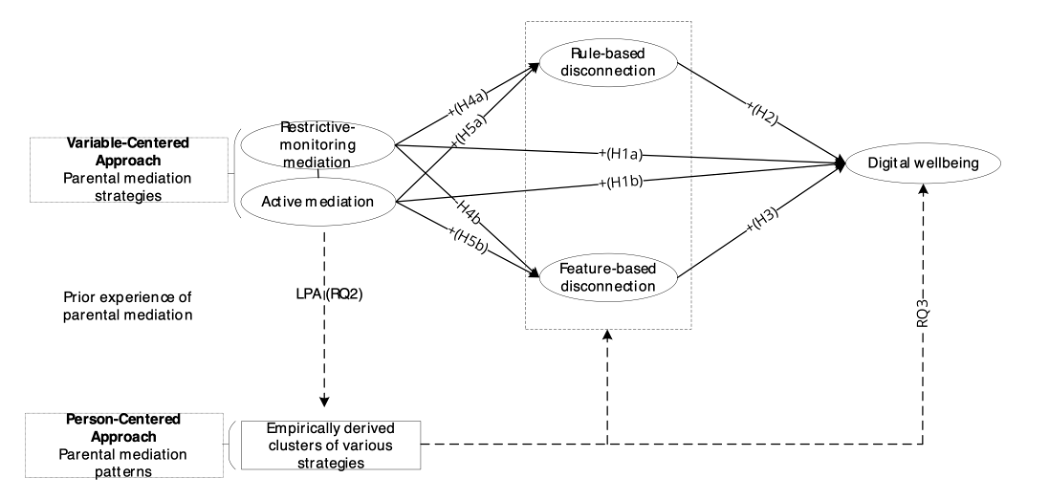
Note. H denotes hypotheses; RQ denotes research questions. Dashed lines indicate associations examined as research questions without specific a priori hypotheses.
Methods
Data Collection and Sample
Data for the current study were collected at Xi’an, a provincial city located in western China, using an online questionnaire titled “The Digital Life Survey”. Following two rounds of pretesting, the formal survey was administered to first-year college students at four different universities, at the end of their first semester, from December 13 to December 18, 2023. The universities were purposively selected to represent different institutional tiers within the Chinese higher education system. At this time point, students have acclimated to their new academic environment for over three months, which was sufficient for them to establish new digital routines. Additionally, their recent departure from home ensured that their memories of parenting practices were still vivid. The questionnaire was distributed in two ways. First, students in randomly selected political courses or English language classes2, were invited to scan a QR code during class break and complete an electronic survey. Incentives for participation included small gifts, such as candy or pens, provided by instructors. Second, survey links were shared by college counselors in several schools via large freshman QQ or WeChat groups, accompanied by random cash red packets ranging from 1 to 5 yuan to encourage participation.
The study received ethical approval from the authors’ institution. Informed consent was obtained from all participants on the first page of the survey, clearly informing them about the study’s purpose, content and estimated completion time; participants who did not consent were directed to the end of the survey. In total, 1,046 first-year college students completed the survey after providing electronic consent. The average time taken to complete the questionnaire was around 7 minutes. The survey included three attention check questions, and responses that failed more than one of these checks were discarded. Furthermore, surveys completed in a period less than one standard deviation below the mean completion time were excluded. After this screening process, 994 samples were retained for the formal analysis. Around 1/5 of the participants were from an ordinary undergraduate university, 26.46% were from a high-level provincial university, 24.35% were from a 211 Project university, and 29.07% were from a 985 Project university3. Roughly 90% of the sample were 18 or 19 years old, with a mean age of 18.37 years (SD = 0.76; range = 15–22). Female students comprised 44.37% of the sample, while male students accounted for 55.63%. Sample description is presented in Appendix Table A1. The original data, codebook, analysis scripts, and corresponding output files are available on osf.io/59r6c.
Measures
Parental Mediation
Parental mediation was assessed using eight items adapted from existing research (Adigwe, 2021; Livingstone et al., 2017; Rodríguez-de-Dios et al., 2018). For restrictive mediation, examples include “Limited the amount of time of digital device use” and “Prescribed the content I am allowed to access online”. Examples for active mediation included “Discussed with me what to do if I am bothered by online friends” and “Encouraged me to independently explore the Internet”. Responses were recorded on a 5-point Likert scale. Using a retrospective format, students were prompted—with the recall period highlighted in a different font color—to report the frequency of their parents’ mediation behaviors during middle and high school (1 = never to 5 = always). While retrospective survey methods offer practical advantages in terms of implementation, they inevitably involve a degree of subjectivity and recall bias. However, in current research on the long-term impact of early family education on adolescent development, retrospective self-reports remain the most common and feasible approach. Comparative research has also shown that retrospective reports yield reasonably reliable and valid results when recalling specific and relatively stable experiences such as parenting practices (Bell & Bell, 2018). Notably, parental mediation strategies may change as children age. The present retrospective measure is intended to capture a global, aggregated perception of parental mediation across adolescence, rather than stage-specific practices at distinct developmental periods.
To determine the measurement structure, we conducted an exploratory factor analysis (EFA) with Maximum likelihood with Varimax rotation, which yielded a two-factor structure (See Appendix Table A2 for details). The Kaiser-Meyer-Olkin (KMO) for this scale was 0.841, and Bartlett’s Sphericity Test (BST) was significant (p < .001), indicating the appropriateness of factor analysis. Notably, two monitoring-related items (e.g., “Stay nearby when I am online”) clustered with restriction. Thus, factor 1 was named as restrictive-monitoring (Cronbach’s α = .847), while factor 2 was labeled active mediation (Cronbach’s α = .878). For the variable-centered analysis, we constructed two composite latent variables derived from the EFA results. In contrast, the person-centered analysis (i.e., LPA) utilized the eight raw items of the scale as indicators to capture nuanced behavioral configurations.
Digital Wellbeing
Digital wellbeing was measured using an adapted scale based on existing literature (Gomes et al., 2023; Rosič et al., 2024). The scale initially consisted of 12 items rated on a 6-point agreement scale ranging from 1 (strongly disagree) to 6 (strongly agree). All items were presented under a common introductory prompt, “When using digital media, you…”, which served as a general stem for the subsequent statements. Sample items included “I feel delightful” “I have made some new friends” and “I have learned new skills and knowledge”. The EFA showed one-factor structure for this scale (KMO = .920, BST p < 0.001; See Appendix Table A3). One reverse-coded item showed a negligible factor loading and was therefore removed. The final scale comprised 11 items measuring digital wellbeing (Cronbach’s α = .903).
Digital Disconnection
Adapted from the work of Nguyen et al. (2024), this study utilized six items to measure two types of digital disconnection: rule-based disconnection and feature-based disconnection, with three items for each type. On a 5-point scale (1 = never to 5 = always), students reported the frequency of their engagement in certain behaviors. For rule-based disconnection (Cronbach’s α = .738), example items were “I deliberately control my screen time” and “I put my digital devices away when I need to focus on other tasks”. For feature-based disconnection dimension (Cronbach’s α = .793), example items included “I turn off notifications of some apps or programs” and “For some software or webpages, I disable the updates and automatic recommendation features”. Consistent with the hypothesized structure, EFA showed a two-factor structure (KMO = .749, BST p < .001; See Appendix Table A4).
Descriptive statistics and correlations among the core variables are provided in Appendix Table A5.
Analytical Procedures
Preliminary analysis was performed using STATA17 and all the other analysis was performed using MPLUS8.4. For the variable-centered approach, structural equation modeling (SEM) was conducted following the conventional two-step procedure. First, a measurement model was estimated to confirm the factor structure of the latent constructs. Subsequently, the structural model was tested, comprising five latent variables indicated by 25 observed indicators. The models were estimated using maximum likelihood (ML) estimation. Indirect effects were assessed using bootstrap resampling (5,000 resamples) to obtain bias-corrected confidence intervals.
For the person-centered approach, LPA was conducted to explore the distinct patterns based on multiple parental mediation strategy items, following the two-step model selection procedure recommended by Johnson (2021). First, models with increasing numbers of profiles were estimated under four alternative variance-covariance structures. These structures differ in their assumptions about variability around the profile-specific means. Specifically, whether the variance of a given indicator is constrained to be equal across profiles or allowed to vary, and whether indicators are permitted to covary beyond the association accounted for by latent profile membership. In the second stage, for each variance–covariance structure, models specifying different numbers of profiles were compared, and the optimal solution within each structure was identified. After identifying the best-fitting model for each structure, a final comparison was conducted across variance–covariance structures to select the overall optimal latent profile solution. This final decision was informed by a combination of model fit, parsimony, theoretical coherence, and profile size (He & Fan, 2018). Regarding model fit, four indexes were considered (Muthén & Muthén, 2015; Spurk et al., 2020): Akaike Information Criterion (AIC), Sample-size adjusted Bayesian Information Criterion (ABIC), Entropy and Lo-Mendell-Rubin Adjusted likelihood Ratio Test (LMRT). Lower values of AIC and ABIC, higher values of Entropy, and significant p-values associated with LMR were considered indicators of more accurate results.
The next step following LPA was to empirically examine the relationship among parental mediation patterns, digital disconnection and digital wellbeing. The established latent profile membership was treated as a categorical observed independent variable. This variable was entered into the SEM in place of the restrictive-monitoring and active mediation used in the variable-centered model. All other model specifications, including latent outcome constructs and estimation methods, were identical to those in the variable-centered SEM.
Results
The Variable-Centered Approach: Parental Mediation Strategies
First, the measurement model was estimated, and the results are reported in the Appendix Tables A6 and A7. The overall model fit was acceptable (χ2/df = 1176.9/261, p < .001, CFI = .926, TLI = .915, RMSEA = .059 [CI = .056~.063], SRMR = .053). All constructs exhibited adequate reliability and validity. Then, the structural model was performed to test the hypothesized relationships between different constructs, as shown in Figure 2. Prior restrictive-monitoring mediation was not significantly associated with digital wellbeing; thus, H1a was not supported. In contrast, prior active mediation was positively associated with digital wellbeing (β = .137, p = .002), supporting H1b. Moreover, rule-based disconnection was positively and significantly related to digital wellbeing (β = .314, p < .001), and a similar but weaker association was observed for feature-based disconnection (β = .103, p = .042). H2 and H3 were supported. With respect to restrictive-monitoring mediation, the direct association with rule-based disconnection was not statistically significant (β = −.074, p = .118), failing to support H4a. In contrast, restrictive-monitoring mediation was negatively associated with feature-based disconnection
(β = −.141, p = .001), supporting H4b. Lastly, H5 was fully supported; active mediation was positively associated with both rule-based disconnection (β = .391, p < .001) and feature-based disconnection (β = .165, p < .001).
Figure 2. Direct Paths Between Parent Mediation Strategies, Digital Disconnection and Digital Wellbeing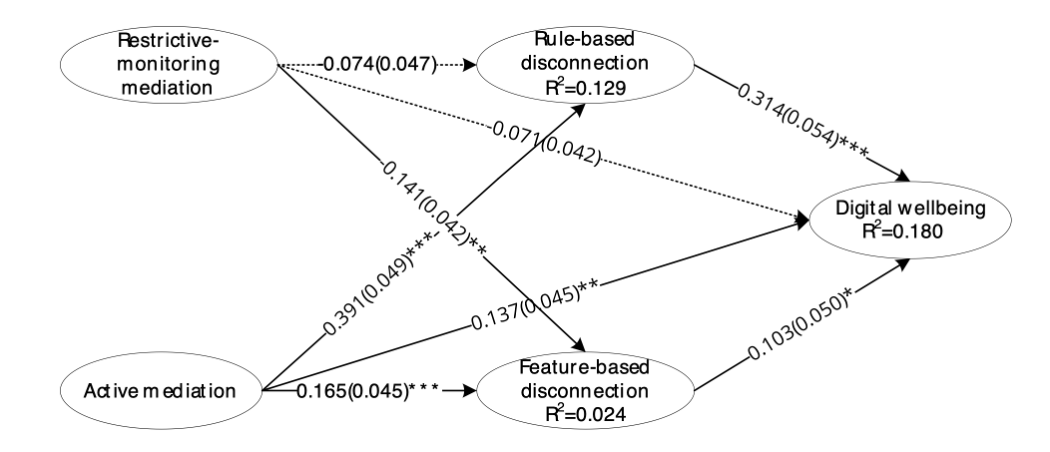
Note. Values on the paths are standardized coefficients (β), and values in parentheses are standard errors (SE); *p < .05, **p < .01, ***p < 0.001; χ2/df = 1176.9/261, p < .001, CFI = .926, TLI = .915, RMSEA = .059 [CI = .056~.063], SRMR = .053; A covariance was specified between rule-based disconnection and feature-based disconnection (r = .428, p < .001). Nonsignificant paths are indicated by dashed lines. The figure omits latent structure for clarity.
Table 1. Indirect Associations Between Parental Mediation Strategies and Digital Wellbeing.
|
Path |
Coef. (SE) |
95% Bias-corrected CI |
|
RM "Rule-based disconnection" DW |
−0.023 (0.015) |
[−0.054, 0.008] |
|
RM "Feature-based disconnection" DW |
−0.015 (0.009) |
[−0.032, 0.003] |
|
AM "Rule-based disconnection" DW |
0.123 (0.027) |
[0.070, 0.175] |
|
AM " Feature-based disconnection" DW |
0.017 (0.010) |
[−0.002, 0.036] |
|
Note. Standardized coefficients. DW = digital wellbeing; RM = Restrictive-monitoring mediation; |
||
To address RQ1, the indirect associations between active, restrictive-monitoring mediation and young adults’ digital wellbeing were examined. As presented in Table 1, neither of the two indirect paths from restrictive-monitoring mediation to digital wellbeing reached statistical significance. The indirect path between active mediation and digital wellbeing via rule-based disconnection was significant (β= .123, 95% CI = [.070, .175]), whereas the indirect path via feature-based disconnection was not. Overall, rule-based disconnection accounted for the primary indirect pathway linking prior active mediation to young adults’ digital wellbeing.
The Person-Centered Approach: The Patterns of Parental Mediation
Choosing the Best LPA Model
Following Johnson (2021), we examined four types of variance-covariance structures. Under each structure, the number of profiles retained in the models and the corresponding model fit indices are summarized in Table 2. Type 1 (equal variance, zero covariance), models with one to seven profiles were retained based on estimation diagnostics and a non-significant LMR-LRT at seven-profile solution. Under Type 2 (profile-specific variances, zero covariances), the three-profile solution failed to terminate normally; only one- and two-profile models were reliable under Type 2. Under Type 3 (equal variance, equal covariance), models could be estimated up to the four profiles. However, beginning with the five-profile model, estimation problems occurred. Type 4 (profile-specific variances and free covariances) encountered convergence issues at the two-profile solution and is therefore omitted from Table 2.
Table 2. Model Fit Indices From LPA of Parental Mediation
|
No. of profiles |
Free par |
LL |
ABIC |
AIC |
Entropy |
LMR p |
|
Variance–covariance structure Type 1: Class-invariant diagonal |
||||||
|
1 |
16 |
−12997.4 |
26054.5 |
26026.9 |
— |
— |
|
2 |
25 |
−11993.8 |
24080.7 |
24037.6 |
.830 |
<.001 |
|
3 |
34 |
−11494.6 |
23115.9 |
23057.3 |
.864 |
<.001 |
|
4 |
43 |
−11168.9 |
22497.9 |
22423.7 |
.862 |
.002 |
|
5 |
52 |
−10969.0 |
22131.8 |
22042.1 |
.891 |
.015 |
|
6 |
61 |
−10791.9 |
21811.1 |
21705.8 |
.885 |
.004 |
|
7 |
70 |
−10673.6 |
21608.1 |
21487.3 |
.876 |
.195 |
|
Variance–covariance structure Type 2: Class-varying diagonal |
||||||
|
1 |
16 |
−12997.4 |
26054.5 |
26026.9 |
— |
— |
|
2 |
33 |
−11784.2 |
23691.3 |
23634.4 |
.879 |
<.001 |
|
Variance–covariance structure Type 3: Class-invariant non-diagonal |
||||||
|
1 |
32 |
−10823.8 |
21766.7 |
21711.5 |
— |
— |
|
2 |
41 |
−10595.8 |
21344.4 |
21273.6 |
.975 |
<.001 |
|
3 |
50 |
−10445.9 |
21078.0 |
20991.7 |
.849 |
<.001 |
|
4 |
59 |
−10332.0 |
20883.9 |
20782.1 |
.797 |
.041 |
|
Final model comparison |
||||||
|
Type 1: five profiles |
52 |
−10969.0 |
22131.8 |
22042.1 |
.891 |
|
|
Type 2: two profiles |
33 |
−11784.2 |
23691.3 |
23634.4 |
.879 |
|
|
Type 3: three profiles |
50 |
−10445.9 |
21078.0 |
20991.7 |
.849 |
|
|
Note. Free par = number of free parameters; LL = log-likelihood; ABIC = sample-size adjusted Bayesian information criterion; AIC = Akaike information criterion; LMR p = p value of the Lo–Mendell–Rubin likelihood ratio test. |
||||||
Model selection proceeded in two stages. First, the optimal number of profiles was determined within each variance–covariance structure. Within Type 1, the six-profile solutions showed lower AIC and ABIC values compared with the five-profile model. However, the five-profile solution exhibited higher entropy. Moreover, in the six-profile solution, two profiles displayed highly similar response patterns, suggesting potential overextraction. The only concern regarding the five-profile solution was that one profile comprised only 41 individuals. Yet this profile was theoretically meaningful and did not represent a mere subdivision of a larger class identified in the four-profile solution. Accordingly, the five-profile solution was selected as the most appropriate representation under Type 1. The four-profile and six-profile solutions are shown in Appendix Figures A1 and A2 for comparison. Within Type 2, the two-profile solution represented the best-fitting model (See Appendix Figure A3). Within Type 3, although models with up to four profiles could be estimated, the four-profile solution exhibited substantially lower entropy than the three-profile solution. More importantly, profile separation was poor, with two profiles showing minimal differentiations. The three-profile solution was thus retained as the optimal model within Type 3 (See Appendix Figure A4). Second, the best-fitting solutions across variance-covariance structures were compared. Regarding model fit indices, the five-profile solution under Type 1 showed consistently better fit indices than the corresponding solution under Type 2. The three-profile solution under Type 3 yielded the lowest AIC and ABIC; however, the five-profile solution under Type 1 demonstrated substantially higher entropy. Moreover, the three-profile solution under Type 3 exhibited profile patterns that were difficult to interpret and of limited theoretical relevance. Considering interpretability, classification quality and theoretical meaningfulness, the five-profile solution under Type 1 was ultimately selected as the final model. This addresses RQ2.
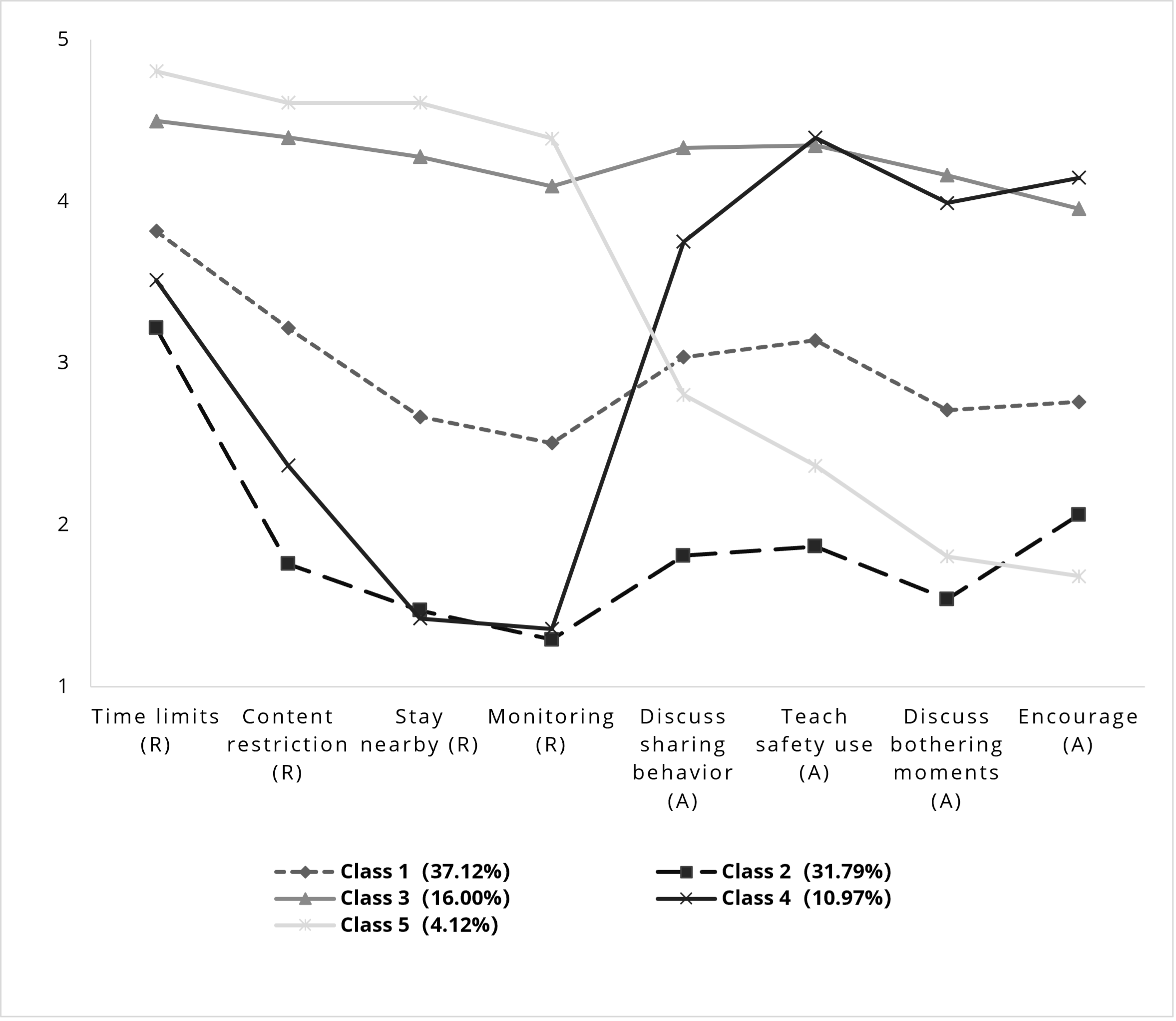
Figure 3 presents the characteristics of the five parental mediation patterns identified using mean scores. Profile 1 (n = 369, 37.12%) was the largest group, consisting of perceived parenting characterized by a moderate level of restrictive-monitoring mediation as well as active mediation. Hence, this profile was named as moderate-involved. Compared to class 1, respondents in class 2 (n = 316, 31.79%) presented significantly lower scores on almost all indicators and were thus labeled as low-involved. Conversely, class 3 (n = 159, 16.00%) showed significantly higher scores on every indicator than class 1 and was referred to as high-involved. Compared to class 3, class 4 (n = 109, 10.97%) had similar values on active mediation indicators but showed significantly lower scores for most restrictive-monitoring mediation indicators. In contrast, Class 5—the smallest group (n = 41, 4.12%)—exhibited high levels of restrictive-monitoring mediation and low scores on active mediation indicators. Thus, class 4 was labeled as supportive and class 5 was named as restriction-oriented. In general, our analysis well identified that many young people experienced a relatively balanced combination of different parental mediation strategies. Youth were less likely to perceive their parents as relying exclusively on either active mediation or restrictive-monitoring mediation.
Figure 3. Five Profile Solution of Parental Mediation Patterns.
A Comparison Between Five Mediation Patterns
For RQ3, using moderate-involved as the reference group, Figure 4 depicts the direct paths between prior parental mediation patterns, digital disconnection and digital wellbeing. Students who experienced the low-involved mediation pattern reported significantly lower levels of rule-based disconnection than those in the moderate-involved group (β = −.099, p = .009), but their feature-based disconnection was higher (β = .093, p = .020). Regarding digital wellbeing, no significant differences were observed between the low-involved and moderate-involved groups. College students who perceived their earlier mediation experiences as high-involved reported more rule-based disconnection (β = .184, p < .001) and feature-based disconnection
(β = .128, p < .001). Similarly, the supportive pattern was associated with higher levels of rule-based disconnection (β = .205, p < .001), feature-based disconnection (β = .245, p < .001) and digital wellbeing (β = .116, p = .001) relative to the moderate-involved pattern. The restriction-oriented pattern did not differ significantly from the moderate-involved group on any outcome variables.
Figure 4. Direct Paths Between Parent Mediation Patterns, Digital Disconnection and Digital Wellbeing. 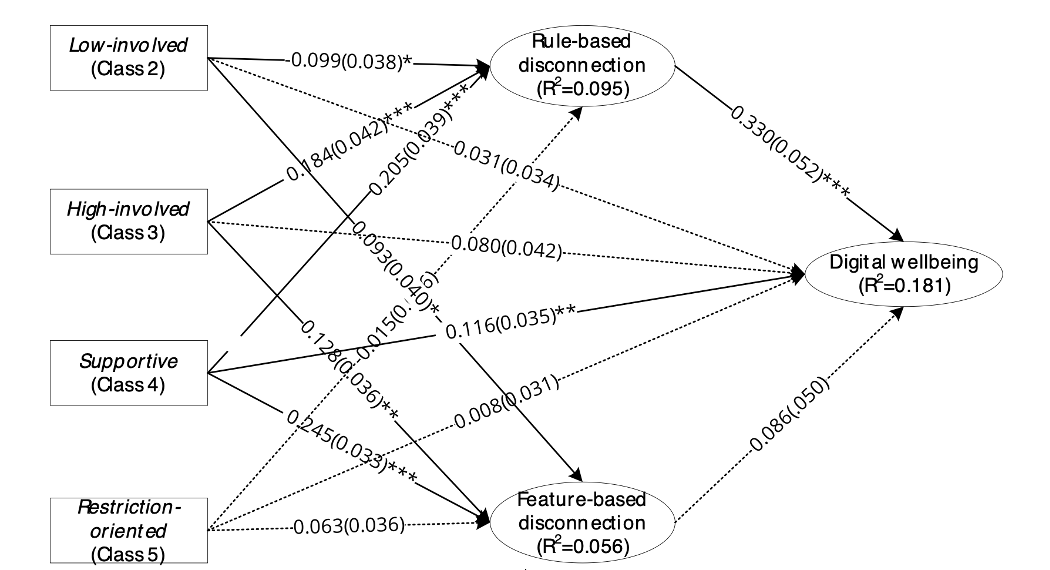
Note. Moderate-involved as the reference group; Values on the paths are standardized coefficients (β), and values in parentheses are standard errors (SE); *p < .05, **p < .01, ***p < .001; χ2/df = 768.8/169, p < .001, CFI = .921, TLI = 0.905, RMSEA = .060[CI=.056~.064], SRMR = .048; Nonsignificant paths are indicated by dashed lines; The figure omits latent structure for clarity.
When the low-involved pattern was changed to the reference group, the high-involved group reported higher levels of rule-based disconnection (β = .262, p < .001), but showed no significant differences in feature-based disconnection or digital wellbeing. The supportive group also reported higher levels of rule-based disconnection (β = .271, p < .001), feature-based disconnection (β = .183, p < .001) and digital wellbeing (β = .095, p = .009). When the high-involved pattern was specified as the reference group, further comparisons were made between the high-involved and supportive patterns. These two patterns did not show significant differences in their associations with rule-based disconnection or digital wellbeing. However, the supportive pattern was associated with higher levels of feature-based disconnection (β = .137, p < .001). In contrast, the restriction-oriented group reported lower rule-based disconnection (β = −.115, p = .005) than the high-involved group. When the supportive pattern was used as the reference group, the restriction-oriented group reported significantly lower rule-based disconnection (β = −.146, p = .001) and feature-based disconnection (β = −.094, p = .016).
Table 3 presents the indirect associations between parental mediation patterns and digital wellbeing, addressing RQ4. The results revealed that parental mediation patterns were significantly associated with digital wellbeing through rule-based disconnection. Specifically, compared to moderate-involved, the low-involved pattern was negatively associated with digital wellbeing via rule-based disconnection (β = −.033, 95% CI = [−.060, −.006]), while the high-involved and supportive pattern exhibited positive indirect associations through enhanced rule-based disconnection (β = .061, 95%CI = [.026, .095]; β = .068, 95% CI = [.034, .101]). When using low-involved as the reference group, both the high-involved and supportive patterns were associated with higher digital wellbeing through rule-based disconnection (β = .086, 95% CI= [.046, .127]; β = .090,
95% CI = [.051, .129]). Using high-involved as the reference group, the restriction-oriented pattern manifested a negative indirect association on digital wellbeing via rule-based disconnection (β = −.038, 95% CI = [−.068, −.008]). A similar pattern emerged when the supportive pattern served as the reference group, with the restriction-oriented pattern again showing a negative indirect association (β = −.048, 95%CI = [−.080, −.016]).
Robustness Check
To assess the robustness of the findings, several additional analyses were conducted. First, we re-estimated the models using alternative estimators in Mplus. While the main analyses employed ML estimation, additional models were estimated using MLR, which is robust to non-normality and provides reliable parameter estimates and standard errors (Kyriazos & Poga-Kyriazou, 2023). The results were highly consistent. Second, no control variables were included in the primary models. This decision was guided by prior methodological evidence suggesting that including non-significant covariates may adversely affect model fit. To further examine robustness, supplementary analyses were conducted including a set of theoretically relevant and individually significant covariates (i.e., gender, parental education, family income, digital device diversity, mental health, and life satisfaction). These analyses yielded substantively identical results. The corresponding results, along with the full analysis code, are reported in the OSF repository (osf.io/59r6c).
Table 3. Indirect Paths Between Parental Mediation Patterns and Digital Wellbeing.
|
Paths |
Coef. (SE) |
95% bias-corrected CI |
|
Ref. moderate-involved |
|
|
|
Low-involved “Rule-based disconnection” DW |
−0.033 (0.014) |
[−0.060, −0.006] |
|
Low-involved “Feature-based disconnection” DW |
0.008 (0.007) |
[−0.005, 0.021] |
|
High-involved “Rule-based disconnection” DW |
0.061 (0.017) |
[0.026, 0.095] |
|
High-involved “Feature-based disconnection” DW |
0.011 (0.008) |
[−0.004, 0.026] |
|
Supportive “Rule-based disconnection" DW |
0.068 (0.017) |
[0.034, 0.101] |
|
Supportive “Feature-based disconnection” DW |
0.021 (0.013) |
[−0.004, 0.047] |
|
Restriction-oriented “Rule-based disconnection” DW |
−0.005 (0.012) |
[−0.029, 0.015] |
|
Restriction-oriented “Feature-based disconnection” DW |
0.005 (0.005) |
[−0.004, 0.015] |
|
Ref. low-involved |
|
|
|
High-involved “Rule-based disconnection” DW |
0.086 (0.021) |
[0.046, 0.127] |
|
High-involved “feature-based disconnection” DW |
0.005 (0.005) |
[−0.004, 0.014] |
|
Supportive “Rule-based disconnection” DW |
0.090 (0.020) |
[0.051, 0.129] |
|
Supportive “feature-based disconnection” DW |
0.016 (0.010) |
[−0.003, 0.035] |
|
Restriction-oriented “Rule-based disconnection” DW |
0.009 (0.012) |
[−0.015, 0.033] |
|
Restriction-oriented “Feature-based disconnection” DW |
0.002 (0.004) |
[−0.006, 0.010] |
|
Ref. high-involved |
|
|
|
Supportive “Rule-based disconnection” DW |
0.016 (0.016) |
[−0.015, 0.047] |
|
Supportive “feature-based disconnection” DW |
0.012 (0.008) |
[−0.004, 0.027] |
|
Restriction-oriented “Rule-based disconnection” DW |
−0.038 (0.015) |
[−0.068, −0.008] |
|
Restriction-oriented “Feature-based disconnection” DW |
−0.001(0.004) |
[-0.008, 0.007] |
|
Ref. supportive |
|
|
|
Restriction-oriented “Rule-based disconnection" DW |
−0.048 (0.016) |
[−0.080, −0.016] |
|
Restriction-oriented “Feature-based disconnection" DW |
−0.008 (0.006) |
[-0.020, 0.004] |
|
Note. Standardized coefficients; DW = digital wellbeing; CI = confidence interval. Bold values represent significant paths. |
||
Discussion
This study provides a multifaceted examination of how prior parental mediation is associated with young adults’ digital wellbeing by integrating variable-centered and person-centered approaches. The variable-centered analyses distinguished between restrictive-monitoring mediation and active mediation, showing that active mediation was positively associated with digital wellbeing. The person-centered approach identified five heterogeneous parental mediation patterns, offering a more ecologically valid representation of real-world parenting practices. Comparisons across these patterns showed that the high-involved and supportive patterns were associated with higher levels of digital wellbeing, whereas low-involved and restriction-oriented patterns were associated with lower levels of digital wellbeing. Analyses of indirect associations further indicated that rule-based disconnection served as the primary pathway linking parental mediation strategies/patterns to digital wellbeing.
Findings
First, the variable-centered approach revealed that prior restrictive-monitoring mediation was neither negatively nor positively associated with digital wellbeing during adulthood. One possible explanation is that restrictive-monitoring mediation plays a relatively transient role only when it is being implemented. Another possible explanation lies in the complex or even contradictory role restrictive-monitoring mediation played in shaping youths’ digital practices (Ren & Huang, 2026). Earlier restrictions from parents may help children maintain boundaries in adulthood, but they may also increase youths’ interest in digital media and their desire for free exploration (White et al., 2015), resulting in the insignificant association between restrictive-monitoring mediation and digital wellbeing. Notably, higher levels of restrictive-monitoring mediation were associated with lower levels of feature-based disconnection. In recent years, media educational expects consistently worried about the potential “boomerang effects” of restrictive parental mediation (Togar et al., 2024). The present findings also provide partial support for this perspective, partially in relation to feature-based disconnection among young adults. Besides, in the present study, monitoring and restrictive mediation loaded onto the same factor, which we labeled “restrictive-monitoring” mediation. This pattern is theoretically reasonable because the two strategies share an external control-oriented function. Their empirical convergence may also reflect the everyday reality of parenting practices, in which monitoring can function both as a basis for setting restrictions and as a means of ensuring compliance with those restrictions.
Second, active mediation was associated with digital wellbeing both directly and indirectly through rule-based digital disconnection. This aligns with previous research indicating that active mediation could help foster healthier digital practices, in terms of wider online activities, higher digital skills and digital maturity (Koch et al., 2024; Steinfeld, 2021). These supports and encouragement, although shown to be a predictor of youth’s exposure to online risks (Livingstone et al., 2017; Rodríguez-de-Dios et al., 2018), concurrently enhanced youths’ understanding of digital technologies, and thus, are crucial for enhancing digital wellbeing. The results further showed that rule-based disconnection played the dominant mediating role in the relationship between active mediation and digital wellbeing, while feature-based disconnection was only weakly related to digital wellbeing. This difference may be attributed to the inherent paradox of feature-based disconnection. Such strategies reflect “disconnection through engagement,” as digital tools are used to regulate digital use (Parry et al., 2025). For instance, relying on ‘screen time’ trackers or website blockers necessitates engaging with the very device one intends to avoid. By relying on technology to escape technology, it perpetuates the cognitive burden and ambivalence associated with constant connectivity. In contrast, rule-based disconnection is more reflective and proactive. It relies on individuals’ spontaneous self-regulatory behaviors rather than external technological controls (Matthes et al., 2022; Nguyen et al., 2024). These findings echo previous research emphasizing the complexity of digital disconnection. While often viewed as a proactive and strategic effort to enhance wellbeing, the actual consequences of disconnection may vary depending on the specific strategies employed and the cultural context (Nguyen & Hargittai, 2024).
Adopting the LPA, our third finding was the uncovering of five natural mediation patterns: moderate-involved, low-involved, high-involved, supportive and restriction-oriented. The first three patterns are highly similar to those reported in recent Western LPA studies (Mayen & Camerini, 2025; Navarro & Jensen, 2026). This indicates a general covariation across strategies: across contexts, the levels of active and restrictive-monitoring mediation tend to align. Thus, despite cross-cultural differences, there appear to be similar patterns in how strategies are combined. Specifically, nearly 70% of participants perceived their parents as moderate- or low-involved, whereas only about 16% were classified as high-involved. For comparison, Navarro and Jensen (2026) found that 34% of U.S. parents perceived themselves as highly involved; however, their sample included a wide age range (5–18), with many younger children. By contrast, the distribution of moderate-, low-, and high-involved groups in our study shared similar patterns with Mayen and Camerini (2025)’s LPA findings, whose sample consisted of older Swiss adolescents. Notably, neither of these Western studies identified supportive or restriction-oriented patterns. This suggests that the Chinese context has a more equal distribution of mediation styles, enabling the detection of these patterns.
Prior research has suggested that Chinese youth rarely report a highly restrictive but low-active pattern, likely because parenting practices in China often integrate both control and support (“管guan” in Chinese) (Chou et al., 2016). In a culture that emphasizes parental authority, youth tend to be more compliant and often interpret parental control as a form of care. However, our LPA was able to identify such a group, albeit a small one. Several factors may account for this finding. First, it may signal cultural and generational shifts among youth, who are increasingly valuing autonomy and exhibiting less deference to parental authority. Second, because our sample consisted of young adults, the retrospective nature of the measures may have captured perceptions that differ from those held during adolescence. That is, participants may not feel controlled at the time, but looking back, they report a pattern that emphasizes restriction without corresponding support.
Our fourth important finding was that supportive mediation patterns were generally associated with higher levels of digital wellbeing among young adults, both directly and indirectly via rule-based disconnection. The high-involved pattern was also positively associated with rule-based disconnection and showed positive indirect associations with digital wellbeing. These findings suggest that when restrictive-monitoring mediation is accompanied by active mediation during adolescence, it may be less likely to be associated with the potential “boomerang effects” noted in prior research. In contrast, the low-involved pattern was less advantageous, being associated with lower levels of rule-based disconnection and showing no significant advantage in digital wellbeing relative to the moderate-involved group. The restriction-oriented pattern was similarly less favorable. Although it did not differ significantly from moderate- or low-involved groups, it was less favorable compared to high-involved and supportive patterns, showing negative indirect associations with digital wellbeing via rule-based disconnection. Taken together, this study highlights the role of parental mediation as an integrated system in relation to youth development. Rather than functioning solely as a protective mechanism, parental mediation may also be understood as a developmental resource associated with youths’ capacity for autonomous and adaptive digital engagement over time.
Implications
This study integrates variable-centered and person-centered approaches in exploring parental mediation. Combining these approaches allows for the identification of both the associations of individual strategies and the configurations in which they co-occur, thereby extending the empirical literature on parental mediation across diverse contexts. Framing parental mediation at the pattern level clarifies concrete targets for intervention and guidance. Rather than encouraging parents to simply “increase” or “reduce” specific strategies, practitioners and media education programs should focus on teaching parents how to create a coherent mediation environment that combines guidance, monitoring, and rule-setting. In practice, this may involve helping parents engage adolescents in ongoing conversations around digital media, and gradually shift responsibility for rule enforcement from parents to youths themselves. Beyond the family context, schools and universities can incorporate activities that encourage students to reflect on their own digital routines and practice setting personal usage rules.
Limitation and Future Work
Several limitations should be acknowledged. First, although the study targets first-year university students to approximate longer-term associations between prior parental mediation and digital wellbeing, the cross-sectional design does not allow for causal inference. Meanwhile, retrospective measurement may also be subject to reporting bias. This highlights the need for longitudinal research to better understand the dynamics of these factors. Second, the patterns in this study were derived solely from parental mediation strategy items. The identified patterns thus should not be interpreted as comprehensive digital parenting styles. Future research would benefit from incorporating indicators of the broader family relational climate (e.g., perceived communication, warmth and psychological control). That would allow for stronger inferences about digital parenting styles and their correspondence with general parenting styles. The small size of the restriction-oriented group further limits statistical power and constrains the extent to which substantive conclusions can be drawn about this profile. Future research could address this by employing larger samples and examining whether similar patterns exist across different cultural contexts. Third, with regard to mechanisms, the present study focuses on digital disconnection. Future studies could additionally examine other potential mediating mechanisms, such as usage patterns and digital literacy. Besides, the current measurement does not differentiate between when disconnection occurs, in which contexts, or in response to which types of digital activities. Future measures could distinguish between temporal dimensions (e.g., time of day), situational contexts (e.g., academic vs. social settings), and activity-specific disengagement (e.g., social media vs. gaming vs. information seeking). Experience sampling and diary methods offer promising avenues to address these limitations. By capturing real-time or near real-time reports, these approaches reduce recall bias and allow researchers to observe within-person dynamics across situations. Such designs can therefore provide a more nuanced account of the conditions under which digital disconnection is associated with adaptive versus less adaptive outcomes.
Footnotes
1 In our survey, we inquired of students whether they were permitted to utilize digital devices during their primary, middle, and high school years. The findings revealed that 94.67%, 95.07%, and 92.25% of respondents, respectively, were not permitted to use any digital devices at each respective stage.
2 The two types of courses are mandatory for all first-year college students at China University.
3 In China, 985 Project universities are the elite institutions chosen by the government to receive special funding and support, aiming to become world-class research centers. The 211 Project universities, also well-regarded, form a larger group receiving significant investment to enhance their research. High-level provincial universities, recognized by provincial governments, are known for their excellence within the province and usually have higher admission standards than ordinary undergraduate universities, which are more common.
Conflict of Interest
The authors have no conflicts of interest to declare.
Use of AI Services
The authors declare they have used AI services, specifically CHATGPT, for grammar correction and minor style refinements. They carefully reviewed all suggestions from these services to ensure the original meaning and factual accuracy were preserved.
Data Availability Statement
All the data and material could be found at osf.io/59r6c.
Acknowledgement
The first author is grateful for the financial support provided by the National Natural Science Foundation of China (72404223), the Xi'an Jiaotong University's "Smart Humanities“ Special Program, the 74 General Funding of China Postdoctoral Science Foundation (2023M742808) and Shaanxi Provincial Social Science Foundation (2024M001). We would like to express our sincere gratitude to the editor and the four reviewers for their meticulous guidance, patience, and generosity throughout the revision process. Without their invaluable comments and support, the manuscript would not have reached its present form.
Appendix
Table A1. Sample Description.
|
|
n |
% |
|
Age |
|
|
|
<=17 |
55 |
5.53 |
|
18 |
588 |
59.15 |
|
19 |
281 |
28.27 |
|
>=20 |
70 |
7.04 |
|
Gender |
|
|
|
female |
441 |
44.37 |
|
Male |
553 |
55.63 |
|
Hometown |
|
|
|
First tier or provincial capital city = 1 |
218 |
21.93 |
|
Prefecture-level city = 2 |
215 |
21.63 |
|
County town = 3 |
280 |
28.17 |
|
Township = 4 |
94 |
9.46 |
|
Rural area = 5 |
187 |
18.81 |
|
University |
|
|
|
Ordinary undergraduate university = 1 |
200 |
20.12 |
|
Provincial high-level university =4 |
263 |
26.46 |
|
The 211 Project universities = 2 |
242 |
24.35 |
|
The 985 Project universities = 3 |
289 |
29.07 |
|
Total |
994 |
100.00 |
Table A2. Descriptions and Loadings of Parental Mediation Scale.
|
Items |
M |
SD |
C1 |
C2 |
|
Restrictive-monitoring mediation |
|
|
|
|
|
Limited the amount of time of digital device use |
3.742 |
1.099 |
0.435 |
0.128 |
|
Prescribed the content I am allowed to access online |
2.906 |
1.358 |
0.700 |
0.258 |
|
Stayed nearby when I am online |
2.489 |
1.254 |
0.932 |
0.163 |
|
Checked up on or asked me to inform them about what I am doing online |
2.326 |
1.262 |
0.843 |
0.218 |
|
Active mediation |
|
|
|
|
|
Discussed with me what should and should not be shared online |
2.924 |
1.219 |
0.379 |
0.716 |
|
Told me how to safely use the Internet |
3.034 |
1.270 |
0.212 |
0.842 |
|
Discussed with me what to do if I am bothered by online friends |
2.674 |
1.248 |
0.277 |
0.798 |
|
Encouraged me to independently explore Internet |
2.838 |
1.234 |
0.080 |
0.721 |
|
Note. Maximum likelihood with Varimax rotation |
||||
Table A3. Digital Wellbeing Scale: Descriptions and Loading.
|
Items (When using digital media, you…) |
M |
SD |
C1 |
|
I rarely feel discouraged |
4.257 |
1.253 |
0.631 |
|
My emotions are always stable |
4.361 |
1.179 |
0.570 |
|
I feel delightful |
4.781 |
0.964 |
0.762 |
|
My connection with friends has become closer |
4.632 |
1.089 |
0.729 |
|
I have a better understanding of my friends’ lives |
4.654 |
1.042 |
0.727 |
|
I have made some real friends |
4.064 |
1.313 |
0.644 |
|
I feel that the activities I engage in online are meaningful and valuable |
4.420 |
1.070 |
0.741 |
|
They have improved my learning/work efficiency |
4.350 |
1.220 |
0.633 |
|
I have learned new skills and knowledge |
4.883 |
0.929 |
0.711 |
|
I can relieve stress through online entertainment activities such as watching movies or playing games |
4.944 |
0.917 |
0.659 |
|
Online entertainment has brought me happiness. |
4.898 |
0.930 |
0.737 |
|
I feel tired of online entertainment (reversed, dropped) |
3.525 |
1.300 |
-0.052 |
|
Note. Extraction method: maximum likelihood. |
|||
Table A4. Digital Disconnection Scale: Descriptions and Loading.
|
Items |
M |
SD |
C1 |
C2 |
|
Rule-based disconnection |
|
|
|
|
|
I put my digital devices away when I need to focus on work. |
3.577 |
0.900 |
0.255 |
0.574 |
|
I deliberately control my screen time. |
3.145 |
1.014 |
0.109 |
0.708 |
|
I keep uninterrupted by digital devices when engaged in other activities. |
3.410 |
0.987 |
0.151 |
0.751 |
|
Feature-based disconnection |
|
|
|
|
|
I delete mobile app or computer programs that are of little use. |
4.071 |
0.903 |
0.568 |
0.314 |
|
I turn off notifications of some apps or programs |
4.211 |
0.888 |
0.851 |
0.118 |
|
For some software or webpages, I disable the update or automatic recommendation features. |
4.187 |
0.918 |
0.775 |
0.159 |
|
Note. Maximum likelihood with Varimax rotation. |
||||
Table A5. Descriptive and Correlation Analysis for the Core Variables.
|
Variables |
M |
SD |
(1) |
(2) |
(3) |
(4) |
(5) |
|
(1) Restrictive-monitoring mediation |
2.866 |
1.032 |
1.000 |
|
|
|
|
|
|
|
|
|
|
|
|
|
|
(2) Active mediation |
2.867 |
1.064 |
.452 |
1.000 |
|
|
|
|
|
|
|
(.000) |
|
|
|
|
|
(3) Digital wellbeing |
4.568 |
0.777 |
.047 |
.217 |
1.000 |
|
|
|
|
|
|
(.139) |
(.000) |
|
|
|
|
(4) rule-based disconnection |
3.378 |
0.784 |
.123 |
.291 |
.340 |
1.000 |
|
|
|
|
|
(.000) |
(.000) |
(.000) |
|
|
|
(5) feature-based disconnection |
4.157 |
0.760 |
.008 |
.095 |
.229 |
.380 |
1.000 |
|
|
|
|
(.802) |
(.003) |
(.000) |
(.000) |
|
|
Note. Values in parentheses indicate p values. Composite scores were calculated as the mean of the respective items. Digital wellbeing used a 1–6 response scale; all other variables used 1–5 response scales. |
|||||||
Table A6. Results of Factor Loadings, Convergent Validity and Reliability for Each Scale.
|
Construct |
Item |
Factor Loading |
CR |
AVE |
Cronbach’s alpha |
|
Restrictive-monitoring mediation |
1 |
.421 |
.844 |
.591 |
.847 |
|
2 |
.732 |
||||
|
3 |
.934 |
||||
|
4 |
.883 |
||||
|
Active mediation |
1 |
.802 |
.880 |
.649 |
.878 |
|
2 |
.853 |
||||
|
3 |
.855 |
||||
|
4 |
.702 |
||||
|
Digital wellbeing |
1 |
.630 |
.905 |
.465 |
.903 |
|
2 |
.565 |
||||
|
3 |
.754 |
||||
|
4 |
.706 |
||||
|
5 |
.708 |
||||
|
6 |
.649 |
||||
|
7 |
.763 |
||||
|
8 |
.653 |
||||
|
9 |
.716 |
||||
|
10 |
.624 |
||||
|
11 |
.709 |
||||
|
Rule-based disconnection |
1 |
.628 |
.741 |
.490 |
.738 |
|
2 |
.719 |
||||
|
3 |
.747 |
||||
|
Feature-based disconnection |
1 |
.633 |
.803 |
.579 |
.793 |
|
2 |
.824 |
||||
|
3 |
.811 |
||||
|
Note. The primary objective of this analysis is to evaluate the internal consistency and convergent validity of the latent constructs. All constructs achieved Cronbach’s alpha and CR values above 0.70, ensuring high internal consistency. Regarding convergent validity, while AVE values for two constructs were slightly below the .50 threshold (.465 and .490), their CR values were well above .70, which fulfills the criteria established by Fornell and Larcker (1981) for acceptable convergent validity. |
|||||
Table A7. Assessment for Discriminant Validity: Squared Factor Correlations (r2) and AVEs.
|
|
(1) |
(2) |
(3) |
(4) |
(5) |
|
(1) Restrictive-monitoring mediation |
.591 |
|
|
|
|
|
(2) Active mediation |
.257 |
.649 |
|
|
|
|
(3) Digital wellbeing |
.001 |
.049 |
.465 |
|
|
|
(4) Rule-based disconnection |
.015 |
.125 |
.159 |
.490 |
|
|
(5) Feature-based disconnection |
.003 |
.009 |
.066 |
.190 |
.579 |
|
Note. The diagonal values now represent the Average Variance Extracted (AVE) for each construct, while the off-diagonal values represent the squared correlations (r2) between constructs. Each construct's AVE is greater than its squared correlations with other constructs, thereby confirming sufficient discriminant validity. |
|||||
Figure A1. Four-Profile Solution in Type 1.
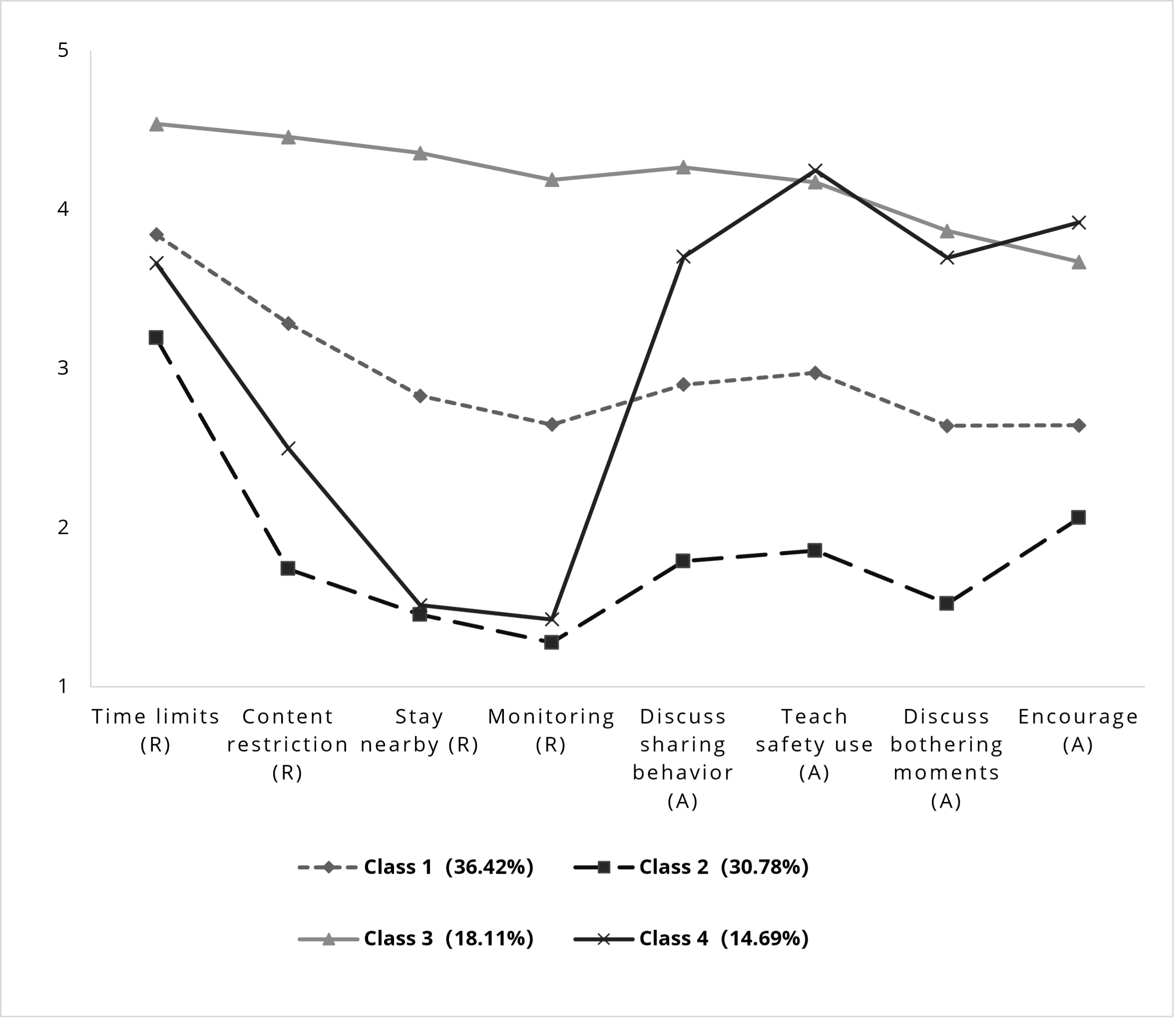
Figure A2. Six-Profile Solution in Type 1.
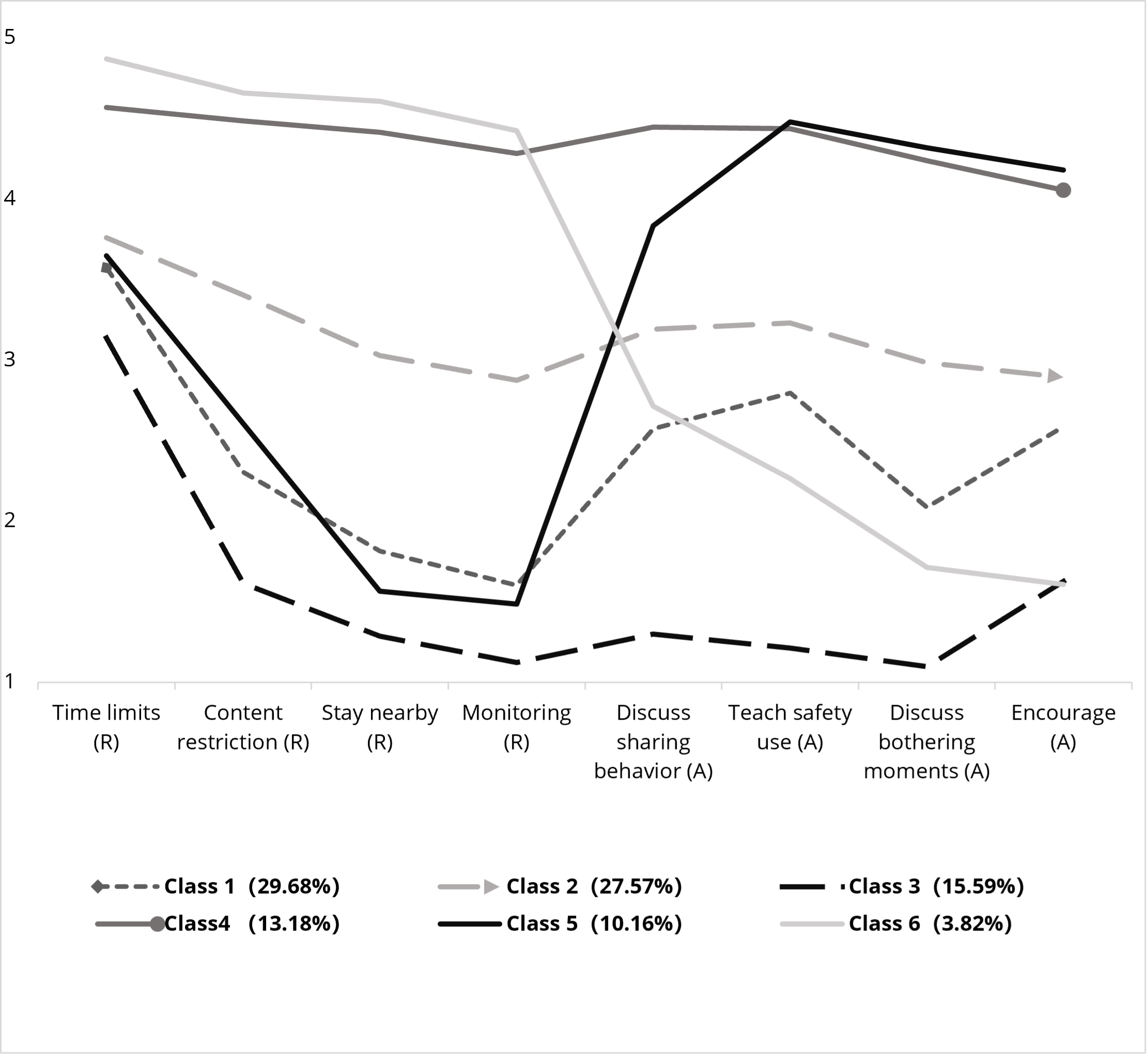
Figure A3. Two-Profile Solution in Type 2.
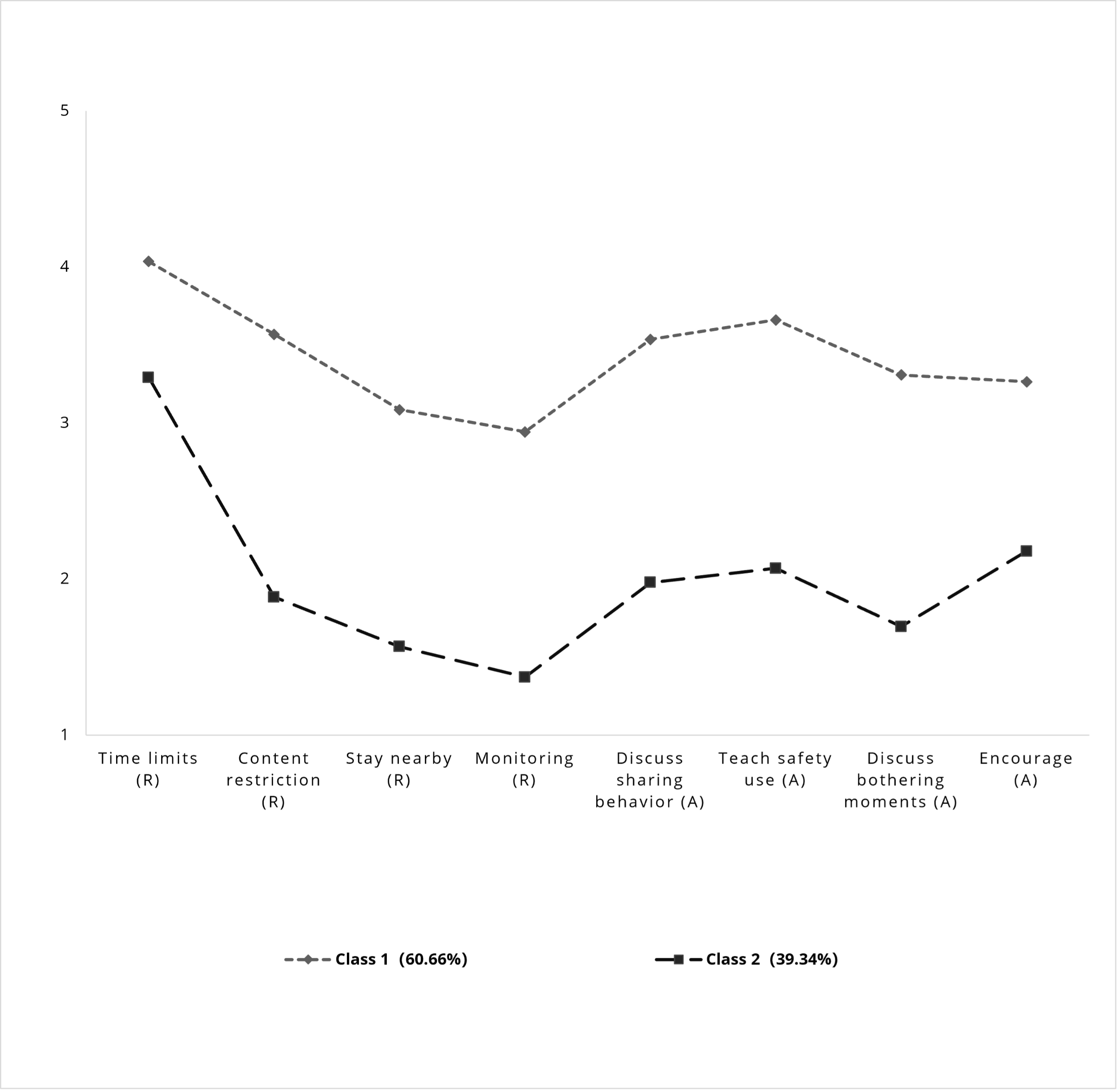
Figure A4. Three-Profile Solution in Type 3.
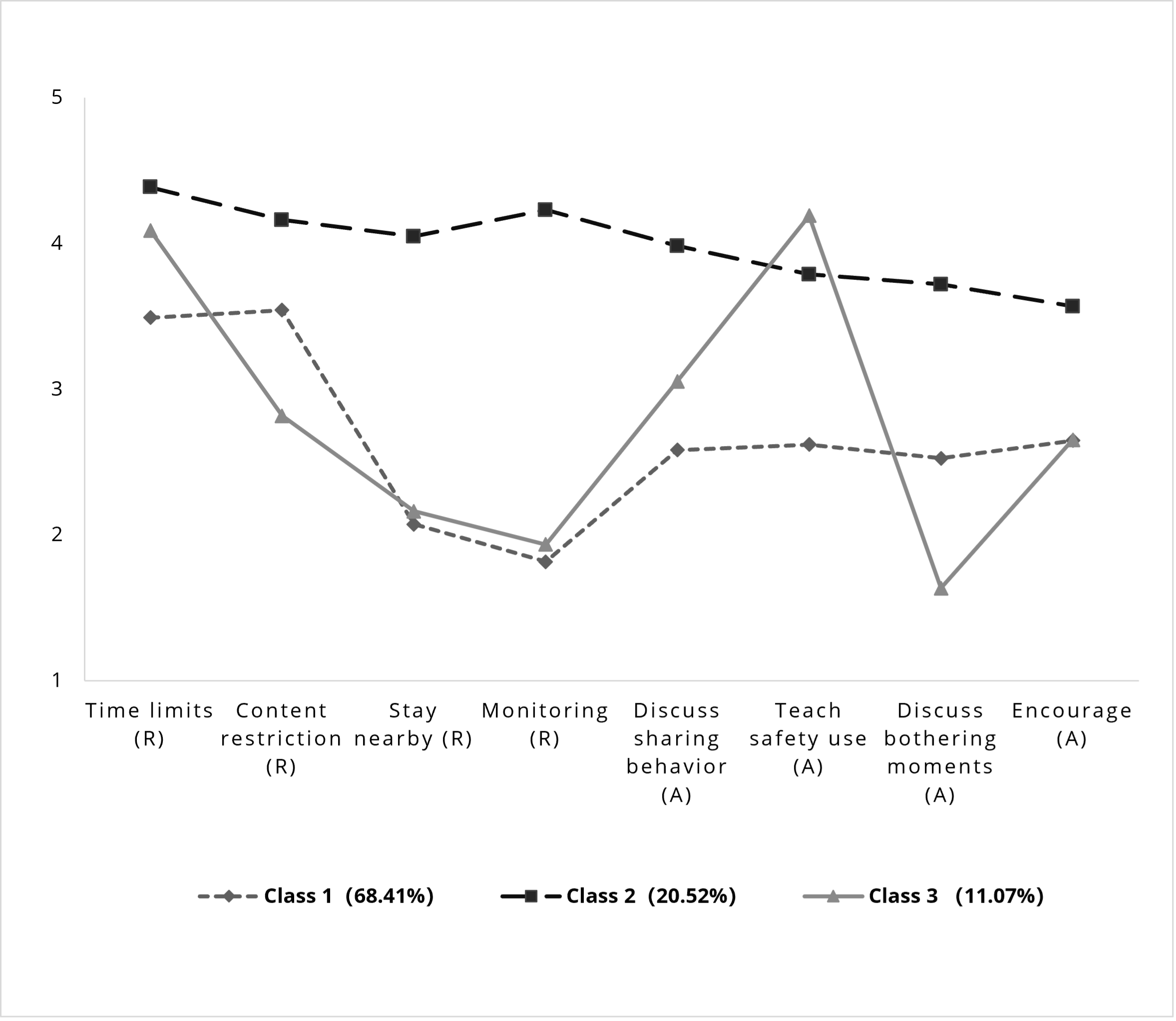


This work is licensed under a Creative Commons Attribution-ShareAlike 4.0 International License.
Copyright © 2026 Wei Ren, Suchuan Ma, Kaili Wang