
Phubbing and relational evaluation among college students: A longitudinal study
Vol.20,No.2(2026)

Phubbing, the act of ignoring others in favor of mobile phone use, has become a widespread phenomenon in social settings and poses increasing challenges to college students’ interpersonal relationships. The present study used a three-wave longitudinal design to examine the impact of peer phubbing on relational evaluation, with a particular focus on the mediating role of psychological needs threat, the moderating role of perceived social norms, and the cumulative nature of these effects over time. Data were collected from 593 Chinese college students across three waves spanning six months. The results showed that peer phubbing at earlier time points predicted higher levels of psychological needs threat and lower relational evaluation at later time points, whereas relational evaluation did not predict subsequent phubbing behavior. Psychological needs threat significantly mediated the longitudinal association between peer phubbing and relational evaluation, while perceived social norms did not moderate the effect of peer phubbing on needs threat and relational evaluation. These findings suggest that peer phubbing undermines situational interpersonal relationship experiences regardless of its perceived normative status. Moreover, peer phubbing appears to function not merely as a momentary interpersonal disruption but as a recurring form of everyday social exclusion with cumulative psychological and relational consequences.
phubbing; social norms; basic psychological needs threat; interpersonal relationships; Chinese college students
Ronghua Zhang
School of Psychology, Northwest Normal University, Lanzhou, China
Ronghua Zhang is an Associate Professor at School of Psychology, Northwest Normal University, China. She is mainly interested in how digital technology use affects social relationships.
Xiaofeng Guo
School of Psychology, Northwest Normal University, Lanzhou, China
Xiaofeng Guo is a Mental Health Counselor at Lanzhou Bowen College of Science and Technology, China. She focuses on the causes and mechanisms phubbing.
Na Yang
School of Psychology, Northwest Normal University, Lanzhou, China
Na Yang is a master’s student at School of Psychology, Northwest Normal University, China. She is mainly interested in how phubbing influences social relationship.
Chenguang Du
School of Psychology, Northwest Normal University, Lanzhou, China
Chenguang Du is an Associate Professor at School of Psychology, Northwest Normal University, China. His research interests include the application and analysis of statistical models in the social sciences, including longitudinal data analysis, structural equation modeling, multilevel linear modeling, latent growth modeling, and causal inference analysis.
Al‐Saggaf, Y., & O'Donnell, S. B. (2019). Phubbing: Perceptions, reasons behind, predictors, and impacts. Human Behavior and Emerging Technologies, 1(2), 132–140. https://doi.org/10.1002/hbe2.137
Aron, A., Aron, E. N., & Smollan, D. (1992). Inclusion of Other in the Self Scale and the structure of interpersonal closeness. Journal of Personality and Social Psychology, 63(4), 596–612. https://doi.org/10.1037/0022-3514.63.4.596
Benenson, J. F., & Wrangham, R. W. (2016). Cross-cultural sex differences in post-conflict affiliation following sports matches. Current Biology, 26(16), 2208–2212. https://doi.org/10.1016/j.cub.2016.06.024
Bernstein, M. J., & Claypool, H. M. (2012). Social exclusion and pain sensitivity: Why exclusion sometimes hurts and sometimes numbs. Personality and Social Psychology Bulletin, 38(2), 185–196. https://doi.org/10.1177/0146167211422449
Burgoon, J. K. (1993). Interpersonal expectations, expectancy violations, and emotional communication. Journal of Language and Social Psychology, 12(1–2), 30–48. https://doi.org/10.1177/0261927X93121003
Büttner, C. M., Ren, D., Stavrova, O., Rudert, S. C., Williams, K. D., & Greifeneder, R. (2025). Ostracism in everyday life: A framework of threat and behavioral responses in real life. Journal of Personality and Social Psychology, 129(5), 870–887. https://doi.org/10.1037/pspi0000471
Cameron, A.-F., & Webster, J. (2011). Relational outcomes of multicommunicating: Integrating incivility and social exchange perspectives. Organization Science 22(3), 754–771. https://doi.org/10.1287/orsc.1100.0540
Campbell, S. W., & Kwak, N. (2010). Mobile communication and civic life: Linking patterns of use to civic and political engagement. Journal of Communication 60(3), 536–555. https://doi.org/10.1111/j.1460-2466.2010.01496.x
Chen, F. F. (2007). Sensitivity of goodness of fit indexes to lack of measurement invariance. Structural Equation Modeling: A Multidisciplinary Journal, 14(3), 464–504. https://doi.org/10.1080/10705510701301834
Cheung, G. W., & Rensvold, R. B. (2002). Evaluating goodness-of-fit indexes for testing measurement invariance. Structural Equation Modeling: A Multidisciplinary Journal, 9(2), 233–255. https://doi.org/10.1207/S15328007SEM0902_5
China Internet Network Information Center. (2024). The 54th statistical report on China's Internet development. https://www.cnnic.com.cn/IDR/ReportDownloads/202411/P020241101318428715781.pdf
Chotpitayasunondh, V., & Douglas, K. M. (2016). How “phubbing” becomes the norm: The antecedents and consequences of snubbing via smartphone. Computers in Human Behavior, 63, 9–18. https://doi.org/10.1016/j.chb.2016.05.018
Cialdini, R. B., Reno, R. R., & Kallgren, C. A. (1990). A focus theory of normative conduct: Recycling the concept of norms to reduce littering in public places. Journal of Personality and Social Psychology, 58(6), 1015–1026. https://doi.org/10.1037/0022-3514.58.6.1015
David, M. E., & Roberts, J. A. (2021). Investigating the impact of partner phubbing on romantic jealousy and relationship satisfaction: The moderating role of attachment anxiety. Journal of Social and Personal Relationships, 38(12), 3590–3609. https://doi.org/10.1177/0265407521996454
Deci, E. L., & Ryan, R. M. (2000). The “what” and “why” of goal pursuits: Human needs and the self-determination of behavior. Psychological Inquiry, 11(4), 227–268. https://doi.org/10.1207/S15327965PLI1104_01
Downey, G., & Feldman, S. I. (1996). Implications of rejection sensitivity for intimate relationships. Journal of Personality and Social Psychology, 70(6), 1327–1343. https://doi.org/10.1037/0022-3514.70.6.1327
Eisenberger, N. I., Lieberman, M. D., & Williams, K. D. (2003). Does rejection hurt? An fMRI study of social exclusion. Science, 302(5643), 290–292. https://doi.org/10.1126/science.1089134
Fleeson, W. (2001). Toward a structure- and process-integrated view of personality: Traits as density distributions of states. Journal of Personality and Social Psychology, 80(6), 1011–1027. https://doi.org/10.1037/0022-3514.80.6.1011
Geser, H. (2006). Are girls (even) more addicted? Some gender patterns of cell phone usage. Universität Zürich, Philosophische Fakultät, Soziologisches Institut. https://nbn-resolving.org/urn:nbn:de:0168-ssoar-327002
Gonzales, A. L., & Wu, Y. (2016). Public cellphone use does not activate negative responses in others… Unless they hate cellphones. Journal of Computer-Mediated Communication, 21(5), 384–398. https://doi.org/10.1111/jcc4.12174
Hales, A. H., Dvir, M., Wesselmann, E. D., Kruger, D. J., & Finkenauer, C. (2018). Cell phone-induced ostracism threatens fundamental needs. The Journal of Social Psychology, 158(4), 460–473. https://doi.org/10.1080/00224545.2018.1439877
Knausenberger, J., Giesen-Leuchter, A., & Echterhoff, G. (2022). Feeling ostracized by others’ smartphone use: The effect of phubbing on fundamental needs, mood, and trust. Frontiers in Psychology, 13, Article 883901. https://doi.org/10.3389/fpsyg.2022.883901
Leung, L. (2014). Predicting internet risks: A longitudinal panel study of gratifications-sought, internet addiction symptoms, and social media use among children and adolescents. Health Psychology and Behavioral Medicine, 2(1), 424–439. https://doi.org/10.1080/21642850.2014.902316
Neubauer, A. B., Schmidt, A., Kramer, A. C., & Schmiedek, F. (2021). A little autonomy support goes a long way: Daily autonomy-supportive parenting, child well-being, parental need fulfillment, and change in child, family, and parent adjustment across the adaptation to the COVID-19 pandemic. Child Development, 92(5), 1679–1697. https://doi.org/10.1111/cdev.13515
Nezlek, J. B. (2007). A multilevel framework for understanding relationships among traits, states, situations and behaviors. European Journal of Personality, 21(6), 789–810. https://doi.org/10.1002/per.640
Niu, G., Yao, L., Wu, L., Tian, Y., Xu, L., & Sun, X. (2020). Parental phubbing and adolescent problematic mobile phone use: The role of parent-child relationship and self-control. Children and Youth Services Review, 116, Article 105247. https://doi.org/10.1016/j.childyouth.2020.105247
Pepinsky, T. B. (2018). A note on listwise deletion versus multiple imputation. Political Analysis, 26(4), 480–488. https://doi.org/10.1017/pan.2018.18
Pietrzak, J., Downey, G., & Ayduk, O. (2005). Rejection sensitivity as an interpersonal vulnerability. In M. W. Baldwin (Ed.), Interpersonal cognition (pp. 62–84). The Guilford Press.
Podsakoff, P. M., MacKenzie, S. B., Lee, J.-Y., & Podsakoff, N. P. (2003). Common method biases in behavioral research: A critical review of the literature and recommended remedies. Journal of Applied Psychology, 88(5), 879–903. https://doi.org/10.1037/0021-9010.88.5.879
Portman, T. A. A., Bartlett, J. R., & Carlson, L. A. (2010). Relational theory and intergenerational connectedness: A qualitative study. Adultspan Journal, 9(2), 88–102. https://doi.org/10.1002/j.2161-0029.2010.tb00074.x
Riva, P., & Eck, J. (2016). The many faces of social exclusion. In P. Riva & J. Eck (Eds.), Social exclusion: Psychological approaches to understanding and reducing its impact (pp. 9–15). Springer International Publishing.
Riva, P., Montali, L., Wirth, J. H., Curioni, S., & Williams, K. D. (2017). Chronic social exclusion and evidence for the resignation stage: An empirical investigation. Journal of Social and Personal Relationships, 34(4), 541–564. https://doi.org/10.1177/0265407516644348
Roberts, J. A., & David, M. E. (2016). My life has become a major distraction from my cell phone: Partner phubbing and relationship satisfaction among romantic partners. Computers in Human Behavior, 54, 134–141. https://doi.org/10.1016/j.chb.2015.07.058
Roberts, J. A., & David, M. E. (2017). Put down your phone and listen to me: How boss phubbing undermines the psychological conditions necessary for employee engagement. Computers in Human Behavior, 75, 206–217. https://doi.org/10.1016/j.chb.2017.05.021
Rudert, S. C., Janke, S., & Greifeneder, R. (2021). Ostracism breeds depression: Longitudinal associations between ostracism and depression over a three-year-period. Journal of Affective Disorders Reports, 4, Article 100118. https://doi.org/10.1016/j.jadr.2021.100118
Sbarra, D. A., Briskin, J. L., & Slatcher, R. B. (2019). Smartphones and close relationships: The case for an evolutionary mismatch. Perspectives on Psychological Science, 14(4), 596–618. https://doi.org/10.1177/1745691619826535
Schminke, M., Ambrose, M. L., & Miles, J. A. (2003). The impact of gender and setting on perceptions of others' ethics. Sex Roles, 48(7–8), 361–375. https://doi.org/10.1023/A:1022994631566
Smith, L. G., Thomas, E. F., & McGarty, C. (2015). “We must be the change we want to see in the world”: Integrating norms and identities through social interaction. Political Psychology, 36(5), 543–557. https://doi.org/10.1111/pops.12180
Telari, A., Riva, P., Perugini, M., & Pancani, L. (2024). Converting smartphone interference into favorable consequences for social interactions: The “resisting phubbing” phenomenon. Social Influence, 19(1), Article 2433943. https://doi.org/10.1080/15534510.2024.2433943
Thibaut, J. W., & Kelley, H. H. (1959). The social psychology of groups. Transaction Publishers.
Tong, W., Jia, J., Wang, P., & He, W. (2024). The associations between parental phubbing, adolescent phubbing, and adolescents’ adjustments: A cross-lagged panel network analysis. Journal of Youth and Adolescence, 53(7), 1529–1541. https://doi.org/10.1007/s10964-023-01909-0
Vanden Abeele, M. M. P., Antheunis, M. L., & Schouten, A. P. (2016). The effect of mobile messaging during a conversation on impression formation and interaction quality. Computers in Human Behavior, 62, 562–569. https://doi.org/10.1016/j.chb.2016.04.005
Vanden Abeele, M. M. P., Hendrickson, A. T., Pollmann, M. M. H., & Ling, R. (2019). Phubbing behavior in conversations and its relation to perceived conversation intimacy and distraction: An exploratory observation study. Computers in Human Behavior, 100, 35–47. https://doi.org/10.1016/j.chb.2019.06.004
Vanden Abeele, M. M. P., & Postma-Nilsenova, M. (2018). More than just gaze: An experimental vignette study examining how phone-gazing and newspaper-gazing and phubbing-while-speaking and phubbing-while-listening compare in their effect on affiliation. Communication Research Reports, 35(4), 303–313. https://doi.org/10.1080/08824096.2018.1492911
Vanden Abeele, M. M. P., Vandebosch, H., Koster, E. H. W., De Leyn, T., Van Gaeveren, K., De Segovia Vicente, D., Van Bruyssel, S., Van Timmeren, T., De Marez, L., Poels, K., DeSmet, A., De Wever, B., Verbruggen, M., & Baillien, E. (2024). Why, how, when, and for whom does digital disconnection work? A process-based framework of digital disconnection. Communication Theory, 34(1), 3–17. https://doi.org/10.1093/ct/qtad016
Wesselmann, E. D., Wirth, J. H., & Bernstein, M. J. (2017). Expectations of social inclusion and exclusion. Frontiers in Psychology, 8, Article 112. https://doi.org/10.3389/fpsyg.2017.00112
Williams, K. D. (2007). Ostracism. Annual Review of Psychology, 58, 425–452. https://doi.org/10.1146/annurev.psych.58.110405.085641
Williams, K. D. (2009). Ostracism: A temporal need-threat model. Advances in Experimental Social Psychology, 41, 275–314. https://doi.org/10.1016/S0065-2601(08)00406-1
Williams, K. D., & Sommer, K. L. (1997). Social ostracism by coworkers: Does rejection lead to loafing or compensation? Personality and Social Psychology Bulletin, 23(7), 693–706. https://doi.org/10.1177/0146167297237003
Winkelmann, L., & Geber, S. (2022). On the norm sensitivity of younger mobile phone users: Perceived social norms and phubbing in interactions between younger and older generations. Communication Research Reports, 39(4), 214–223. https://doi.org/10.1080/08824096.2022.2115476
Xie, X., Tao, Y., Liu, A., & Lei, L. (2020). Peer relationship mediates the effect of mobile phone functions on adolescent adaptation. Children and Youth Services Review, 108, Article 104571. https://doi.org/10.1016/j.childyouth.2019.104571
Yang, R. (2020). Studies on the influence of social norms on phubbing [Master’s thesis, Yangtze University]. China National Knowledge Infrastructure.
Yang, C.-c., Pham, T., Ariati, J., Smith, C., & Foster, M. D. (2021). Digital social multitasking (DSMT), friendship quality, and basic psychological needs satisfaction among adolescents: Perceptions as mediators. Journal of Youth and Adolescence, 50(12), 2456–2471. https://doi.org/10.1007/s10964-021-01442-y
Zadro, L., Williams, K. D., & Richardson, R. (2004). How low can you go? Ostracism by a computer is sufficient to lower self-reported levels of belonging, control, self-esteem, and meaningful existence. Journal of Experimental Social Psychology, 40(4), 560–567. https://doi.org/10.1016/j.jesp.2003.11.006
Zhang, J., Dong, C., Jiang, Y., Zhang, Q., Li, H., & Li, Y. (2023). Parental phubbing and child social-emotional adjustment: A meta-analysis of studies conducted in China. Psychology Research and Behavior Management, 16, 4267–4285. https://doi.org/10.2147/PRBM.S417718
Zhu, W. Q. (2016). The effect of social exclusion on stereotyping: different mechanisms for different genders [Master’s thesis, Central China Normal University]. China National Knowledge Infrastructure.
Authors' Contribution
Ronghua Zhang: conceptualization, writing—original draft, writing—review & editing, project administration. Xiaofeng Guo: methodology, investigation, data curation, formal analysis. Na Yang: investigation, data curation, formal analysis. Chenguang Du: formal analysis, validation.
Editorial Record
First submission received:
October 22, 2024
Revisions received:
September 20, 2025
February 5, 2026
Accepted for publication:
March 17, 2026
Editor in charge:
Alexander P. Schouten
Introduction
The ubiquity of mobile phones has become an undeniable aspect of modern life. According to the 54th Statistical Report on China's Internet Development, by June 2024, there were 1.1 billion internet users in China, with 99.7% (1.09 billion) accessing the internet via mobile phones (China Internet Network Information Center, 2024). This pervasive influence is particularly evident among college students, where the phenomenon of smartphone symbiosis, characterized by a culture of constant connectivity, has become increasingly prevalent. While such connectivity provides undeniable convenience, it also gives rise to new social challenges, one of the most prominent being phubbing. A portmanteau of phone and snubbing, phubbing refers to the act of ignoring one’s social partner in favor of interacting with a smartphone (Chotpitayasunondh & Douglas, 2016).
Among the many consequences of phubbing, its most immediate and profound impact lies in its disruption of relational evaluation. A wealth of empirical research has demonstrated that phubbing significantly impairs the social experiences of those being phubbed. It results in lower moral evaluations and decreased interpersonal satisfaction toward the phubber and fosters a sense of social alienation. These negative consequences have been consistently observed across various relational contexts, including peer, romantic, and hierarchical relationships (David & Roberts, 2021; Niu et al., 2020; Roberts & David, 2016; Xie et al., 2020; Zhang et al., 2023). Such adverse reactions are commonly driven by the social exclusion signaled by phubbing. The act of phubbing often conveys a message of disengagement or disinterest, prompting the phubbed individual to feel rejected. This sense of rejection is accompanied by immediate psychological distress and a threat to basic psychological needs, which refers to the needs for belonging, self-esteem, meaningful existence, and control (Williams, 2009).
Although prior studies have confirmed the negative effects of phubbing through the lens of basic psychological need threat, it remains unclear whether these effects are confined to isolated incidents or whether they accumulate over time to influence broader relational patterns. Since phubbing is a highly contextualized interactional event, its most direct consequences unfold in specific moments of social interaction. What remains to be explored is whether these seemingly fleeting instances of being ignored might aggregate over time and ultimately shape individuals’ broader relational sensitivity and response patterns. Moreover, while some studies have begun to consider the moderating role of social norms (Gonzales & Wu, 2016), the findings remain inconclusive, particularly concerning whether perceived social norms around phubbing can buffer its negative effects.
Therefore, to comprehensively examine the psychological impact of peer phubbing, this study adopts a longitudinal design. We aim to investigate not only the immediate effects of phubbing on social connection and need threat but also the potential cumulative impact over time and whether the perceived social norms surrounding phubbing moderate this process. Specifically, we seek to determine whether peer phubbing affects not just momentary psychological states but also future perceptions of social connection and psychological need threat, and whether this effect is contingent on individuals' perceptions of phubbing-related social norms.
Phubbing Impairs Relational Evaluation Through Psychological Need Threat
Peer phubbing refers to the act of diverting attention from face-to-face interactions to mobile phone use, thereby disengaging from one’s social partner (Chotpitayasunondh & Douglas, 2016). This behavior has become increasingly prevalent in various daily contexts, including meals, classrooms, workplaces, and informal gatherings (Al‐Saggaf & O'Donnell, 2019). Substantial research has established that phubbing conveys negative social signals and disrupts interpersonal processes. Much of this research has focused on its long-term impact on stable relational structures, including family ties (David & Roberts, 2021; Niu et al., 2020; Roberts & David, 2016; Xie et al., 2020; Zhang et al., 2023), friendships (Cameron & Webster, 2011), and workplace relationships (Roberts & David, 2017). However, phubbing is fundamentally a situational social event that occurs within a specific interactional context. Its most salient consequences manifest in individuals’ immediate psychological experiences, thus, in this study, we focus on interpersonal relationships within phubbing situations, conceptualized as distinct from stable, long-term peer relationships, and defined relational evaluation as the perceived relational closeness or distance that emerges in real-time, face-to-face interactions when one is being phubbed (Wesselmann et al., 2017). This definition underscores that interpersonal connections are not only enduring, trait-like constructs but also moment-to-moment, state-like experiences that are highly sensitive to social-contextual cues.
According to Expectation Violation Theory (EVT), individuals maintain normative expectations regarding attentiveness and responsiveness in interpersonal exchanges (Burgoon, 1993). When these expectations are violated, such as through phubbing, individuals engage in cognitive appraisals that often result in negative emotional responses, adverse attributions, and diminished interactional evaluations (Vanden Abeele et al., 2019). In parallel, theories of social exclusion posit that being ignored or excluded, whether physically or emotionally, threatens fundamental psychological needs and evokes feelings akin to social pain (Riva & Eck, 2016; Williams, 2009). In face-to-face interactions, attentiveness and engagement serve as key indicators of relational investment. When a partner shifts attention to their phone, the behavior can be interpreted as an exclusionary cue, thereby triggering need threat. Empirical studies show that even subtle cues of exclusion can elicit intense emotional distress and psychological discomfort (Eisenberger et al., 2003; Wesselmann et al., 2017; Williams & Sommer, 1997). Moreover, smartphones, while enabling constant digital interaction, have been shown to diminish responsiveness and amplify feelings of being unheard (Sbarra et al., 2019; Vanden Abeele & Postma-Nilsenova, 2018). Taken together, EVT and social exclusion theory suggest that phubbing is not merely a minor breach of etiquette but a contextually embedded signal of social exclusion (Burgoon, 1993; Vanden Abeele et al., 2019). It directly threatens basic psychological needs, including belonging, self-esteem, and control, and thus impairs individuals’ subjective experiences of social connection during interpersonal encounters (Eisenberger et al., 2003; Williams, 2007, 2009). This leads individuals to perceive reduced intimacy, lower relational value, and colder social interactions (Roberts & David, 2016; Vanden Abeele et al., 2016). Based on these considerations, we propose Hypothesis 1 and Hypothesis 2:
H1: Peer phubbing negatively predicts relational evaluation.
H2: Basic psychological need threat mediates the relationship between peer phubbing and relational evaluation.
Although the effects of phubbing are inherently situational, emerging evidence suggests that such experiences may accumulate over time. Repeated exposure to social rejection can heighten sensitivity to relational threat and exacerbate negative emotional responses in future interactions (Downey & Feldman, 1996; Pietrzak et al., 2005). Similarly, lifetime exclusion experiences have been linked to elevated emotional reactivity and enduring vulnerabilities, indicating long-term psychological consequences (Wesselmann et al., 2017). While research on the cumulative impact of phubbing remains limited, its widespread occurrence suggests that individuals who are frequently phubbed may experience chronic need threat. This persistent exposure could amplify sensitivity to neglect cues, ultimately shaping a relational style marked by heightened interpersonal vigilance and alienation.
Accordingly, we propose Hypothesis 3:
H3: Peer phubbing at earlier time points will positively predict basic psychological need threat and negatively predict relational evaluation at later time points, indicating a cumulative effect of phubbing over time.
The Moderating Role of Social Norms Regarding Phubbing
While peer phubbing generally exerts a negative influence on relational evaluation, the extent of its impact may be moderated by individuals’ perceptions of social norms surrounding mobile phone use (Gonzales & Wu, 2016). Social norms serve as guidelines for acceptable behavior within a group and play a crucial role in shaping how individuals interpret and respond to phubbing. According to Cialdini et al. (1990), social norms can be classified into two categories: descriptive norms, which refer to the prevalence of a behavior, and injunctive norms, which reflect societal approval or disapproval of that behavior. As mobile phones become increasingly embedded in everyday social life, injunctive norms discouraging phone use during face-to-face interaction may be gradually giving way to descriptive norms that normalize such behavior (R. Yang, 2020). For individuals who perceive phubbing as socially acceptable or common, the behavior may be less likely to provoke negative emotional reactions or dissatisfaction during social encounters. In contrast, those who view phubbing as a breach of traditional social expectations are more likely to experience heightened feelings of exclusion, disrespect, and frustration. These reactions, in turn, may threaten their basic psychological needs and diminish their relational satisfaction (Vanden Abeele et al., 2024).
In line with Social Exchange Theory (Thibaut & Kelley, 1959), individuals assess social interactions based on perceived costs and rewards. In contexts where phone use is consistent with descriptive norms, the perceived social cost of phubbing is lower, potentially mitigating its impact on relationship quality (Cialdini et al., 1990; Gonzales & Wu, 2016). Conversely, in situations where phubbing contravenes injunctive norms that emphasize attentiveness and engagement, the perceived cost is higher, leading to stronger negative affect and unmet psychological needs (Roberts & David, 2016; Vanden Abeele et al., 2016). Furthermore, the moderating role of social norms may extend to perceptions of situational interpersonal relationships. In settings where phone use is perceived as normative, individuals may adjust their expectations accordingly, thereby reducing the perceived severity of phubbing (Burgoon, 1993; Wesselmann et al., 2017). However, in contexts where phubbing is viewed as socially inappropriate, the behavior may directly contradict interpersonal expectations and substantially deteriorate perceived relational quality (Telari et al., 2024; Williams, 2009).
Based on this reasoning, we propose the following hypotheses:
H4: The perception of phubbing-related social norms moderates the relationship between peer phubbing and basic psychological needs threat.
H5: The perception of phubbing-related social norms moderates the relationship between peer phubbing and relational evaluation.
The Current Study
The present study extends prior research by examining how peer phubbing shapes relational evaluation, that is, individuals’ momentary experiences of social closeness or distance during real-time, face-to-face interactions. Drawing on the framework of aggregated state constructs (Fleeson, 2001; Nezlek, 2007), we argue that while perceptions of closeness are inherently situational, their recurrence across contexts may accumulate over time and form relatively stable patterns of interpersonal perception. To investigate these processes, we employed a three-wave longitudinal design involving Chinese college students. This design allows for the examination of both concurrent associations and temporal dynamics, providing stronger evidence for causal inference than cross-sectional methods. Specifically, we propose a moderated mediation model in which the effect of peer phubbing on relational evaluation is mediated by basic psychological needs threat, and this indirect pathway is further moderated by perceived social norms related to phubbing (see Figure 1 for the conceptual model).
By integrating Expectation Violation Theory, the Need Threat Model, and theories of social norms, the present study offers a nuanced understanding of how phubbing impare not only immediate social connection but also influence individuals’ long-term relational sensitivity and interaction patterns. In doing so, the study contributes to the growing body of literature exploring the psychological implications of digital device use in contemporary social life.
Figure 1. Proposed Moderated Mediation Model.
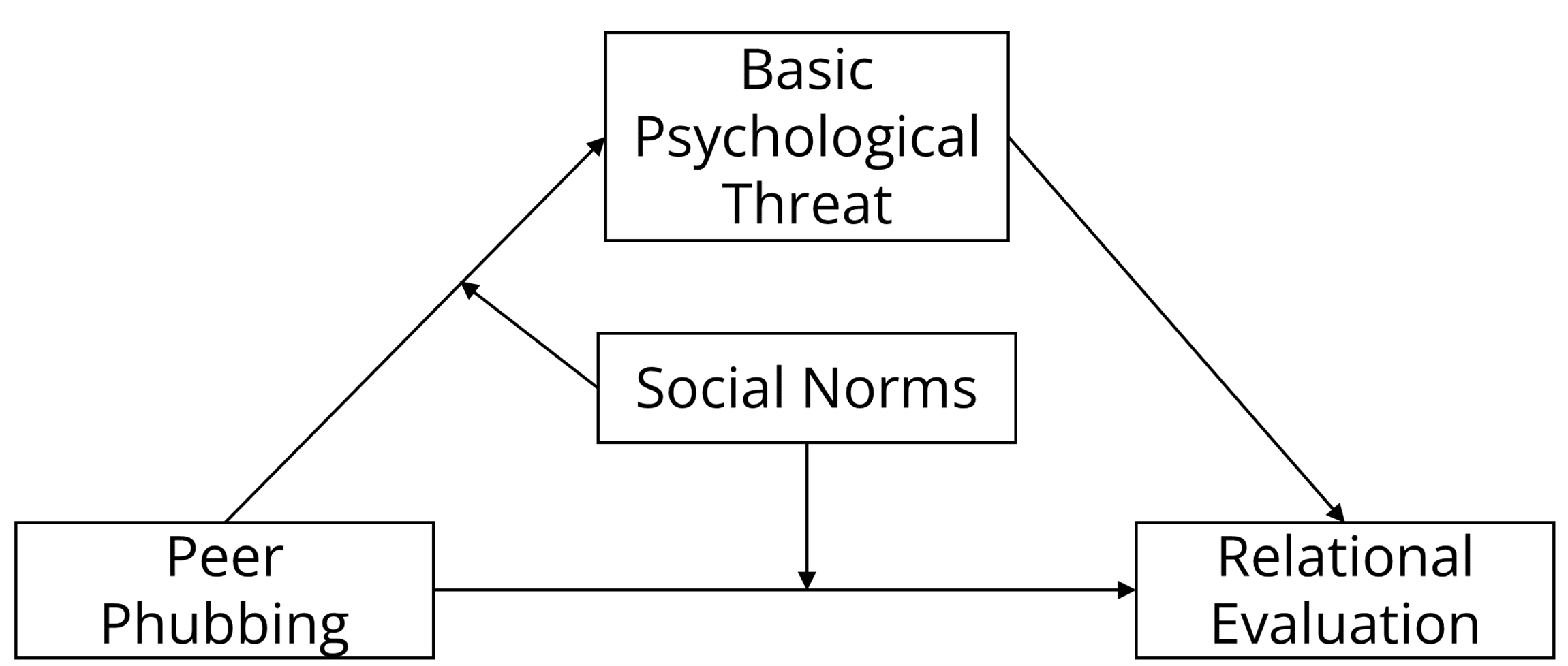
Proposed moderated mediation model in Figure 1 depicts the relationships among peer phubbing, basic psychological need threat, social norms, and relational evaluation. Peer phubbing is hypothesized to negatively predict relational evaluation both directly and indirectly via need threat. Social norms are expected to moderate the relationship between peer phubbing and need threat as well as the direct effect on relational evaluation. All relationships are tested using three-wave longitudinal data (T1–T3), allowing for examination of temporal precedence among the variables.
Methods
Participants
A convenience sampling method was employed to recruit university students from a major city, who were invited to complete online questionnaires. Data collection took place at three time points during the first semester of the 2023–2024 academic year: T1 (mid-September), T2 (early November), and T3 (mid-January). This time frame was selected both to align with previous research (e.g., Tong et al., 2024) and to coincide with the natural rhythm of the academic calendar, thereby reducing attrition between semesters. Participants were recruited through social media platforms, and those who completed each questionnaire received 1 yuan per wave. Participants who completed all three waves were awarded an additional 5 yuan. All participants were native Chinese students.
To ensure data quality, one attention check item was embedded in each questionnaire to identify inattentive or careless responses. Participants who failed this check were excluded from further analysis. The number of valid questionnaires retained at each wave is reported in Table 1. For the longitudinal analyses, we employed listwise deletion to maintain consistency across waves (Pepinsky, 2018). Accordingly, only participants who provided complete responses at all three measurement points were retained. After excluding cases with unmatched IDs across waves, the final analytic sample consisted of 593 participants.
Table 1. Questionnaire Recovery Rate.
|
Measurement Round |
Distributed Questionnaires |
Valid Questionnaires |
Valid Response Rate |
|
1 |
1,418 |
1,196 |
84.34% |
|
2 |
1,145 |
987 |
86.20% |
|
3 |
774 |
748 |
96.64% |
In total, 593 valid responses were collected (see Table 1 for response rates), comprising 301 males (50.8%); mean age is 19.86 years (SD = 2.3). The sample included 320 freshmen (54.0%), 120 sophomore (2.2%), 68 juniors (11.5%), and 85 seniors (14.3%); and majored in 183 liberal arts (30.9%), 135 science (22.8%), 108 engineering (18.2%), and 167 medicine (28.2%).
This study received ethical approval from the institutional ethics committee, and all participants provided informed consent before participating. In accordance with the journal’s anonymity requirements, the name of the institution is not disclosed.
Research Instruments
Peer Phubbing Behavior
Peer phubbing was measured using an adapted version of the Partner Phubbing Scale (PPS) developed by Roberts and David (2016). To reflect the peer context of this study, the term partner in the original scale was replaced with peer. In this study, peer was treated as a category-level referent (i.e., classmates in general) rather than a specific individual. Participants were instructed to evaluate the experience of being phubbed by peers as a general situational phenomenon, in order to minimize variability caused by differences in relational closeness or partner-specific characteristics. The scale includes nine items, such as: When I have a meal with my peers, they use their phone. Participants responded to each item on a 5-point Likert scale (1 = never, 5 = always), with higher scores indicating more severe peer phubbing behavior. Internal consistency was high across the three time points, with Cronbach’s alpha values of αT1 = .86, αT2 = .89, and αT3 = .90.
Relational Evaluation
Relational evaluation was assessed using the Inclusion of Others in the Self Scale by Aron et al. (1992). This scale measures participants’ perceptions of the closeness of their interpersonal relationships at a given moment, participants were instructed to evaluate how close or distant they felt when experiencing peer phubbing. To control for variability in individual relationship characteristics, peer was again treated as a category-level referent rather than a specific person. Participants viewed seven pairs of circles representing the self and another person, ranging from non-overlapping (1) to almost completely overlapping (7). Greater overlap between the circles indicated a closer interpersonal relationship.
Psychological Need Threat
Psychological need threat was measured using the Basic Psychological Needs Satisfaction Scale, adapted from Zadro et al. (2004) and translated by Zhu (2016). Since the present study aims to capture the immediate psychological consequences of phubbing as a situational form of social exclusion, the psychological needs threat was assessed as a situational response to being phubbed, capturing participants’ momentary experiences of threatened belonging, self-esteem, control, and meaningful existence specifically in phubbing situations. The scale consists of 12 items spanning four dimensions: self-esteem (3 items), sense of control (3 items), sense of belonging (3 items), and sense of meaning (3 items), the items were explicitly framed to refer to participants’ feelings when being phubbed, such as: When peers look down at their phones, I feel in control of the interaction. Responses were recorded on a 5-point Likert scale (1 = strongly disagree, 5 = strongly agree), after reverse scoring, with higher scores indicating lower threat of psychological needs. The internal consistency was robust across the three measurements, with Cronbach’s alpha values of αT1 = .89, αT2 = .89, and αT3 = .87.
Social Norms
Perceived social norms surrounding phubbing were measured using the Perceived Social Norms of Phubbing Scale (PSNP), adapted from Chotpitayasunondh and Douglas (2016) and translated by R. Yang (2020). The scale includes five items that capture both descriptive norms (e.g., Do you think phubbing is common among people around you?) and injunctive norms (e.g., Do you think others consider phubbing appropriate?). Responses were provided on a 5-point Likert scale (1 = strongly disagree, 5 = strongly agree), with higher scores indicating a stronger perception of phubbing as a social norm. Descriptive norms and injunctive norms were conceptualized as reflecting participants’ overall attitudes toward and acceptance of phubbing. Accordingly, we combined the two dimensions to create a single indicator of perceived social norms regarding phubbing. Internal consistency was maintained over the three measurements, with Cronbach’s alpha values of αT1 = .80, αT2 = .80, and αT3 = .85.
All questionnaires used in this study were administered in Chinese. The questionnaire is provided in the Appendix.
Data Analysis
Data were analyzed using SPSS v26.0 and Mplus v8.3. Descriptive statistics and correlation analyses were conducted in SPSS to summarize sample characteristics and examine the relationships among variables. To analyze the longitudinal data collected at three time points, cross-lagged panel models (CLPM) were implemented in Mplus v8.3 to assess the directional effects between peer phubbing, basic psychological needs threat, and relational evaluation. As a comparison, we also applied a random-intercept cross-lagged panel model (RI-CLPM) to test the mediational model. The most appropriate model (CLPM vs. RI-CLPM) was selected based on model fit indices.
To test the moderating role of social norms, a multiple-group SEM was conducted. In this analysis, social norms were treated as a stable trait. Accordingly, a composite variable was created by averaging social norm scores across three time points. This composite score was then dichotomized into low and high levels based on the median to create a grouping variable. Using this categorical variable, we conducted multiple-group SEM analyses. During the analysis, two models (constrained vs. unconstrained) were compared using a likelihood ratio test. In the constrained model, all path coefficients in the mediational paths were constrained to be equal across the two social norm groups, whereas in the unconstrained model, all path coefficients within the mediational model were freely estimated for both groups. The Mplus syntax used for the data analysis is provided in the Supplementary Material.
Results
Common Method Bias Test
To assess potential common method bias, the Harman single-factor test was conducted (Podsakoff et al., 2003). In this test, all variables are entered into an exploratory factor analysis to determine the proportion of variance explained by a single factor. Across the three time points, seven factors were identified with eigenvalues greater than 1. The first factor accounted for 25.66%, 26.57%, and 26.33% of the total variance at T1, T2, and T3, respectively. As this is well below the critical threshold of 40%, these results suggest that common method bias is not a significant issue in this study.
Measurement Invariance
To ensure consistent measurement of constructs across the three time points, we tested for measurement invariance using four models: Configural Invariance, Metric (Weak) Invariance, Scalar (Strong) Invariance, and Strict Invariance. Model fit was assessed using χ² difference tests, CFI, TLI, RMSEA, and SRMR (Neubauer et al., 2021). All models demonstrated acceptable fit, supporting strict measurement invariance across time. Importantly, comparisons between adjacent models indicated that changes in fit indices were within recommended thresholds (ΔCFI < .010, ΔRMSEA < .015, ΔSRMR < .010; Chen, 2007; Cheung & Rensvold, 2002), supporting strict invariance for peer phubbing, social norms, and basic psychological needs threat. This indicates that the constructs were measured equivalently across time and that longitudinal comparisons are valid (Table 2).
Descriptive Statistics and Gender Differences
The means and standard deviations for peer phubbing behavior, social norms related to phubbing, basic psychological needs threat, and relational evaluation across the three measurements are presented in Table 3. Independent sample t-tests were performed to compare these variables between male and female participants. The results revealed significant gender differences in peer phubbing behavior, basic psychological needs threat, and relational evaluation at all three time points. However, no significant gender differences were found for social norms related to phubbing (see Table 3 for detailed results).
Pearson correlation coefficients were computed to examine the relationships among peer phubbing behavior, social norms, basic psychological needs threat, and relational evaluation at T1, T2, and T3 (see Table 4 for detailed results). Given the significant gender differences observed across these variables, gender was included as a covariate in subsequent analyses to control for its potential influence.
Table 2. Tests of Measurement Invariance.
|
Scale |
χ² |
c |
df |
CFI |
RMSEA |
SRMR |
BIC |
ΔCFI |
ΔRMSEA |
ΔSRMR |
|
Peer Phubbing |
||||||||||
|
Configural MI |
362.450 |
1.076 |
233 |
.973 |
.031 |
.030 |
31594.585 |
— |
— |
— |
|
Weak MI |
372.735 |
1.067 |
247 |
.974 |
.029 |
.034 |
31513.232 |
.001 |
−.002 |
.004 |
|
Strong MI |
379.009 |
1.064 |
261 |
.976 |
.028 |
.033 |
31429.245 |
.002 |
−.001 |
−.001 |
|
Strict MI |
391.913 |
1.062 |
277 |
.976 |
.026 |
.037 |
31340.140 |
< .001 |
−.002 |
.004 |
|
Social Norm |
||||||||||
|
Configural MI |
86.620 |
1.014 |
65 |
.996 |
.024 |
.017 |
20575.625 |
— |
— |
— |
|
Weak MI |
90.191 |
1.003 |
71 |
.997 |
.021 |
.018 |
20539.950 |
.001 |
−.003 |
.001 |
|
Strong MI |
92.205 |
1.002 |
77 |
.997 |
.018 |
.018 |
20503.585 |
< .001 |
−.003 |
< .001 |
|
Strict MI |
102.352 |
1.089 |
87 |
.997 |
.017 |
.020 |
20458.721 |
< .001 |
−.001 |
.002 |
|
Basic Psychological Needs Threat |
||||||||||
|
Configural MI |
668.003 |
1.001 |
504 |
.987 |
.023 |
.026 |
55683.272 |
— |
— |
— |
|
Weak MI |
673.694 |
1.004 |
517 |
.988 |
.023 |
.026 |
55608.331 |
.001 |
< .001 |
< .001 |
|
Strong MI |
684.181 |
1.003 |
533 |
.988 |
.022 |
.026 |
55515.988 |
< .001 |
−.001 |
< .001 |
|
Strict MI |
666.825 |
1.049 |
557 |
.992 |
.018 |
.026 |
55375.580 |
.004 |
−.004 |
< .001 |
|
Note. N = 593; c = scaling factor; df = degrees of freedom; CFI = comparative fit index; RMSEA = root mean square error of approximation; SRMR = standardized root mean square residual; BIC = Bayesian information criterion; MI = measurement invariance; Model comparisons were conducted stepwise (metric vs. configural, scalar vs. metric, strict vs. scalar), Δ values represent differences between adjacent models. |
||||||||||
Table 3. Descriptive Statistics of Peer Phubbing, Basic Psychological Needs Threat,
and Relational Evaluation (n = 593).
|
Variable |
Measurement Round |
M |
SD |
Female (n = 292) |
Male (n = 301) |
t-test (Gender Difference) |
p |
||
|
M |
SD |
M |
SD |
||||||
|
Peer Phubbing |
T1 |
3.46 |
0.62 |
3.69 |
0.56 |
3.25 |
0.61 |
−9.09 |
< .001 |
|
T2 |
3.48 |
0.64 |
3.71 |
0.59 |
3.26 |
0.61 |
−9.09 |
< .001 |
|
|
T3 |
3.51 |
0.60 |
3.63 |
0.58 |
3.39 |
0.60 |
−4.85 |
< .001 |
|
|
Social Norms |
T1 |
3.00 |
0.91 |
3.07 |
0.88 |
2.93 |
0.93 |
−1.93 |
.054 |
|
T2 |
3.04 |
0.89 |
3.09 |
0.85 |
3.00 |
0.92 |
−1.15 |
.252 |
|
|
T3 |
3.03 |
0.88 |
3.03 |
0.88 |
3.02 |
0.88 |
−0.21 |
.836 |
|
|
Psychological Needs Threat |
T1 |
2.69 |
0.81 |
2.49 |
0.77 |
2.89 |
0.81 |
6.14 |
< .001 |
|
T2 |
2.67 |
0.80 |
2.35 |
0.74 |
2.98 |
0.73 |
10.47 |
< .001 |
|
|
T3 |
2.65 |
0.82 |
2.40 |
0.76 |
2.89 |
0.80 |
7.63 |
< .001 |
|
|
Relational Evaluation |
T1 |
4.25 |
1.51 |
3.87 |
1.52 |
4.61 |
1.40 |
6.24 |
< .001 |
|
T2 |
4.16 |
1.44 |
3.51 |
1.29 |
4.79 |
1.28 |
12.15 |
< .001 |
|
|
T3 |
4.11 |
1.57 |
3.38 |
1.35 |
4.82 |
1.43 |
12.61 |
< .001 |
|
Table 4. Correlation for Study Variables.
|
|
gender |
T1-X |
T1-W |
T1-M |
T1-Y |
T2-X |
T2-W |
T2-M |
T2-Y |
T3-X |
T3-W |
T3-M |
T3-Y |
|
gender |
1 |
|
|
|
|
|
|
|
|
|
|
|
|
|
T1-X |
−.06 |
1 |
|
|
|
|
|
|
|
|
|
|
|
|
T1-W |
.03 |
.39*** |
1 |
|
|
|
|
|
|
|
|
|
|
|
T1-M |
.04 |
−.27*** |
.23*** |
1 |
|
|
|
|
|
|
|
|
|
|
T1-Y |
−.01 |
−.51*** |
−.07 |
.53*** |
1 |
|
|
|
|
|
|
|
|
|
T2-X |
.02 |
.32*** |
.15*** |
−.09* |
−.18*** |
1 |
|
|
|
|
|
|
|
|
T2-W |
.01 |
.13** |
.12** |
−.06 |
−.09* |
.26*** |
1 |
|
|
|
|
|
|
|
T2-M |
.03 |
−.45*** |
−.05 |
.37*** |
.27*** |
−.29*** |
.11** |
1 |
|
|
|
|
|
|
T2-Y |
.02 |
−.69*** |
−.08 |
.66*** |
.72*** |
−.51*** |
−.10* |
.67*** |
1 |
|
|
|
|
|
T3_X |
.02 |
.15*** |
.09* |
−.06 |
−.11** |
.30** |
.14** |
−.13** |
−.21*** |
1 |
|
|
|
|
T3_W |
.02 |
.03 |
.02 |
−.02 |
−.04 |
.01 |
.13** |
−.03 |
−.03 |
.24*** |
1 |
|
|
|
T3_M |
−.03 |
−.24*** |
−.07 |
.17*** |
.11** |
−.34** |
−.06 |
.39*** |
.35*** |
−.28*** |
.11** |
1 |
|
|
T3_Y |
.01 |
−.50*** |
−.10* |
.37*** |
.37*** |
−.68*** |
−.12** |
.70*** |
.76*** |
−.52*** |
−.05 |
.68*** |
1 |
|
Note. T1, T2, and T3 represent the three measurement time points. X stands for peer phubbing behavior, W for social norms, M for basic psychological needs threat, and Y for relational evaluation. ***p < .001, **p < .01, *p < .05. |
|||||||||||||
Longitudinal Mediation of Basic Psychological Needs Threat Between Peer Phubbing and Relational Evaluation
To examine the mediating role of basic psychological needs threat in the association between peer phubbing behavior and relational evaluation, we employed a cross-lagged panel model (CLPM), with gender included as a covariate on each path. The overall model demonstrated a good fit to the data. (χ² = 9.656, RMSEA = .03, CFI = .99, TLI = .99, SRMR = .01).
After controlling for gender, all auto-regression coefficients are significant all autoregressive coefficients were significant. For instance, peer phubbing at T1 significantly predicted peer phubbing at T2 (β = .23, p < .001), which further predict the peer phubbing at T3 (β = .27, p < .001). Similarly, the psychology needs threat at T1 significantly predicts itself at T2 (β = .27, p < .001), which in turn significantly predicted psychological needs threat at T3 (β = .30, p < .001). The detailed path coefficients are given by
Figure 2.
Regarding the focal paths, the direct effect of peer phubbing on relational evaluation was marginally significant (β = .03, p = .074). In addition, T1 peer phubbing significantly predicts the T2 psychological needs threat (β = −.34, p < .001), which in turn predict the outcome at T3 (β = .38, p < .001). Finally, the indirect effect through psychological needs threat (β = −.33, p < .001) as well as the total effect (β = −.25, p < .001) were both significant. Therefore, we could conclude that psychological needs threat plays a mediational role in between peer phubbing and interpersonal relationship.
In order to examine the sensitivity of our results. We also conducted a meditational analysis using RI-CLPM. The RI-CLPM advances traditional cross-lagged models by separating stable between-person differences (e.g., traits) from dynamic within-person processes, reducing bias in temporal inferences. It achieves this by incorporating random intercepts to account for unobserved, time-invariant heterogeneity (e.g., genetics, personality), ensuring that cross-lagged effects reflect true within-person changes rather than confounding correlations. We first fitted the same mediational model using RI-CLPM. Although the indirect effect (β = −.36, p < .001) and total effect (β = −.29, p < .001) were still significant, whereas, the model fit index of RMSEA is .10, which is larger than when the CLPM was used for mediation analysis. This value also is larger than the accepted criterion of .08. We therefore choose to rely on the results of CLPM to support our further analysis.
Figure 2. Path Plot of Mediation Effect Based on Cross-Lagged Panel Analysis. 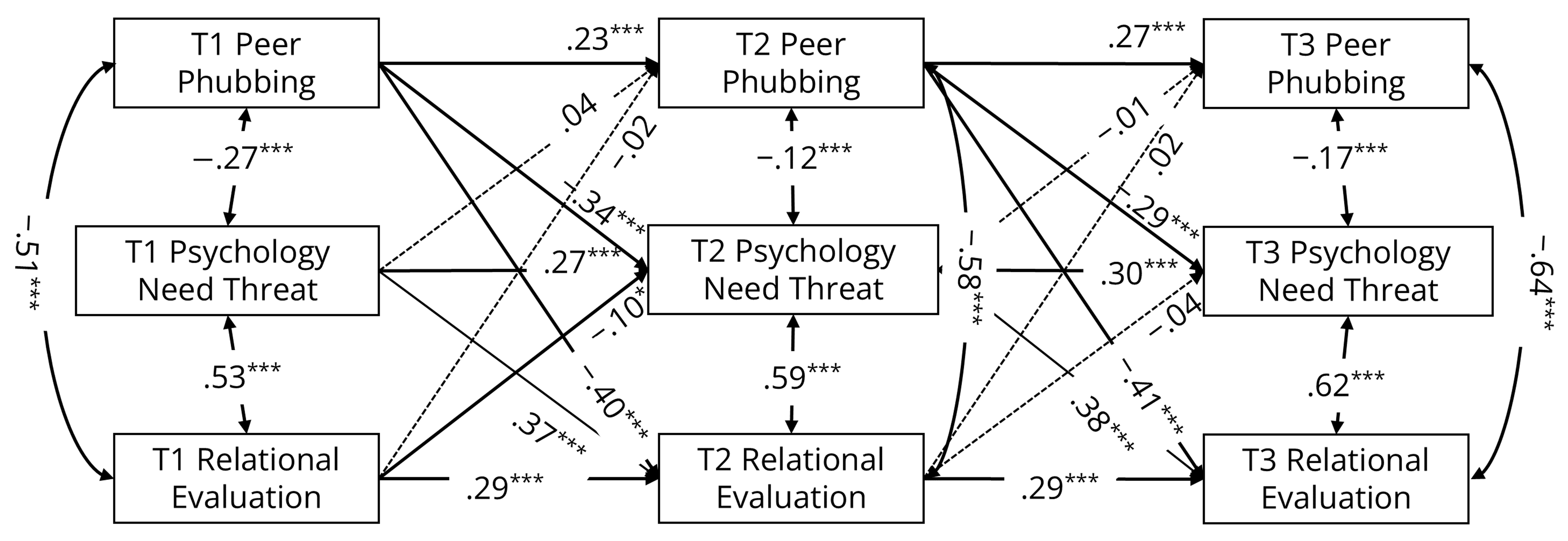
Note. CLPM of mediation role of psychology needs satisfaction between peer phubbing and relational evaluation.
***p < .001, **p < .01, *p < .05.
The Moderating Role of Social Norms Between Peer Phubbing Behavior and Relational Evaluation
To test the moderating effect of social norm category, we conducted a multiple-group structural equation model. The mediational effects, along with model fit indices for both the constrained and unconstrained models, are presented in Table 5. Overall, in unconstraint model, both indirect effect (βlow = −.38, p < .001; βhigh = −.28, p < .001) and total effect (βlow = −.27, p < .001; βhigh = −.21, p < .001) are statistically significant. However, direct effects from peer phubbing to relational evaluation in both groups are not significant. In constraint model, the direct (β = .10, p = .030), indirect effect (β = −.35, p < .001) and total effect (β = −.25, p < .001) are significant. The likelihood ratio difference test indicated that the constrained model fit the data as well as the unconstrained model. Therefore, the more parsimonious constrained model was retained, which indicates that the moderating effect of social norm is not significant (∆χ² = 5.08, ∆df = 6, p = .534).
Table 5. Estimated Effect in Both Constraint and Unconstraint Model.
|
|
Constraint Model |
Unconstraint Model |
|
|
|
|
Low Social Norm |
High Social Norm |
|
Direct effect |
.10* |
.11 |
.08 |
|
Indirect Effect |
−.35*** |
−.38*** |
−.28*** |
|
Total Effect |
−.25*** |
−.27*** |
−.21*** |
|
CFI |
1.00 |
.99 |
|
|
TLI |
1.00 |
.99 |
|
|
RMSEA |
.01 |
.02 |
|
|
SRMR |
.02 |
.01 |
|
|
χ² |
20.10 |
15.92 |
|
|
df |
20 |
14 |
|
|
Note. *** p <.001, ** p <.01, * p <.05 |
|||
Missing Data Analysis
A binary logistic regression was conducted to examine whether gender (1 = male, 2 = female), academic year (grades 1–4), and major type (Science, Engineering, Medicine, and Liberal Arts) predicted participants’ likelihood of completing all three waves of data collection (1 = completed; 0 = missing). As shown in Table 6, gender was a significant predictor, with female students being less likely than male students to complete all three waves (OR = 0.61, SE = 0.09, p = .036). Academic year was also significant, with higher-grade students more likely to complete the data collection (e.g., ORGrade3= 1.78, SE = 0.21, p = .006. Major type showed a significant effect as well, with students in certain majors (e.g., Science and Medicine) slightly more likely to complete all waves.
Table 6. The Sample Attrition Analysis.
|
Terms |
Estimate |
SE |
OR |
p |
|
Female |
−0.49 |
0.15 |
0.61 |
< .001 |
|
Grade 2 |
−0.30 |
0.20 |
0.74 |
.134 |
|
Grade 3 |
0.58 |
0.21 |
1.78 |
.006 |
|
Grade 4 |
1.89 |
0.29 |
6.62 |
< .001 |
|
Science |
1.56 |
0.26 |
4.78 |
< .001 |
|
Engineer |
−0.96 |
0.18 |
0.38 |
< .001 |
|
Medicine |
2.52 |
0.25 |
12.38 |
< .001 |
|
Note. OR = Odds ratio, SE = Standard error, outcome is attritional status (1 = attrition, 0 = non-attrition). |
||||
Discussion
This study provides key insights into the longitudinal effects of college peer phubbing behavior on psychological needs threat and relational evaluation, with important implications for understanding the role of social norms in moderating these dynamics. First, the analysis revealed notable gender differences. Female participants reported higher levels of peer phubbing behavior and basic psychological needs threat, while lower relational evaluation compared to males. However, no significant gender differences were observed in the perception of social norms related to phubbing. Second, the results confirmed the longitudinal mediating role of psychological needs threat between peer phubbing behavior and relational evaluation. Additionally, peer phubbing at T1 and T2 negatively predicted relational evaluation at T2 and T3, while relational evaluation at T1 and T2 did not significantly predict subsequent peer phubbing behavior. Third, the likelihood ratio test indicated no significant difference between the constrained and unconstrained models, suggesting that the mediational pathways did not differ across social norm categories, imply that social norm category did not moderate the indirect or total effects of peer phubbing on basic psychological needs threat and relational evaluation.
Gender Differences in Peer Phubbing and Relational Evaluation
In this study, females reported higher levels of peer phubbing and basic psychological needs threat, and lower levels of relational evaluation compared to males. These findings may be attributed to gender differences in social sensitivity and relational engagement. Research has consistently shown that females are more focused on maintaining interpersonal connections and are more sensitive to social disruptions (Portman et al., 2010; Schminke et al., 2003). As a result, peer phubbing is likely perceived as a greater threat to social bonds by females, leading to increased emotional impact. Consistent with Compensatory Internet Use Theory (Leung, 2014), individuals may turn to online interactions to compensate for social deficits in face-to-face settings. In such situations, females may use their phones more frequently in response to peer phubbing, potentially perpetuating a cycle of disengagement and increased phone use (Campbell & Kwak, 2010; Geser, 2006). Additionally, studies on social ostracism suggest that females are more inclined to engage in compensatory social behaviors following exclusion, whereas males tend to withdraw socially (Williams & Sommer, 1997). This may explain why females, in response to peer phubbing, are more likely to turn to online interactions as a coping strategy, reinforcing their use of phones in social contexts (Benenson & Wrangham, 2016). In contrast, males generally view phones as functional tools, primarily using them for instrumental purposes (Campbell & Kwak, 2010; Geser, 2006). This practical orientation may explain why males are less likely to interpret peer phubbing as a personal slight or a threat to their social standing.
Interestingly, there were no significant gender differences in the perception of social norms regarding phone use. This suggests that both males and females share a similar understanding of phone use norms, particularly within the college student population. The pervasive use of smartphones may have normalized phone use in informal social contexts, making it widely accepted across genders (Winkelmann & Geber, 2022). However, these norms likely vary depending on the context. In more casual settings, such as social gatherings or family events, phubbing may be considered normal and socially acceptable. By contrast, in formal settings, such as meetings or public events, phone use is often viewed as inappropriate (Chotpitayasunondh & Douglas, 2016; Smith et al., 2015). Given that this study focused on social interactions among college students, the consistency in norms across gender is understandable.
These findings add to the growing body of literature on gender differences in technology-mediated interactions, emphasizing the importance of accounting for gender when exploring the social consequences of phone use in real-world settings (Hales et al., 2018). Future research should consider further investigating the contextual factors that influence gender-specific responses to peer phubbing behavior.
The Mediating Role of Psychological Needs Threat
Consistent with our hypothesis, the present findings confirmed that psychological needs threat mediates the longitudinal relationship between peer phubbing and interpersonal relationship quality. The cross-lagged panel model revealed a clear unidirectional pattern: peer phubbing at earlier time points (T1 and T2) significantly predicted poorer relational evaluation at subsequent time points (T2 and T3), whereas interpersonal satisfaction did not predict later phubbing behavior. This temporal ordering suggests that peer phubbing functions as an antecedent of relational deterioration rather than a reaction to already impaired relationships. Importantly, this pattern indicates that the detrimental effects of phubbing are cumulative, with its negative influence on interpersonal relationships becoming more pronounced over time. Such findings are consistent with prior research showing that the consequences of social exclusion and digital disengagement often unfold gradually rather than instantaneously (Knausenberger et al., 2022; C.-c. Yang et al., 2021).
The observed cumulative effect can be understood through the Temporal Need–Threat Model of Ostracism (Williams, 2009), which posits that social exclusion threatens fundamental human needs for belongingness, control, meaningful existence, and self-esteem. In line with this framework, our results demonstrate that peer phubbing—a prototypical signal of social avoidance—was associated with significantly higher levels of basic psychological needs threat. Being phubbed during face-to-face interactions heightened individuals’ perceptions of need threat and was accompanied by lower relational evaluation, reflecting diminished feelings of social connection and interpersonal value (Hales et al., 2018).
Crucially, the longitudinal design of the present study extends prior cross-sectional work by showing that the psychological consequences of phubbing are not transient. Although phubbing is inherently situational, its impact on psychological functioning appears to persist and accumulate across time. Repeated exposure to phubbing-related exclusionary cues predicted heightened need threat and deteriorating relational evaluation at later time points, a pattern that more closely reflects everyday social experiences in which exclusion is often chronic and low-intensity rather than acute and isolated (Büttner et al., 2025). Consistent with this view, research on chronic ostracism suggests that prolonged exclusion can deplete psychological resources, ultimately leading to feelings of helplessness, alienation, and worthlessness (Rudert et al., 2021). From a motivational perspective, ongoing frustration of basic psychological needs may progressively erode interpersonal functioning. As unmet needs accumulate, individuals may experience increasing disconnection in social interactions, which in turn undermines relationship quality and reinforces the negative interpersonal consequences of peer phubbing
(Deci & Ryan, 2000; Riva et al., 2017).
Taken together, these findings underscore the temporal dimension of peer phubbing effects: while phubbing immediately disrupts situational interpersonal experiences, its repeated occurrence exerts incremental and cumulative psychological costs. The present study thus provides robust longitudinal evidence that peer phubbing represents not only an immediate interpersonal stressor but also a socially pervasive form of everyday exclusion with enduring relational consequences.
The Moderating Role of Social Norms
Contrary to our hypothesis, perceived social norms did not significantly moderate the relationship between peer phubbing and situational interpersonal relationships. This finding can be meaningfully interpreted within theoretical frameworks of social exclusion and expectation-based processing. As noted by Wesselmann et al. (2017), expectations can buffer the negative impact of social exclusion: exclusion that occurs unexpectedly is more likely to elicit negative experiences and relational consequences, whereas this buffering effect presupposes that the exclusionary behavior has been accepted and normalized at the outset. In contrast, when individuals are exposed to persistent or repeated exclusion, they may develop heightened sensitivity to exclusionary cues or, alternatively, experience emotional numbing and disengagement (Bernstein & Claypool, 2012; Riva & Eck, 2016).
The present findings suggest that peer phubbing may not yet be widely accepted as a normative form of social behavior, but rather continues to be interpreted as a negative social act that disrupts interpersonal interaction. Although smartphone use during face-to-face encounters has become increasingly prevalent, accumulating evidence indicates that phubbing is still primarily perceived at a psychological level as a violation of interactional norms rather than as a neutral or legitimate behavior. For instance, recent research shows that even in contexts where smartphone use is frequent, phubbing is commonly judged as morally inappropriate and is associated with significantly diminished moral evaluations of the phubber (Telari et al., 2024). Moreover, previous research demonstrates that individuals continue to experience smartphone interference as a threat to relational connection and responsiveness, and tend to engage in compensatory behaviors to restore social engagement rather than treating phubbing as an unquestioned social norm (Vanden Abeele & Postma-Nilsenova, 2018).
Together, these findings indicate that behavioral prevalence does not necessarily translate into normative acceptance. From this perspective, the absence of a moderating effect of social norms in the present study implied that when phubbing continues to signal relational devaluation and attentional withdrawal, it functions as a social exclusion cue that automatically activates psychological need threat, regardless of whether individuals subjectively perceive the behavior as common. This interpretation aligns closely with the temporal need threat model of ostracism, which posits that social exclusion first elicits an immediate, reflexive stage characterized by threats to core psychological needs, belonging, self-esteem, control, and meaningful existence. These responses emerge rapidly and operate largely independently of reflective cognitive appraisal (Wesselmann et al., 2017; Williams, 2009). In contrast, normative considerations are more likely to arise during later, reflective stages, and thus may exert greater influence on more enduring and stable evaluations of interpersonal relationships rather than on immediate, situational experiences of social connection.
Taken together, the present findings indicate that despite the widespread integration of smartphones into contemporary social life, peer phubbing has not been fully normalized at a psychological level. Instead, it continues to be interpreted as a violation of fundamental expectations of attentiveness and mutual engagement, and persistently undermines situational interpersonal relationship experiences through the activation of psychological need threat.
Limitations
While this study provides valuable insights into the effects of peer phubbing on situational interpersonal relationships and the moderating role of social norms, several limitations should be considered when interpreting the findings.
First, although the study employed a three-wave longitudinal design, data collection occurred within a single academic semester. This relatively short time frame may limit the ability to fully capture the long-term effects of peer phubbing on interpersonal relationship. The delayed moderation effect observed at T3 suggests that the cumulative impact of phubbing becomes more pronounced over time. However, a longer study period would offer a more comprehensive understanding of the extended temporal dynamics of phubbing’s effects on relationships, allowing researchers to examine how these effects evolve beyond a single semester.
Second, the study measured social norms using a general assessment of phone use in social settings, but did not account for how these norms might vary across different social contexts (e.g., casual vs. formal settings, public vs. private gatherings). Additionally, the study did not consider the underlying motivations for phubbing behavior, such as whether individuals were passively responding to phone notifications or actively choosing to engage with their phones (Vanden Abeele et al., 2016). These variations in social context and motivation could significantly influence how phubbing impacts interpersonal relationships. Future research should explore how context-specific social norms and different motivations for phubbing affect the relationship between phubbing behavior and relationship.
Third, the sample comprised only native Chinese college students, which limits the generalizability of the findings. College students, particularly in China, represent a relatively homogeneous group, and their experiences with technology and social norms may differ from those of other demographic groups. Moreover, the study focused exclusively on peer interpersonal relationships, whereas previous research has shown that phubbing occurs in a variety of relationship types, such as between romantic partners and supervisors and subordinates. Future research should examine how different types of relationships are affected by phubbing and social norms, and whether the impact of phubbing differs depending on relationship dynamics and cultural contexts.
Finally, because data collection involved a relatively high attrition rate and our analyses relied on complete cases, caution is warranted when interpreting the findings. The attrition analysis suggests that the missingness at least partly followed a missing-at-random (MAR) pattern. Therefore, the results may not be fully generalizable to certain subgroups, such as lower-grade male students in science fields.
Conclusion
This study advances research on peer phubbing by providing longitudinal evidence of its impact on situational interpersonal relationships among college students. Across three waves of data, we found that peer phubbing undermines basic psychological need satisfaction, which in turn predicts lower perceived situational closeness over time. Contrary to our expectations, social norms did not significantly moderate these processes. Although phubbing is becoming increasingly common and may even be regarded as acceptable in certain social environments, our findings indicate that such normative attitudes do not reduce its negative impact. Instead, whenever individuals encounter phubbing in face-to-face interactions, they tend to experience relational distance and diminished interpersonal closeness. These results underscore the cumulative and temporal dynamics of phubbing’s effects and highlight the need for future studies to explore other contextual or individual factors that might shape these processes.
Conflict of Interest
The authors have no conflicts of interest to declare.
Use of AI Services
Since all four authors are native Chinese speakers, we used OpenAI’s ChatGPT to help improve the clarity, fluency, and overall presentation of the manuscript in English academic writing. The manuscript was initially drafted by the authors in Chinese and then translated into English by the authors themselves. ChatGPT was used only to refine the language and expression of the text. All research ideas, study design, data collection, data analysis, interpretation of the findings, and final content were developed and completed by the authors, who take full responsibility for the manuscript.
Acknowledgement
This research is supported by the National Science Foundation of China (NSFC) project (Key project with No. 61936010). Thank you to Feng, who helped us with data collection.
Data Availability Statement
The data underlying this article are available in https://osf.io/p6g54/
Appendix
Questionnaires
Hello! Thank you very much for participating in this survey. This study aims to understand the impact of your peers' head-down phone usage on your relationship with them.
Before completing the questionnaire, please carefully read the instructions and answer according to your actual situation. Your responses will be kept strictly confidential and used solely for academic research. Please rest assured and answer truthfully. It will take approximately 5–10 minutes to complete this questionnaire. Make sure you have enough time and avoid distractions during the process.
This questionnaire is intended for college students only (junior college and above). If you are not a college student, please do not participate.
Thank you for your cooperation.
1. Your university:
2. Your major category is:
○ Literature ○ Science ○ Engineering ○ Medicine
3. Your year of study:
○ Freshman ○ Sophomore ○ Junior ○ Senior
4. Your gender:
○ Male ○ Female
5. Your age:
6. Your student ID: (Used for follow-up tracking only. We will not disclose your personal information. Please fill it in with confidence.)
7. The following are some questions about your peers' head-down phone use in daily life. Please answer according to your actual situation.
7.1 When I have a meal with my peers, they use their phone.
○ Strongly Disagree ○ Disagree ○ Not Sure ○ Agree ○ Strongly Agree
7.2 When I’m with my peers face-to-face, they usually place their phones where they can see them.
○ Strongly Disagree ○ Disagree ○ Not Sure ○ Agree ○ Strongly Agree
7.3 When I am with my peers, they usually hold their phones.
○ Strongly Disagree ○ Disagree ○ Not Sure ○ Agree ○ Strongly Agree
7.4 When their phones ring/vibrate, my peers usually check them even if we are talking.
○ Strongly Disagree ○ Disagree ○ Not Sure ○ Agree ○ Strongly Agree
7.5 My peers usually look at their phones when chatting with me.
○ Strongly Disagree ○ Disagree ○ Not Sure ○ Agree ○ Strongly Agree
7.6 My peers usually use their phones even when playing with me.
○ Strongly Disagree ○ Disagree ○ Not Sure ○ Agree ○ Strongly Agree
7.7 When we hang out together, my peers usually play with their phones.
○ Strongly Disagree ○ Disagree ○ Not Sure ○ Agree ○ Strongly Agree
7.8 My peers usually look at their phones when talking to me.
○ Strongly Disagree ○ Disagree ○ Not Sure ○ Agree ○ Strongly Agree
8. What is your perception of head-down phone usage in daily life? Please answer based on your actual experience.
8.1 Do you feel familiar with the behavior of using phones with head down?
○ Not at all ○ A little ○ Moderate ○ Often ○ Always
8.2 Do you think people are aware of their own head-down phone behavior?
○ Not at all ○ A little ○ Moderate ○ Often ○ Always
8.3 Do you think people around you engage in head-down phone behavior?
○ Not at all ○ A little ○ Moderate ○ Often ○ Always
8.4 Do you think head-down phone behavior is acceptable?
○ Not at all ○ A little ○ Moderate ○ Often ○ Always
8.5 Do you think others find head-down phone behavior acceptable?
○ Not at all ○ A little ○ Moderate ○ Often ○ Always
9. The following are some feelings you may have when your peers engage in head-down phone behavior in daily life. Please respond based on your actual experience.
9.1 When peers look down at their phones, I feel isolated.
○ Strongly Disagree ○ Disagree ○ Not Sure ○ Agree ○ Strongly Agree
9.2 When peers look down at their phones, I feel rejected.
○ Strongly Disagree ○ Disagree ○ Not Sure ○ Agree ○ Strongly Agree
9.3 When peers look down at their phones, I feel like an outsider.
○ Strongly Disagree ○ Disagree ○ Not Sure ○ Agree ○ Strongly Agree
9.4 When peers look down at their phones, I feel good about myself.
○ Strongly Disagree ○ Disagree ○ Not Sure ○ Agree ○ Strongly Agree
9.5 When peers look down at their phones, I feel a high level of self-esteem.
○ Strongly Disagree ○ Disagree ○ Not Sure ○ Agree ○ Strongly Agree
9.6 When peers look down at their phones, I feel likeable.
○ Strongly Disagree ○ Disagree ○ Not Sure ○ Agree ○ Strongly Agree
9.7 When peers look down at their phones, I feel powerful.
○ Strongly Disagree ○ Disagree ○ Not Sure ○ Agree ○ Strongly Agree
9.8 When peers look down at their phones, I feel in control of the interaction.
○ Strongly Disagree ○ Disagree ○ Not Sure ○ Agree ○ Strongly Agree
9.9 When peers look down at their phones, I feel outstanding.
○ Strongly Disagree ○ Disagree ○ Not Sure ○ Agree ○ Strongly Agree
9.10 When peers look down at their phones, I feel unnoticeable.
○ Strongly Disagree ○ Disagree ○ Not Sure ○ Agree ○ Strongly Agree
9.11 When peers look down at their phones, I feel meaningless.
○ Strongly Disagree ○ Disagree ○ Not Sure ○ Agree ○ Strongly Agree
9.12 When peers look down at their phones, I feel a lack of presence.
○ Strongly Disagree ○ Disagree ○ Not Sure ○ Agree ○ Strongly Agree
10. The following diagram consists of two circles. One circle represents yourself, and the other represents your peer. The overlapping area indicates the closeness of your relationship—the greater the overlap, the closer the relationship. Now, based on an interaction scenario where your peer is using their phone with head down, please judge how close they feel the relationship is and choose the corresponding number.
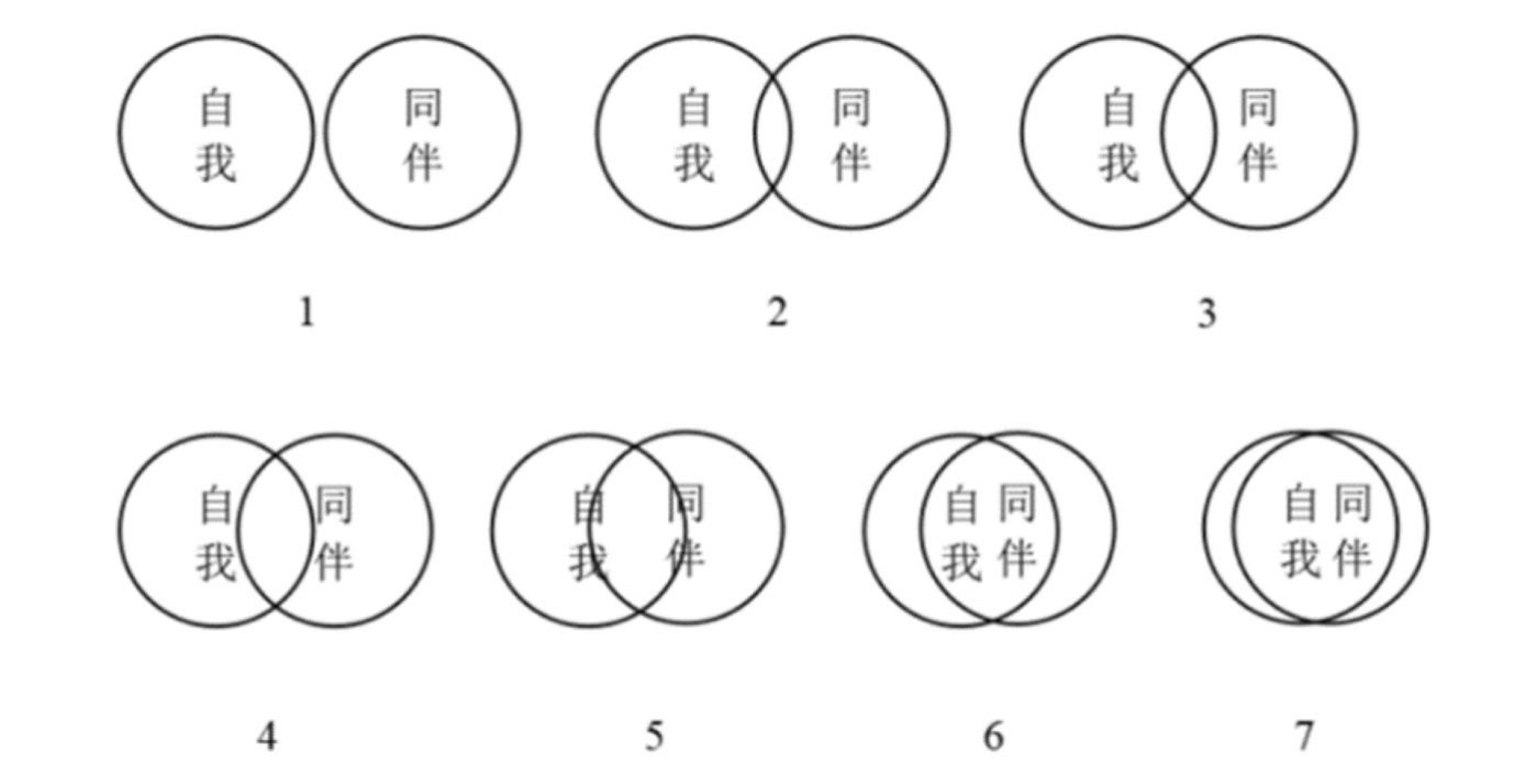
○1 ○2 ○3 ○4 ○5 ○6 ○7(自我refers to self; 同伴refers to peer)


This work is licensed under a Creative Commons Attribution-ShareAlike 4.0 International License.
Copyright © 2026 Ronghua Zhang, Xiaofeng Guo, Na Yang, Chenguang Du